Down mammary lane

How do your breasts change as you age? We talk to five breast specialiasts to find out how the breast ages in every decade, exploring what is healthy, what is not – and when you should worry.


What to look out for in your twenties
Expert: Professor Justus Apffelstaedt is an Associate Professor for the University of Stellenbosch and head of the Breast Clinic at the Tygerberg Hospital.  He is a surgeon, with a specialised interest in breast health and is the head of the Tygerberg Breast Clinic in Cape Town. 


According to Professor Apffelstaedt, the earlier you start checking your breasts for lumps, the better. Breast cancer screening, he explains, is one of the most important contributing factors to the dropping mortality of breast cancer.  “It should be a normal health habit you begin doing once a month, ten days after your menstruation,” he says. “And, if you do find a lump, don’t panic. Most lumps in this age group are benign. Watch out for a painless lump, contour changes, changes in the size of the breast, skin changes such as areas of redness that persist for more than five days, changes of the nipple, nipple discharge, skin dimpling, retraction of the nipple and/or skin and lastly, lumps in the armpits.”


Besides conducting a routine breast self-exam, he also recommends an annual clinical breast examination by a healthcare professional. “Your breasts will be checked for a number of changes, including lumps. Mammograms are not recommended in the twenties, as the breast tissue is too dense,” he says.


During this decade, pregnancy and lactation change the breast – and when women delay family planning until after age thirty, their risk of breast cancer is also increased. Professor Apffelstaedt points out that as with all cancers, breast cancer prevention suggestions include; changing to a healthy lifestyle and sound eating habits, avoiding foods known to cause cancer, and taking prophylactic measures, such as anti-estrogens for women with a very high risk of breast cancer.


“Often women incorrectly believe that they have a very high risk of breast cancer, due to a family history, for example,” he says. “Women with a family history of breast cancer should have this history evaluated by a specialist centre to ascertain if their risk is indeed as high as they think it to be. If it is, modern risk management strategies, personalised to the individual woman’s circumstances, can reduce the risk substantially. This relieves a great amount of stress.”


Professor Apffelstaedt is positive about modern cancer management. “Thanks to constant improvements in this arena, the chance of dying of breast cancer is decreasing constantly.”


What to look out for in your thirties
Expert: Dr Rika Pienaar is a private clinical radiation oncologist for GVI Oncology in the Panorama Mediclinic in Cape Town. She is nationally recognised for her talks on breast cancer and has delivered more than 50 invited lectures at national meetings, colleges, universities and women’s organisations. 


“All women are at risk for breast cancer, but that risk does not seem very real when we’re young – or in our thirties. Although breast cancer most often occurs in women over the age of 50, about 11,000 women under the age of 40 are diagnosed each year,” says Dr Pienaar. “Unlike women over age 40, most young women discover their own breast cancers. One study from Harvard, for example, found that 71% of women diagnosed with breast cancer at age 40 or younger discovered their breast cancers by self-exam. Most had never had a mammogram at the time of their diagnosis.”


Dr Pienaar explains that younger women diagnosed with breast cancer often experience a more aggressive cancer and a lower chance of survival. For this reason, women in this age group are advised to regularly check their breasts by self-exam. “You may never face breast cancer during your lifetime, particularly before the age of 40, but it is important to understand your risk and to be your own health advocate. Know the landscape of your breasts and alert your doctor right away if they look or feel unusual,” she says. 


According to Dr Pienaar, some studies have suggested that use of oral contraceptives results in a very slight increased risk for developing breast cancer, over those who have never taken them. Women who have stopped using birth control pills for more than ten years do not seem to be at any greater risk. Other studies, however, show no such effect. Researchers continue to study the conflicting results in these trials to determine if birth control pills play a role in breast cancer. 


“Experts suspect that the more a woman is exposed to estrogen, the greater her risk. That might be one explanation for the rising rates of breast cancer in younger women,” she says. “Compared to 50 years ago, women today have a greater lifetime exposure to estrogen, beginning menstruation several years earlier, sometimes as early as age nine, and starting menopause later in life. Contemporary lifestyles may also expose women to more carcinogenic environments and lifestyle behaviours, which can be modified or controlled, for example, whether or not you smoke, how much alcohol you drink and what you weigh.”


She explains that while most lumps are benign, they are often ignored by younger women – and sometimes their doctors, who often believe their patients are too young to get breast cancer – and so, decide to wait and see what happens. “These delays can adversely affect a woman’s overall outcome, because by the time the cancer is finally discovered, it may have spread to the lymph system and other organs of the body, making treatment more difficult,” she says. 

What to look out for in your forties
Expert: Dr Hugo Allison is a general surgeon with an interest in the management of benign and malignant breast disease. He has also been a member of Groote Schuur Breast Clinic for 25 years.


Women in their forties, especially in their late forties and peri-menopausal, can expect changes in their breasts, explains Dr Allison. “Breast tenderness is very common as part of the involuntary changes that take place – and breasts may get larger, especially if there is noticeable weight gain,” he says. “The glandular component starts to atrophy (get smaller) and there is an increase in fat deposition in the breast.  In peri-menopausal women, hormone levels may fluctuate, so breast sensitivity may change.  This is often normal, however, it is important that the focal areas of tenderness or pain be assessed by a doctor or specialist.”


Breast cancer shows a tendency to be more common in women who are overweight and excessive alcohol consumption has also been noted to have an increased risk of breast cancer.  Exercise is important, reducing weight and modifying alcohol consumption are essential, says Dr Allison. 


“Breast self-examination is crucial in this age group as malignancy is usually detected by the woman herself,” he says. “If you find a lump or notice a change in anything in your breast, get is seen to and don’t go into denial.  Most likely it is not serious, but you don’t want to miss a more serious problem!”


Dr Allison advises women in their forties to pay attention to changes in the skin, as well as dimpling, thickening or distortion of the breast contour.  He also points out that changes in the nipple area are also important to look out for, looking at puckering or retraction of the nipple. “Ulceration of the nipple or spontaneous bloodstained discharge from the breast could be quite serious – and need further investigation by a specialist,” he adds. 


He recommends that all women in this decade of age have an annual thorough breast examination and mammogram done, as a baseline, in their early forties. “If there is a family history of breast cancer, then regular annual mammograms are recommended from the age of forty onwards. This mammogram should also be backed up by an ultrasound – as a mechanism to ensure the breast is healthy,” he adds. 


What to look out for in your fifties
Expert: Dr Irene Boeddinghaus is an oncologist in private practice specialising in the treatment of cancerous and non-cancerous breast conditions. She holds a doctorate in the hormonal treatment of breast cancer, which she obtained from the University of London. She is an author and co-author of multiple papers and books on the subject and has presented breast cancer research at a number of international conferences.

“Women in their fifties should really try to accept routine mammograms as mandatory,” says Dr Boeddinghaus. “Ultrasounds are not always necessary. Some people hope that they can go for an ultrasound without a mammogram, but unfortunately, this way, a lot of cancers can be missed – and we don’t recommend that.” 

According to Dr Boeddinghaus, research has been conducted on the link between obesity in post-menopausal women and breast cancer. “The link is frighteningly clear,” she says. “Also, if you drink more than four units of alcohol a week, there is a 1.5 times higher chance of breast cancer development, so restrict yourself to two glasses of wine per week.” She also encourages women to watch their calorie-intake. “It is not about exercise as much as it is about restricting your diet, so that you can keep your weight down.”

Another common occurrence in the fifties age group is that of breast cysts. “Cysts come under the band of aberrations of normal development and involution or ANDI – in other words, they are associated with aging. They are less common in younger women – although they can occur in the younger age group, but are specifically found in early post menopausal women,” she says. “Few cysts are cancerous – but the only sure guarantee that it is benign, is to have it looked at through a mammogram and ultrasound and aspiration biopsy.” Dr Boeddinghaus explains that cysts can pop up overnight and can also disappear within a few days. For people with multiple recurrences, she advises them to wait, but that if there is ever a smidgen of doubt about a lump, it is important to have it examined by a professional and to have it scanned early. 

“In the fifties, women can experience leaky breasts. This is when the ducts that carry the milk from the breast gland to the nipple age, and you can often end up with a non-bloodstained discharge,” she says. “It is not a pre-cancerous condition, but it can impact upon lifestyle – as nobody likes leaky boobs. This is normally fixed with a small operation, but when it is blood-stained, it definitely needs to be checked immediately. One in ten women experiencing this condition can have an underlying cancer – but if it is not blood-stained, then it is not cancerous. It is just one of those aging problems.” 

In this age group, many women also start hormone replacement therapy (HRT) – and this can often affect the breasts. “HRT can definitely cause lumps and cysts, but this is not to say that HRT is negative – only that is has an effect on the breasts. HRT maintains the density of the breasts so that mammograms may be more painful – and can be less effective in pinpointing cancer,” she says. “Short term use of HRTs, that is, less than five years, does not increase the incidence of breast cancer, but prolonged use, that is greater than five years, can.” 
What to look out for in your sixties
Expert: Dr Peet van Deventer is a plastic and reconstructive surgeon in private practice in Bellville in the Western Cape and holds the post as an extraordinary senior lecturer in the division of plastic and reconstructive surgery at Tygerberg Hospital and the University of Stellenbosch. He is renowned for developing the internal bra procedure for the Breform company, one of the latest developments in cosmetic breast surgery. 


Dr van Deventer explains that as you age, especially in your sixties, all the tissues in the body, including that of the breast, undergo atrophy or wasting. The glandular component and fatty content of the breast decrease in volume, the ligaments weaken and stretch and the skin thins and loses its elasticity. The result, he says, is an ‘envelope’ too large for its contents and loss of function of the supporting structures, causes drooping of the breast, known as breast ptosis. “The attractiveness of the breast may then be lost and affect the person with loss of self-esteem and confidence,” he says. “It can also result in physical problems like the collection of moisture in the fold beneath the breast, resulting in mal-odour.”


According to Dr van Deventer, breast ptosis can be treated by doing a breast lift (mastopexy) procedure. “Excising the excessive skin and reshaping the breast can be beneficial, however, this may be a temporary solution, as the skin will stretch with time – and the breast will droop again,” he says. “In this regard, one of the latest developments in cosmetic breast surgery is the internal bra procedure.  It is a non-absorbable biocompatible mesh, used to reconstruct the ligaments responsible for maintaining breast shape and relieving the skin of that function, maintaining the breast shape and reducing the tension on the suture lines with less scarring.”


With a mammogram, breast cancer can be detected before a mass is palpable and therefore there is a better prognosis in the treatment of this condition. “The glandular component of the breast is prone to malignant change with a higher risk in the older age group. Every woman at every age must learn to do breast self-examination and perform it at least once a month.  At this age, annual mammograms and ultrasounds are also important. This will ensure early detection of abnormalities, which can be investigated and treated if necessary.”


Dr van Deventer recommends women stay healthy by maintaining a constant body mass index between 20 and 25. “Women who smoke put themselves at higher risk,” he says. “Only moderate use of alcohol is advisable.  I also advocate regular exercise and for women to be sexually active.”


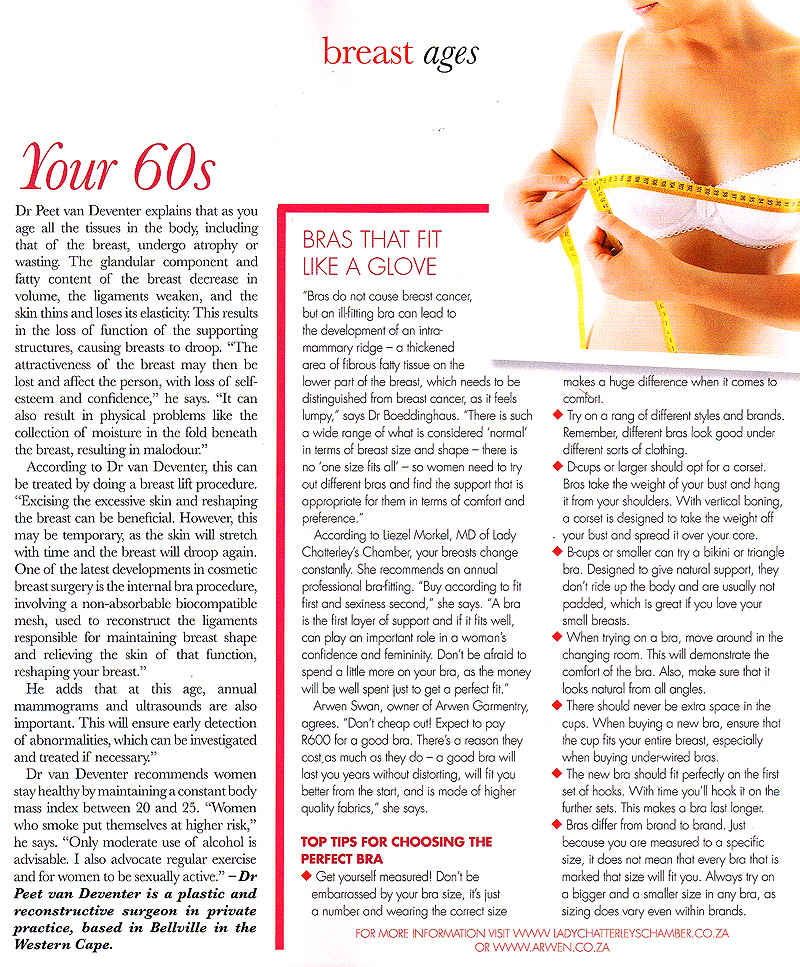
Bras that fit like a glove
“Bras do not cause breast cancer, but an ill-fitting bra can lead to a development of what we call an intra-mammary ridge – a thickened area of fibrous fatty tissue on the lower part of the breast, which needs to be distinguished from breast cancer, as it feels lumpy,” says Dr Boeddinghaus. “There is such a wide range of what is considered ‘normal’ in terms of breast size and shape – there is no ‘one size fits all’ – so women need to try out different bras and find the support that is appropriate for them in terms of comfort and preference.”


According to Liezel Morkel, managing director of Lady Chatterley’s Chamber, the online Lingerie Boutique; http://www.ladychatterleyschamber.co.za, women should pay attention to how their bodies change, because the breast changes constantly, from having a baby, losing or gaining weight and during your period – and so, recommends an annual professional bra-fitting. “It is important to buy according to fit first and sexiness second,” she says. “A bra is the first layer of support and if it fits well, can play an important role in a woman’s confidence and femininity. Don’t be afraid to spend a little more on your bra, as the money will be well-spent just to get a perfect fit.”


Arwen Swan, owner of Arwen Garmentry; http://www.arwen.co.za, agrees. “Don’t cheap out! You can expect to pay more than R600 for a good bra. There really is a reason that they cost as much as they do, a good bra will last you years without distorting, will fit you better from the start, and is made of higher quality fabrics,” she says. 


Swan and Morkel share the following top tips for choosing the perfect bra:

  • Get yourself measured! Don’t be embarrassed by your bra size, it’s just a number and wearing the correct size makes all the difference in the world as to your comfort. 
  • Try on a number of different styles and brands. Remember different bras look good under different sorts of clothing. 
  • D-cups or larger should opt for a corset. Bras take the weight of your bust and hang it from your shoulders and a corset which has vertical boning is designed to take the weight of your bust and put it over your core. 
  • B-cups or smaller can try a bikini or triangle bra. These are designed to give natural support, don’t ride up the body, and are usually not padded which is great if you love your small breasts. 
  • When trying on a bra, move around in the changing room.  This will demonstrate the comfort of the bra. Also, make sure that it looks natural from all angles.  
  • There should never ever be extra space in the cups. When buying a new bra, ensure that the cup fits your entire breast, especially when buying under-wired bras. 
  • The new bra should fit perfectly on the first set of hooks. As the bra then gets worn more often, you’ll start hooking the bra on the further sets of hooks. This makes a bra last longer.
  • Bras differ from brand to brand. Just because you are measured to a specific size, for example, 36D, it does not mean that every bra that is marked a 36D will fit you. Always try on a bigger and a smaller size in any bra, as sizing does vary even within brands.

Author: Charlene Yared-West, Longevity Magazine, Special Supplement: Breast Health Guide: October 2010.
The power of one

“How I regained my speech after suffering a stroke.” – Liesl Mocke, 44, Cape Town

The 7th of July 2002 was the last day of my life as I knew it. I was 36-years old; a psychologist, a mother and a wife. I had been living in London for two and a half years working for the Red Cross in an administrative position, whilst waiting to be registered as a Psychologist with the British Psychological Society, as I had practised in Pretoria before moving overseas. I could speak six languages – English, Afrikaans, Hebrew, Greek, Xhosa and German – and was successful in my career, and specialised in helping school pupils suffering from dyslexia and other learning difficulties. 


After experiencing a severe migraine one Wednesday morning, and then daily until the Sunday afternoon, I collapsed and was found paralysed and unable to speak on the bed, by my husband, Daniel. I had been lying there for about one and a half hours after going to lie down. I had suffered a rare type of stroke, where an artery in my neck had ruptured – the same artery that carried blood to my brain. 

Suddenly, I could no longer do what I had so often taken for granted; I couldn’t swallow, I couldn’t move the right hand side of my body, I could not read or produce any sound. I was numb, emotionless and in a state of emptiness. My first step was to get out of bed and walk around the hospital. With the help of a physiotherapist, this took me a few weeks to accomplish. Then I had to learn how to produce sound. On the 22nd day after the stroke, a speech therapist spent an hour with me in hospital, showing me how to press my lips together and then to release them, after which I eventually could say a short ‘mah’, with a little voice. I was shown how to touch my throat over the larynx, while breathing out simultaneously with a push of the breath, to make a sound. It was very difficult and extremely exhausting, and all I wanted to do was sleep, which is not uncommon for stroke patients. 


After more practice, I could eventually say my first word; mamma. However, I still felt devoid of emotion and did not even know what ‘mamma’ meant. This was when my mother, Mari Mocke, a speech and drama teacher took over with teaching me to speak, practically from scratch, as I only spent two sessions with the speech therapist at the hospital. She began coaching me to speak and write again in English and Afrikaans, immediately after my discharge. 


It was not easy-going. I had absolutely no words in my mind, only pictures. For instance, I could picture a fork and a knife and know their function, but I had no idea what they were called. Only after practising with my mother to articulate every speech sound with the tongue and the lips and the outgoing breath, was I able to learn the names of things as she showed them to me, and named them. With the aid of a hand mirror I had to learn to press the tip of my tongue against the palate of my mouth, behind the teeth, to get it into the right position for articulating, for example, the letter ‘n’, before I could eventually say the word ‘knife’.


I practised every morning and afternoon, at first for about ten minutes, then about twenty minutes at a time during the first week at home. Fatigue was the greatest problem, not frustration, because I had very little emotion. Sometimes I was actually too tired for the practices, but then I forced myself to do it, because I wanted to speak.


Once I had mastered the ability to utter a speech sound, I learnt to identify and say ‘pappa’, Daniel (my husband) and Johan, my son’s name. With my mother, I practised saying short sentences, the first of which was, ‘Johan likes juice’. 


Eventually, six months after my stroke, I was able to speak full sentences more spontaneously, but sometimes, naming common objects lodged my mind, was difficult. I still experience this challenge, where the name for an image or object gets lost in my mind. I find that a helpful way of getting around this is to use hand gestures, while describing the object. Some days are better than others. 

About a year after the stroke, I used to draw the pictures of the items on my shopping list, if I could not bring the word to the fore! 


Roughly three years after the stroke, my emotional seat started functioning again. Then, besides working closely with my mother, I went for intensive therapy to help me express the anger and frustration I felt about my situation, but had been unable to communicate verbally as I used to, before the stroke. Especially abstract thoughts. This was hard for me as just three years previously; I had been the one sitting in the psychologist’s chair, helping people overcome their challenges. Now I needed the help.  


I used to define myself by what I did, now, free of those constraints, I do what I love – baking, gardening, singing and making bath-salts and soaps. I also love reading and helping my nine-year old son with his homework, which brings me great joy. I live life fully, because I have much to be thankful for. My husband, Daniel is the rock in my life and he has been supportive throughout.


I now understand what a gift communication is – and every day I make progress. I am Liesl, I have a speech difficulty, but I am not the speech difficulty. I have talents and abilities that are unique to me, but they do not make me who I am as a soul or a spirit. We are all so much more than that.


Author: Charlene Yared-West, The Oprah Magazine, August 2010. (Please note that the copy posted above is the unedited version of what was published in the magazine and will differ slightly. To read the edited version of the article, please click on the images for an expanded view.)

The 7-Day green challenge

How seriously do you take the state of our environment? Challenge yourself to go green in one week, starting Monday!


Day One: Green your eating habits!
Mondays always start off with a new diet to ease the conscience of all the baddies eaten over the weekend. Start your green week challenge with an overhaul of your eating habits that will benefit your waistline, as well as the environment. 
Step 1: Go for organic, seasonal greens
“It isn’t necessary to become a vegetarian overnight, but decreasing your consumption of animal protein can definitely help you to become more eco-friendly,” says registered dietician, Lila Bruk. “Eating organic food may improve your health and help the planet, as organic food is less likely to contain harmful additives, which would be added in processing.” Bruk adds that eating seasonal produce can also ensure that you get the maximum amount of nutrients from the food – and this is good for the environment, because a lot of the fresh produce on shop shelves have been imported. Eating seasonal fruit and veg means that the food was grown locally and did not have to be brought in via air travel, which means you lower your carbon footprint. 
Step 2: Make a green girly cocktail
Smoothies are a great way to get your daily quota of fruit and veg servings. Dice your favourite seasonal fruits and vegetables and add to a blender with two cups of ice and blend together for about 30 seconds until your reach your desired consistency. Find a perfect spot outdoors where you can enjoy the beauty of nature while sipping on your eco-friendly drink!


Day Two: Clean up your act!
Yesterday’s veggie smoothie binge has left you feeling lighter on your feet and happier about your role in saving the planet. Go a step further and learn about separating your trash and composting in your backyard. Be brave, for worms are involved in the process…
Step 1: Separate your trash
Incorporate the three R’s of Reduce, Reuse and Recycle. Reduce the resources you use, Reuse recources as much as possible and Recycle when you can. Implement a recycling programme in your area by contacting a local recycler who will pick up recyclables of paper, glass, plastics, metals, foil-lined juice boxes (tetrapak) and batteries. “Across South Africa, we are fast running out of landfill space – a waste crisis is looming! We can all play our part,” says Bertie Lourens, MD of Waste Plan. “By recycling we can drastically reduce the waste we landfill. Try a simple exercise at home: separate out all plastics from your rubbish – including plastic bags, bottles, containers as well as polystyrene – and see how little rubbish there is left! And this is just one of the recyclable waste streams.”
Step 2: Make your own vermicompost system
“A vermicompost system is very easy to build – or one can buy a ready-made system, for as little as R150.00, excluding the worms,” says owner of Worms R Us, Denise Cowan. “To make one, you need a sealed black container, shredded paper as bedding for the worms to live in and the leftover food you wish to recycle. Drill some holes in the container and place it onto a catchment container to collect the ‘worm tea’. This is the nutrient-rich fertiliser, which can be used for watering plants by mixing one part to ten parts of water. It’s as easy as that!” Cowan says that most vegetable kitchen waste can be used, but to avoid citrus and onions as it can cause the system to become acidic. Egg shells, coffee grounds, teabags and garden leaves are also good additions to your system. “I find nothing better than making a salad out of my own home-grown produce, as I know what I have used on them and am not putting dangerous chemicals into my body. It is also guilt-free and earth friendly!” she adds. 

Day Three: Entertain the earth-friendly way!
It’s time for some mid-week entertainment, so why not invite close friends over for a eco-braai and good coffee. Eating out isn’t always earth-friendly. And, make your party bloom without cut flowers using greener tablescapes.
Step 1: Enjoy a eco-braai
The Swanniebraai uses old newspapers and other paper, crumpled into balls to braai boerewors and meat within six to ten minutes of starting the fire. “So many newspapers that are not recycled end up in landfills, which are polluting the planet. Usually a braai uses charcoal, which is less eco-friendly than paper – and it takes a longer time to get to the point where meat can be placed on the grid. The Swanniebraai cooks the meat through in a much shorter time,” says Willem Landman, owner of the Swanniebraai. A gas braai is often preferred by environmentalists as it emits less pollution than charcoal. 
Step 2: Liven up the party
Liven up your braai with colourful, decorative touches such as fruit or vegetables for table displays. About 80% of cut flowers come from Ecuador or Colombia and are grown with about 12 different pesticides, which pollute the earth and water. Finally, don’t forget to buy organic foods for your braai, including organic coffee from a Certified Fairtrade coffee producer and roaster. “Organically produced coffee means that the coffee trees have been farmed and cared for without the use of chemical fertilizers and pesticides,” says director of Bean There Coffee Company, Sarah Robinson. “Bean There is South Africa’s first roaster of Certified Fairtrade coffee that is of single origin, exclusive, optimally roasted and organic.”


Day Four: Observe the ‘less is more’ rule!
If last night at the braai left you a little tender from slight over-indulgence, it’s time to realise that sometimes, less is better than more. If we could each reduce our carbon footprint on the earth by just a tiny bit, the state of the environment would be greatly improved. 
Step 1: Reduce your carbon footprint
Take action to reduce your usage of electricity, water, paper and fuel. “South Africans are generally not too preoccupied with saving natural resources, unless it hurts us financially,” says owner of Recycle Now, Gina da Silva. “Cut down on electricity by, for example, opting for sleeping socks instead of an electric blanket. Change to energy-saver bulbs. Cut down on wasting water by being more mindful of when you use it. Reuse paper where you can and think twice before printing documents. The basics apply to everything you consume, including fuel. Opt for public transport or organise lift clubs. Perhaps even take a walk or cycle to where you need to get to.”
Step 2: Make the change to green fuel
Roy Dibley is an inventive South African of note. He modifies cars so that they can run on vegetable oil, sourced from food outlets that have been filtered of any food fragments. “The system I’ve designed has been fitted to over 70 cars over the past three years and I have been driving on green oil for the last five years. It is very cost efficient as I am using a waste product that would have to be disposed of in another way if I did not use it. Almost everything we consume can be used again or recycled, but most people are too lazy to do this. It’s a conscious choice to move to a green fuel. Stop doing things the easy way and make a small effort for a big difference!”


Day Five: Old is the ‘new’ new!
Instead of a cocktail party out in the town, arrange a swop night with girlfriends, where you exchange clothing and other items you no longer need in the house. Show them around your place, sharing innovative greening tips, such as using tyres in the garden as pot plants. 
Step 1: Implement a funky clothing exchange
“It’s a win-win situation to exchange clothing with friends, because not only does it reduce your carbon footprint, it also means that new items don’t have to be manufactured to satisfy your need for something new,” says owner of the Hermanus Swop Shop, Marilyn van der Velden. So, top up on tea and swop out that funky flower skirt you no longer wear. 
Step 2: Change something old into something new
Thinking creatively goes a long way and can benefit the environment in many ways, says van der Velden. “Old tyres are one of the world’s biggest problems for landfill sites.  They have been successfully turned into playground equipment and surfacing for roads but I use them for worm farms, planters and aids to conserve water in my garden.” Simply take something old, like blue jeans and turn them into patchwork tablecloths, blankets, skirts, cushion covers, skirts and sofa covers. 

Day Six: Go shopping!
Saturday is usually the perfect shopping day to restock the food cupboard. It’s all about considering your purchases carefully, buying in bulk and focusing on greening your pantry. 
Step 1: Buy less, buy smart
Farmer’s markets are brilliant for shopping for fresh produce that is locally produced, artisanal and often organic. Another smart shopping tip is to buy green cleaning products like Enchantrix that use ingredients that are not toxic or harmful to the environment. “This also goes for toiletries. The Victorian Organic Skin Care Company has an organic skin and body care range of products recreating recipes from the Victorian era using traditional ingredients from the English countryside, sourced and made in South Africa.” says owner of Green Space, an online shopping information portal, Theresa Wilson. “Reduce is key – rather buy a few quality products that will last a long time than lots of cheap goods that will only last a season or a few years – and that pollute the environment . We also need to add another ‘R’ to the 3 R’s; Respect for all life forms.” Buying local products not only supports the local economy, but also the environment, as they also require less transportation, storage and packaging. 
Step 2: Save money, save the planet
One of the latest trends when purchasing a cell phone contract is to upgrade your current phone to one of the newer models on the market. The same goes for car models. “Instead of buying or upgrading to a newer model, stick to the one you’ve got for as long as you possibly can, because more often than not, the old one will end up in the landfills,” says Wilson. Any kind of battery or e-waste rusts and the contents seep into the earth and contaminate the water. 


Day Seven: Step out into Mother Nature!
What better to do than spend a Sunday filling your lungs with fresh air, enjoying the great outdoors. The only downside to this is when these areas are polluted or spoilt because of litter or other forms of degradation. Sundays are family days – so go outdoors and make sure those environments are clean for generations to come. 
Step 1: Educate the young about cherishing earth
Take young family members out into natural surroundings – either a beach, forest or park and encourage them to value the beauty of the area. Children are the future – and greening the planet continues through the actions of the young. “If everyone picks up three pieces of litter every time you go to a beach, it’ll add up to a huge difference,” says Ocean Minded brand manager, Tim Starke. “Never before has our earth been under so much pressure, the human race is stretching the earth’s resources to all ends. It’s going to be in our generation that we either destroy our earth beyond repair, or protect what is left for our descendants. Education is key to emphasising this to our children. Apart from its life-sustaining nature, we derive so much pleasure and enjoyment from our outdoor environment. It’s essential that we protect our chosen playgrounds.”
Step 2: Get involved; volunteer and clean the planet
“Cleanliness starts at home, so explore your area to see where help is needed. The Wildlife and Environmental Society of South Africa, as well as your local aquarium, zoo, museum and municipality often organise local clean-up programmes which you can volunteer for,” says marine biologist, Siani Tinley. “It is important now to realise that the environment encompasses the world that we live in and that every daily action we choose to make has an effect on our environment.” 


Ordinary South Africans doing the extraordinary for the planet

  • Mary Honeybun (76) collects bread tags for wheelchairs when she isn’t helping her 10-year old grandson with his homework. For one wheelchair to be secured, about 50 kilograms or 141,400 bread tags need to be collected and given to the recycler, which amounts to about R1550 per wheelchair. “This is not just about wheelchairs for the less fortunate – it is also about saving the environment,” says Honeybun. “Service to other people is the rent we pay for our room on earth – and this is what makes living worthwhile.”Contact Mary Honeybun on 021-789-1831 for more information on this worthy project. 
  • Designer, Adri Schütz started the Mielie Workshop in 2002, providing employment to over 40 talented crafters in Khayelitsha and other townships in Cape Town, by handcrafting handbags, accessories, homeware articles and 2010 soccer balls – all made from recycled materials. “We make something beautiful out of recycled materials that are usually thrown away by factories.” Contact the Mielie Workshop to find out more about their innovative products and how you can purchase them at 021-686-2026.
Author: Charlene Yared-West, Longevity Magazine, August 2010, p44.

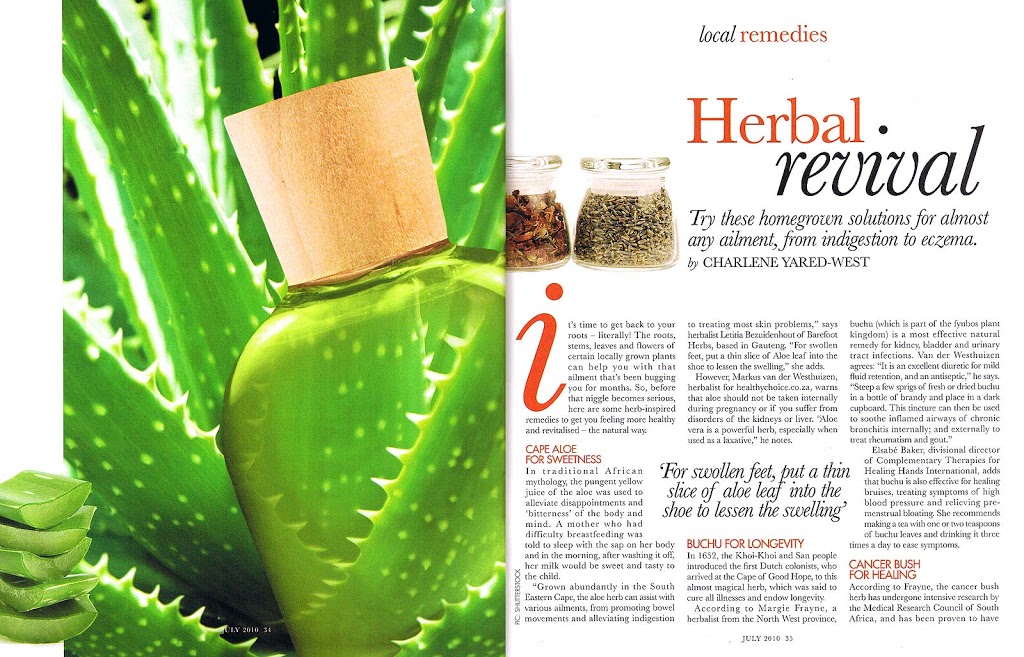
Herbal revival

It’s time to get back to your roots – literally! South African roots, stems, leaves and flowers of certain locally grown plants can help you with that ailment that’s been niggling at you for months. So, before that niggle becomes serious, here are some herb-inspired remedies to get you feeling more vital and healthy – the natural way.


Cape Aloe for sweetness
In traditional African mythology, the pungent yellow juice of the Aloe was used to alleviate disappointments and bitterness of the body and mind. A mother who had difficulty breastfeeding her baby was told to sleep with the sap on her body and in the morning, after washing it off, her milk would be sweet and tasty to the child. “Grown abundantly in the South Eastern Cape, the aloe herb can assist with many different ailments, from promoting bowel movements and alleviating indigestion to treating most skin problems,” says herbalist, Letitia Bezuidenhout of Barefoot Herbs. “For swollen feet, put a thin slice of the aloe leaf into the shoe and the swelling will lessen.” Markus van der Westhuizen, herbalist of Healthy Choice, warns that aloe should not be taken internally during pregnancy or if you suffer from disorders of the kidneys or liver. “Aloe vera is a powerful herb, especially when used as a laxative, which has been used for centuries,” he adds. 


Buchu for longevity
In 1652, the Khoi-Khoi and San people introduced the first Dutch colonists who arrived at the Cape of Good Hope to this almost magical herb, which was said to cure all illnesses and endow longevity. According to Margie Frayne, herbalist from the North West province, buchu, part of the fynbos plant kingdom, is a most effective natural remedy for kidney, bladder and urinary tract infections. Van der Westhuizen agrees; “It is an excellent diuretic for mild fluid retention, and an antiseptic,” he says. “Steep a few sprigs of fresh or dried buchu in a bottle of brandy in a dark cupboard. This tincture can then be used to soothe inflamed airways of chronic bronchitis internally and externally to treat rheumatism and gout.” Elsabé Baker, divisional director of Complementary Therapies for Healing Hands International adds that buchu is also effective for healing bruises, treating symptoms of high blood pressure and relieving pre-menstrual bloating. She recommends making tea with one or two teaspoons of buchu leaves and drinking it three times a day to alleviate symptoms. 


Cancer bush for healing
According to Frayne, the cancer bush herb has undergone intensive research by the Medical Research Council of South Africa and has been proven to have powerful healing compounds for treating diabetes and certain cancers. “It has also shown to reverse the wasting associated with cancer, HIV/AIDS and tubercolosis,” she says. Traditional health practitioner or Igquirha, Peter von Maltitz, founder of Zanemvula Traditional Healing, suggests taking about half a teaspoon of cancer bush dried leaves in the form of a tea. “This drink is excellent for when you can’t seem to get warm – even with warm clothes or blankets,” he says. Bezuidenhout points out that those on anti-retrovirals should be cautious when using the herb, as it might interfere with their therapy.  “As always, consult a specialist before you start using herbs to self-medicate,” she says. “It is also shown to be very good in stimulating weight gain, appetite and overall well-being and decreasing anxiety and stress.”

Wild Dagga for strength
Commonly found in many gardens, the wild dagga plant is an attractive, tall herb with tufts of bright orange flowers and is a magnet for sunbirds. It is not of the same plant family as the narcotic dagga plant, nor does it resemble it. “Wild dagga, also known as ‘lion’s ear’ is a great medicine to help alleviate fear and stimulate courage and strength,” says von Maltitz. “It can be chewed, taken as a tea infusion for the heart, or bathed in.” Bezuidenhout adds that the Zulu and Xhosa people use the leaves as a poultice for snakebites, scorpion stings and spider bites. “Some people also smoke the resinous flowering tops and leaves as a euphoriant, but caution should be taken, as it is mildly addictive – although there is no proof to date of this,” she says. In addition, wild dagga can be used externally for the relief of haemorrhoids, eczema, skin rashes and boils, explains van der Westhuizen. “It can also be used internally for the treatment of hypertension, coughs, fever, headaches, sinusitis, hayfever and other allergies, colds, flu, chest infections, diabetes, eczema, epilepsy, delayed menstruation, intestinal worms and constipation,” he adds. 


Blue Mountain Sage for peacefulness
Another plant native to South Africa, the Blue mountain sage can be used as an alternative to the Australian tea tree oil. “Place a few leaves in boiled water and drink as needed,” says Diane Aldworth, herbologist in the KwaZulu-Natal Midlands. “Alternatively, you can place five drops of oil into a teaspoon of almond oil and massage the affected areas for abdominal cramps, to ease the aches and pains of colds and flu or for skin irritations, nappy rash, shaving rash and scratches.” Baker adds that it can ease sore throats, flatulence, heartburn, colic, and cramps. “It also assists in calming you down mentally and emotionally – and is great to use for pre-menstrual stress and other symptoms, easing menstrual cramps at the same time,” she says. 


Rooibos for rest
“Rooibos was first introduced to botanists in 1772 by the Khoi people of the Cederberg region of the Western Cape – and has been cultivated since then,” says Aldworth. “Rooibos contains zero caffeine, a low tannin content and is antioxidant-rich, which may help protect against free radical damage that can lead to cancer, heart attack, and stroke.” Consumed as a tea, it can help as a digestive aid, to alleviate insomnia, and is rich in vitamins and minerals. Baker points out that it slows down the ageing process and prevents diseases like cancers and heart conditions, whilst maintaining healthy skin, bones, teeth, and assists in metabolic processes.  It is also great for the skin. Bezuidenhout shares her skin cream recipe for skin ailments; “Take one cup of aqueous cream and a half a cup of dried rooibos leaves and mix it together in a double boiler. Once the aqueous cream has melted, allow the mixture to simmer for 20 minutes. Strain the mixture through a sieve and add one tablespoon of honey and pour into jars – and voila! You now have a cream that can help heal a multitude of skin problems.”

African Wormwood for courage
It is said that good old Jan van Riebeeck noted the African Wormwood in his diary, writing that it was used for a variety of complaints – from gout to jaundice. This plant is known in Xhosa as umhlonyane which translates as “courage” and is still used as their first aid remedy. “It can be used for a wide variety of conditions, including colds, headaches and bronchial complaints.  It is a tonic which contains anti-inflammatory and anti-septic properties and can also be administered as an anti-depressant,” says Baker. “It relieves colic, blocked nasal passages, indigestion, loss of appetite and expels intestinal worms, as well as helps to  relieve aches and pains, clear acne and boils, and also to disinfect cuts and wounds.” She suggests wrapping some warmed leaves around sprains and swellings – or even on the stomach to relieve aches, pain and discomfort. Aldworth also suggests drinking African Wormwood as a tea, sweetened with a little honey to help feel better. “It is widely distributed in South Africa, and is an ancient medicinal plant that is still widely used by people of all cultures.”


African Potato for immunity
African Potato, otherwise known as Inkomfe or SA’s ‘miracle muthi’ was used in the Zulu tradition as a powerful emetic against nightmares and in Sotho folklore; it was used as a charm against lightning and storms. Today is known for being an overall tonic and proves to be effective in the treatment of reproductive disorders and prostate problems.  It can also be used to treat tumors, such as testicular tumors and is also recommended for people living with HIV / AIDS, because of its powerful immune boosting properties, explains Baker. Van der Westhuizen also points out that it can be used for reducing inflammation and also for treating symptoms of rheumatoid arthritis. Rather than making your own home remedy, it is advisable to use a commercial health supplement or herbal remedy that is readily available. Says Aldworth; “As a topical application in a base cream it can benefit eczema, psoriasis and skin lesions caused by the sun.”


All good things in moderation, from the experts…

  • At a maximum, use a herbal remedy for 5 to 10 days, then skip a few days. 
  • If a herb is taken therapeutically, it must be assumed that this is a drug like any other – and a safe dosage must be consumed. 
  • Always start with the lowest recommended dosage and monitor your response. Should there be any unpleasant side effects such as rashes, dizziness, nausea or headaches, stop taking the herb immediately!
  • Remember herbal remedies are extremely potent and can have side-effects and that natural medicine does not replace the advice of your doctor. 
  • Should you have any side-effects, stop using the herbs immediately and consult your doctor and herbalist.
  • Herbs should be treated with respect.  ‘Less is more.’ Many are under the impression that because it is natural, it is automatically safe too. This is not true – as some herbs can work against allopathic medicine, or block their activity by adhering to the receptor sites for the drugs. This is especially true of Hypericum that can block off 95% of the receptor sites. 
  • A lot can go wrong if you take the wrong herbs, especially since herbal mixtures are normally concentrated. 
  • Remember that herbs are plants – and as in food, it is not unheard of for allergic reactions to occur. It is best to consult a herbalist if you are not sure.
  • Each herb will have its own recommended dosage, so do not self-medicate unless you have discussed this with someone knowledgeable in the use of herbal medicines. Your age and vitality also determines dosage. 

Hemp, the taboo herb
“Hemp is prized for its medicinal qualities and the omega rich oil in the seeds,” says director of Hemporium, Tony Budden. “It is also useful because of the range of products that can be made from the plant – from textiles, to paper to building materials. There are literally thousands of uses for hemp.” Hemp is made from the cannabis sativa variety, which has no narcotic use – unlike it’s ‘narcotic cousin’, marijuana. “It was only during the last century that cannabis hemp has been associated with the drug dagga and therefore banned in many countries,” he says. “For 8000 years or more before that, it was the world’s largest agricultural crop, producing the majority of our fibre, paper, fabric, lighting oil, medicines, as well as food oil and protein for both humans and animals.” Bezuidenhout adds that cannabis is mentioned in the ancient Chinese pharmacopoeias dating back to the 5th century BC, where it was used for inducing sleep and easing pain. “Today, marijuana is often abused, but is also useful for patients of chemotherapy and radiation therapy and for HIV/AIDS patients to decrease nausea, improve appetite and relieve pain,” she says. 


Indigenous massage home recipes
“I believe that using what grows in one’s immediate surrounds is more suited and beneficial to us than something that’s grown in a different climate, altitude and season and had to travel far to reach our shores. We import no oils and rigorously support our local farmers,” says Sue Pugh of Still Pure Essential Oils and Handcrafted Products. “Our flora, indigenous to SA is fairly new to the essential oil arena, so exciting discoveries are being made every day about the properties and uses for each of them.”


Sue adds that when essential oils are used, the air smells wonderful and inhaling it will benefit you on both a physical and emotional level and no harm is done to any animals or plants in the vicinity. 


Try out one of these massage recipes recommended by Still Pure to help you move easily through your day: 


Ingredients: 
Stress Buster: African Chamomile, Lavender and Cape May
Indigestion-go-away: Spearmint, Sweet Orange and Lavender
All smiles today: Cape Snowbush, Grapefruit and Mandarin


Method: 
Blends for massage should be mixed in ratio of about three drops of essential oil to one tablespoon of carrier oil, such as grapeseed, almond, olive or rosehip oil. 


Author: Charlene Yared-West, Longevity Magazine, July 2010, p34.

Rainy days with kids

“I’m so bored! There is nothing to do!” Do you dread hearing those words from your kids this Winter? Instead of plugging them into the latest tv-game or DVD movie, remember there are alternatives to keep them occupied. Keep this activity list handy for those inevitable rainy days. 

Have a bird cake tea party
Birds sometimes have a hard time finding a good source of nutrients during the colder Winter months when their food is scarce, so treat them to a delicious, easy to make seed cake bird feeder. Take a few empty yoghurt pots and make a small hole in the bottom of each. Thread a string through the holes, with a knot on the inside, so that it can be tied to a tree later. Now, into the kitchen for the fun part! Take turns squishing some birdseed, raisins, peanuts, grated cheese and lard or margerine into a mixing bowl. Once everyone has had a turn at mixing, fill the yoghurt pots with the bird cake mix and place into the fridge to set for about one hour. When the cakes have hardened, hang them outside and wait for all the feathery friends to arrive. Enjoy a pot of tea and a slice of human chocolate cake whilst watching the birds feast!

Funk up your junk 
Instead of filling up a landmine with junk – funk it up with these nifty ideas. Make a day of it with other families and ask them to empty out their craft cupboards or recycling bins, and to bring containers, boxes, bottles and any other bits and pieces they have lying around. Provide glue, sticky tape, a stapler, kitchen foil, paint, scissors and a good sense of humour, as you encourage everyone to let their imaginations run wild! You could make anything from a junk Robocop superhero, plastic doll’s house, egg box boat or something completely modern. Even better, combine everyone’s masterpieces into one giant model and get in touch with an art gallery to view your piece! (or not!)

Go on a treasure hunt adventure
Kids love a good treasure hunt, and in rainy weather, it is a great boredom-buster! Buy a few small treats like chocolate or small toys and hide them in interesting places all over the house. Write down clues for each object, and depending on the explorer’s age, you can make the clues fairly simple or quite cryptic. Each clue should lead your little treasure hunter to the pot of gold. This game is also great when played after dark, where the kids can search with a torch. Let them take pictures of their monumentous discoveries with a digital camera, before eating or playing with it! 

Have fun with play dough
Ready-made play dough is easily available in toy shops, but it’s just so easy to make – and mixing your own is half the fun you and your kids can have. All you need is a cup of plain flour, a quarter cup of salt, a sprinkle of cooking oil, food colouring, half a cup of water and some glitter to add some sparkle. Take turns with your children to knead this altogether, slowly adding the liquids to the flour and salt, until it’s spongy and feels like scone dough. Bring out some plastic cookie cutters to make interesting shapes and creative doughy objects. Voila! It’s play time! 

Create an indoor fortress 
Blankets, tablecloths, a few cushions and some torches are all you need to transform a dull evening into an evening spent in a magical fortress from a faraway land – or for the boys – the Batcave! Drape blankets and tablecloths over couches and chairs and create a soft landing with some cushions, or even a mattress. Now that your fort is ready, play some music to add to the mood and snuggle undercover with a book or your imagination, to tell some fantastical stories. Other options include colouring in or playing a fun board game to pass the time. Make sure you’ve got some yummy ‘midnight’ 10pm snacks and juice on the ready and camp out for the night. 

Make your own homemade story tape 
Being stuck indoors all day is the perfect time to make your own story tape. Get the kids together and ask them to choose their favourite story from off the bookshelf. Once they’ve chosen, sit them down with a tape recorder, a blank tape and some odds and ends to make sounds with, like beans in a box or water that can be poured from one glass to the other. Making a tape can become quite a production if a few kids are also invited over to participate. Each child can read for a while, or can take on the part of a character in the book and can also take turns to make the appropriate noises and sound effects. Make sure the kids sign the tape cover and make a copy for each of them to take home. A homemade tape makes for a great present for elderly members of the family to brighten their day!

Bake some cookies for the firemen
There’s nothing better than the smell of fresh cookies baking in the oven. Gather your children into the kitchen, making sure their hands are washed and they’re wearing old clothes for that inevitable spill or flour explosion. All you need is one and a half cups of sugar, one cup of flour, five teaspoons of butter, three teaspoons of honey and some oil for greasing the pan. Mixing all the ingredients together, get your hands sticky until you’ve formed a slightly stiff dough. Roll into small balls and place on a tray, baking for about 12 minutes until honey-brown. When the cookies have cooled, divide them between yourselves, making a pile for your local community fire station. Get the kids to each write a card to the firemen telling them how much they’re appreciated for all the hard work they do in putting out fires. Hand deliver this delightful package the next day.

Make your own music with kitchen cutlery and crockery
You have a whole orchestra in your kitchen – you just haven’t realised it yet! Pots and pans make excellent drums when beaten with a wooden spoon. And let’s not forget, glasses filled to varied levels with water and a teaspoon can make a truly magical, tinkling tune, reminiscent of a glockenspiel. If you’re a tenant in a high-rise flat, this activity might upset the neighbours, but just maybe you might be able to impress them with the melodic sounds coming from your kitchen. Add to this your own voice, fun songs, and you have a choir and an orchestra… home-grown!

Have an indoor picnic 
Who says a picnic has to be in the great outdoors? It can be just as fun having it inside the house. Perfect for making mealtimes more exciting, kids can get involved moving the lounge furniture out of the way and laying a picnic blanket over the floor. Print out some sunny day pictures from the computer, like a beach or forest scene, and stick them up on the walls to create a picnic mood. Pack a basket with some of your kids favourite goodies – or even better – get them to help prepare the picnic basket, including some cheese sarmies, salads and of course some cake or chocolate for dessert. Eat out of paper-plates to save on washing up, while enjoying a good time with your family. Food just tastes better when eaten on a blanket!

Take a walk in the rain anyway! 
Yes, some might argue it’s better to stay inside where it’s warm, but there is so much fun to be had outdoors, enjoying the rain – with a raincoat and wellies on, of course! If the rain is not too heavy and there’s no thunder and lightning, take the dog with you (if you have one) and go for a walk, looking for earthworms and splashing in mud-puddles. Watch the weather, paying close attention to the clouds and see what the little ones want to talk about. After you’ve had your fun, go back inside, dry yourselves off and enjoy a cup of hot chocolate, marshmallows and buttery rusks together. 

Author: Charlene Yared-West, Fresh Living Magazine, July 2010, p66. 

Go nuts! Nuts and seeds are good for you.


Feeling guilty about that snack of mixed nuts you just couldn’t deny? Well, believe it or not – there are good reasons to make nuts and seeds an essential part of your everyday diet.


For many years, nuts and seeds have been given a bad name for being high in fat. Thank goodness this myth has been debunked by American nutty professors and scientists alike, in at least five different studies, showing the impact of nuts and seeds on heart health. Here’s the lowdown on our top ten nuts and seeds and why we’re simply nutty about them!


Nutty all-rounder almonds
Not only do almonds have a wonderful flavour, but they also help to lower cholesterol levels in the blood and reduce the risk of heart disease, says Pick n Pay dietitian, Teresa Del Fabbro. “They are also rich in vitamin E, an anti-oxidant that helps to prevent oxidation in cell membranes and other tissues, and are a useful source of calcium, which builds strong bones and teeth and keeps them strong,” she says. 


Good night hazzzzzZZZZZZZZelnuts
Hazelnuts are no doubt a firm favourite for chocolatiers, but they are also noted for being a good bedtime snack. High in the amino acid tryptophan, you will be guaranteed more Zs during the night!  In addition, although hazelnuts are relatively high in fat, they are also significantly high in anti-oxidants that can protect against several types of cancer. 


Lean, mean, green pistachios
“Pistachios are relatively low in kilojoules compared to other nuts,” says Del Fabbro. “They are also a good source of fibre, protein, anti-oxidants and mono-unsaturated fatty acids which help to lower cholesterol levels.” For the health conscious, it is best to snack on unsalted, raw pistachios and not the salted, oil-roasted version. 


Wonderful walnuts 
A study published in the journal of the American College of Cardiology in 2006, showed that eating walnuts after a fatty meal helped to reduce the effects of clogging up the blood vessels. Other studies have also shown that eating walnuts can help your cardiovascular system, help improve brain functioning, protect your bones and even prevent gallstones. They also contain melatonin, which helps to regulate sleep. 


Chew on a few cashews
Originating from Brazil, cashews contain iron, which is essential for red blood cell function, as well as magnesium for energy and bone growth, phosphorus for strong teeth and bones, zinc for digestion and metabolism, and selenium, which helps to protect the body from cancer. Cashews also help to promote a healthy heart.


Cancer-crunching pecans
Perhaps best known for their role in the delicious pecan-pie, pecan nuts are also a good source of a variety of vitamins and minerals. “Because they are quite high in calories, pecan nuts should be eaten in moderation,” says Del Fabbro. “Pecan nuts also have anti-cancer effects and are also a good source of vitamin E.” 


Marvellous mouth-watering macadamias
Macadamia trees were first grown for their ornamental value, until someone discovered how delicious the nut was! Nutritionally, Macadamias are a rich source of B-complex vitamins, for metabolism, and fibre, for healthy digestion. Even though it has a relatively high kilojoule count compared to other nuts and must be eaten moderately, it contains anti-oxidants, which decreases the risk of certain types of cancer. 


Leading little linseed 
“Linseeds may help manage menopausal symptoms, and they are a good source of omega-3 fatty acids,” says Del Fabbro. “Rich in fibre, they can also help to relieve constipation and regulate the digestive system.”  Because linseeds are small, it is a good idea to grind them in order to release the nutrients.


Simply superb sesame seeds
“Sesame seeds help to protect the body from free radicals,” says Del Fabbro. “Sesame seeds are also a source of phytic acid, which may inhibit colon cancer, and also contains magnesium and calcium.” Eating sesame seeds in moderation could also provide relief from arthritis and help to improve vascular and respiratory health. 
These seeds should be ground down before they are eaten in order to obtain their nutritional value.


Pretty powerful pumpkin seeds
Pumpkin seeds, best eaten fresh, are very good for men’s prostate health. They also support the immune system, lower cholesterol levels and assist people suffering from arthritis, as they have an anti-inflammatory effect. Pumpkin seeds are also a good source of omega-3 fatty acids, and zinc for improved metabolism and digestion.


Don’t go completely nuts! Exercise moderation…
In 2003, the FDA approved the following health claim for a variety of nuts; “Scientific evidence suggests but does not prove that eating about 44g per day of most nuts as part of a diet low in saturated fat and cholesterol may reduce the risk of heart disease.” 


Pick n Pay dietitian, Teresa Del Fabbro agrees; “Even though the types of fatty acids found in nuts are healthy, fat is still kilojoule-dense and therefore portion sizes must be controlled. Using nuts and seeds as a topping, rather than a snack, can help to incorporate them in the right quantities,” she says. 


The lowdown on nuts and seeds

  • Nuts and seeds can certainly add important nutrients, such as monounsaturated and polyunsaturated fats, vitamins, minerals and fibre to the diet. They also add flavour, texture and interest to dishes.
  • All nuts and seeds are cholesterol-free as they are plant foods. Plain versions are usually the healthiest option (e.g. plain cashews versus salted and roasted cashews).

Author: Charlene Yared-West, Fresh Living Magazine, April 2010, p52. 

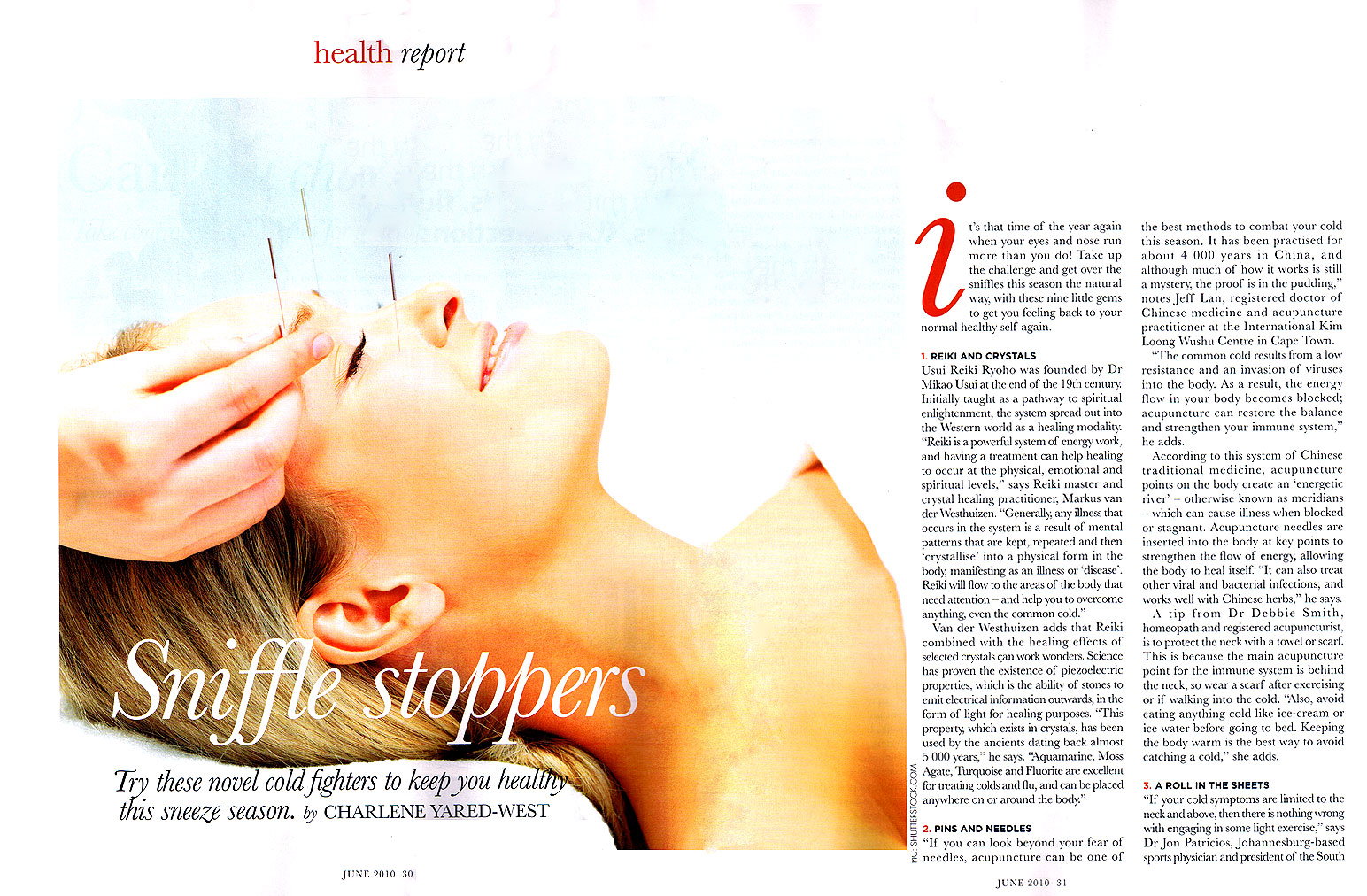
Sniffle stoppers


It’s that time of the year when your eyes and nose run more than you do! Take up the challenge and get over the sniffles this season the natural way, with these nine little gems to get you back to feeling your healthy self again.


1. Reiki, crystals and a little bit of faith
Usui Reiki Ryoho was founded by Dr. Mikao Usui at the end of the 19th century. Initially taught as a path to spiritual enlightenment, the system spread out into the western world as a healing modality. “Reiki is a powerful system of energy work and having a treatment can help healing to occur at the physical, emotional and spiritual levels,” says Reiki Master and Crystal Healing practitioner of Healthy Choice, Markus van der Westhuizen. “Generally, any illness that occurs in the system is as a result of mental patterns that are kept, repeated and that ‘crystallise’ into physical form in the body, manifesting itself as an illness or ‘dis-ease’. Reiki will flow to the areas of the body that need attention – and help you to overcome anything – even the common cold.” He points out that Reiki combined with the healing effects of selected crystals can work wonders. Science has proven the existence of piezoelectric properties, which is the ability of stones to emit electrical information outwards, in the form of light for healing purposes. “This property, which exists in crystals, has been used by the ancients dating back almost 5,000 years ago,” he says. “Moss agate, green opal and fluorite are excellent for treating colds and flu, and can be placed anywhere on or around the body.”


2. Pins and needles do the trick
“If you can look beyond your fear of needles, acupuncture is the best method to combat your cold this season. It has been practised for about 4,000 years in China and although much of how it works is still a mystery – the proof is in the pudding!” says Dr. Jeff Lan, registered doctor of Chinese medicine and acupuncture practitioner at the International Kim Loong Wushu Centre in Cape Town. “The common cold results from a low resistance in the body and an invasion of viruses into the body. As a result, the energy flow in your body becomes blocked – and acupuncture can restore the balance and strengthen your immune system.” According to this system of Chinese Traditional Medicine, acupuncture points on the body create an ‘energetic river’, otherwise called meridians, which, when blocked or stagnant, can cause illness. Acupuncture needles are inserted into the body at key points to strengthen the flow of energy, allowing the body to heal itself. “It can also treat other viral and bacterial infections and works well with Chinese herbs,” he says. According to Dr. Debbie Smith, homoeopath and registered acupuncturist, the main acupuncture point for the immune system is behind the neck, so after exercising or if walking into the cold, protect the neck with a towel or a scarf. “Also, try avoiding eating anything cold like ice-cream or ice-water before going to bed. Keeping the body warm is the best way to avoid catching a cold,” she adds. 


3. A roll between the sheets
“If your cold symptoms are limited to the neck and above, then there is nothing wrong with engaging in some light exercise,” says Dr. Jon Patricios, Johannesburg-based sports physician and president of the South African Sports Medicine Association. “Research has shown that your levels of the anti-body, immunoglobulin IgA, a protein important for strengthening the immune system and countering viral infections, increases with moderate to light exercise, however, if you have the symptoms of fever, body and joint pains, increased heart rates, or if you coughing – you should avoid exercise completely, as this might make your condition worse.” According to Professor and sex therapist Elna McIntosh, good sexual health also increases this protein in the body. “Since you have to lower your exercise to moderate levels when you’re not well, having sex once or twice a week can help you to feel better and overcome colds and flu,” she says. “And, what better way to get some exercise into the day than through having sex!” 


4. Eat, drink and feel better
“There are definitely some foods you can eat to overcome colds and flu this winter,” says registered dietician, Lila Bruk. “Eat all the green veggies you can, because they’re rich in immune-boosting, antioxidant properties. Also, your granny was right, chicken soup has anti-bacterial and anti-inflammatory properties, which are important to recover from colds and flu!” Besides supplementing with vitamins and minerals, she also recommends garlic, as fresh as possible, which also helps immunity – as well as the powerful antioxidant, curcumin, the active ingredient in turmeric, which assists with overcoming flu symptoms. “All of the above foods can play a role in boosting your immune system and thus keep you flu- and cold-free. However, these would need to be eaten very regularly to confer any significant benefit,” she says. Bruk also adds that it is very important to not expect these foods to be a panacea for all colds and flu and if you are not feeling better after a few days you should consult your doctor. Dr. Smith, agrees. “Often overlooked is the problem of dehydration. In winter, we tend to consume less water and substitute with coffees and warm sugary beverages. All the body’s systems need water to function properly, including the immune system – and excessive sugar suppresses this.”

5. Poke your nose into the neti pot
Nasal irrigation in Eastern cultures is as routine as brushing one’s teeth and has been practiced for centuries. With its roots in Ayurveda, the technique, known as Jala Neti, which translated means ‘nasal cleansing’ uses a neti pot to flow a saline solution into one nostril, through the sinus cavities and out through the other nostril. “I strongly believe in the efficacy of sinonasal irrigations, and recommend this to all my patients,” says Dr. Chris Hofmeyr, Ear, Nose, Throat Specialist of the Milnerton Medi-Clinic. Dr. Smith concurs this. “The best way to prevent sinusitis is to make sure that the nasal passages are clear of mucous blockages and the use of neti pots or any other nasal irrigation device alleviates congestion, facial pain and pressure and reduces the need for antibiotics and nasal sprays,” she says. According to Dr. Tinus van Wyngaardt, private medical integrative practitioner from Cape Town, there are less invasive ways to clear the sinuses, such as having a warm bath or standing in a steamy shower. “Humidifiers or cool mist vaporisers also help symptoms,” he says. “Adding a few drops of eucalyptus oil to the bath water or humidifier can provide rapid relief for irritating symptoms.”


6. Feel-good vibrations
The ETA-scan device, launched in 2002, has its roots in the Russian space programme and is based on the scientific discoveries of Nikolas Tesla and others in the field. It is an electronic software programme that a patient would attach to their body so that a reading can be taken. The programme contains an extensive database which contains recordings of specific vibrations affecting every organ in the body – which, simply put, measure which organs are out of sync (or not vibrating at their optimum levels) – and why. “The ETA-scanner is a wonderful tool for finding out exactly where the imbalances in the body are, pinpointing them and finding ways of overcoming the problems. Colds and flu can be as a result of any number of imbalances in the body – and those are the problems I look at – the root of the issue,” says Naturopath, Anthea Grobler. “After the scan, clients are then given a ‘resonator’ treatment to balance out the vibrations in their bodies – to start the process of overcoming their illnesses.” The treatment, she says, help with detoxification and stimulates healing to take place. “You would be amazed at the number of ailments this non-invasive machine has helped to cure – the common cold and flu are no exceptions!”


7. Avoiding others like the plague!
It might sound offensive to say that you should stay away from people who are sick, because colds and flus are just so contagious – but this is good advice, according to 
Dr. van Wyngaardt. “It is not the cold weather that causes a cold, but the fact that chilly weather causes people to congregate in small, stuffy spaces, which makes transmission of the virus easier,” he says. “Fresh air is essential and keeping your immune system as strong as you can. Public gatherings, such as the 2010 Soccer World Cup, might increase the spread of the virus – so make sure you take every precaution to protect yourself.” Dr. Hofmeyr points out that direct contact with unwell people or high-risk places should be avoided. “Of course this is not always possible – and might also be considered quite anti-social behaviour, so it’s important to make sure your immune system is strong enough to begin with,” he adds. 


8. Flush out your pipes
Enemas were recorded as early as 1500BC in an Egyptian medical document; the Eber Papyrus. And, in later years, famous surgeon and brainchild of Kellogg’s Corn Flakes, Dr. John Harvery Kellogg argued that 90% of disease is due to improper functioning of the colon. It is no surprise then that he created All Bran Flakes to encourage healthy colon functioning. “Enemas help remove excess acid from the body and toxic waste, which builds up in the cells and weakens the immune system,” says colon hydro-therapist from Somerset West, Nicola Day. “It’s always a good idea to have a colonic irrigation, unless you have bleeding haemorrhoids, ulcers or cancerous tumours. Cleansing out the system will not only provide relief from colds and flu, but will also leave you feeling lighter and more alert and have more lust for life.” A colonic, she adds, will also confirm if you have parasites and candida, which usually comes as a shock to most people – but at least it can be treated afterwards. Dr. van Wyngaardt adds that it’s important to take a good pre- and pro-biotic once you’ve had a colonic irrigation, to replenish the good bacteria for a healthier immune system. 

9. Floating the flu away
When you’re sick, the last thing you’d think of doing is lying in a tank, soaking in Epsom salts. However, according to Cape Town Medispa Director, Ian Macfarlane, this is exactly what you should consider trying out. “Flotation therapy, known as Restricted Environment Stimulation Technique (REST), might at first accelerate all the symptoms of colds and flu, and may make you feel worse before you feel better – but this is a good sign of an accelerated detox, cleansing and a restoring of homeostasis, indicating a healing from your illness,” he says. “It is an extremely simple form of hydro-therapy, but profound in its simplicity. It relaxes all the muscles, balances the hemispheres and layers of the brain, and assists one to enter into a deep meditative state, where healing naturally occurs.” The function of the Epsom salts in the water reduces or eliminates acute pain, which can be permanent after one session. Other benefits include; lessening of oedema, an increased range of movement in skeletal joints, lower perceived levels of stress, reduced feelings of fatigue and insomnia, a lower blood pressure, assistance in weight control and restoring energy levels. “To lie on your back and float in an isolation tank filled with Epsom salt water, induces deep and pleasurable relaxation, producing a flood of endorphins and other beneficial chemicals to your body, while boosting the autonomic immune system –  essential for overcoming colds and flu, through balancing body, mind and soul.”


Old Wives vs The Experts
Weird and wonderful old wives tales for overcoming the sniffles…What the experts say:


Warm your feet in hot water, then soak a thin pair of socks in cold water, wring them out and put them on. Over that, put on a pair of thick, dry socks and then go to bed, allowing the socks to do their trick overnight.

  • Dr. van Wyngaardt: Rather than destroying a perfectly good pair of socks and most likely, your bed too – take a warm steamy bath or shower that will moisturise your upper airways and relax you!

  • Dr. Smith: There is no logical reason for this to be effective, but the world often defies logic!


Apply a poultice to the chest made of fried onions and garlic to ease inflammation and loosen and break up hardened mucous. 

  • Dr. Hofmeyr: I do not feel that a poultice is medically beneficial, but would not discourage its use as the placebo effect cannot be underestimated!

  • Dr. Smith: A poultice is a good idea for immediate effect but using this with a homoeopathic cough mixture to break up the mucous will ease the effects of the mucous as well.

  • Dr. van Wyngaardt: Although this will not cause you any physical harm, it may destroy your social life! This might be beneficial, but you can get much better results from ingesting a small portion of raw onion and garlic – this will help fight the virus, relieve symptoms and boost your immune system. Take as much of the raw onion as you can tolerate with the onset of the cold and add some garlic – this combination works very well.


Drink some delicious, healing lizard soup. 

  • Dr. Lan: All medicine started in a backyard once upon a time and sometimes we must take our minds out of the backyard and move on to see the new view. Chinese medicines have many superstition-based remedies, which are no longer used as much in modern society. Ancient medicines have evolved. Back in the old days, many remedies would be used to fix ailments, but today we have a more sophisticated approach to old remedies; scientific proof! 

  • Dietician Lila Bruk: Lizard soup is claimed to help boost the immune system, as well as help to decrease stress, however there doesn’t appear to be any scientific evidence to back these claims.


Eat Vicks Vapour Rub – it goes straight to the problem.  

  • Dietician, Lila Bruk: Although a lot of people do swear by eating Vicks, there is no evidence to show that it confers any additional benefit than using it in the traditional way. In addition, the label does specify that it should not be eaten and therefore could be detrimental to one’s health to eat!

  • Dr. van Wyngaardt: Vicks Vapour Rub should never be ingested, especially by children. You could get better results with fewer side effects by just inhaling it.  There are some cold remedies commercially available with the same active ingredients that you can ingest.

Drink a hot toddy, made from hot water or tea, lemon, sugar or honey, and rum, brandy or whiskey. 

  • Dietician, Lila Bruk: Alcohol is a diuretic and therefore will cause dehydration, which can in fact make a cold last longer! Ginger has expectorant and decongestant properties and therefore helps to break down mucous and treat sinusitis and bronchitis. Ginger is also excellent for managing nausea and other stomach upsets. Honey has an anti-inflammatory effect and is soothing for coughs and sore throats. Therefore, if one wishes to add ginger and honey to a hot toddy, it would be more advisable to have the ginger and honey in hot water and omit the alcohol!


Author: Charlene Yared-West. Published in Longevity Magazine, June 2010, p30.