Kick-start your immunity!

It’s almost time to pull out those Winter woollies from the back of your closet as the days get a little nippier. Not only do you have to rearrange your wardrobe, but you also need to stock up on the usual cold and flu remedies such as Echinacea, ginger and fruits or supplements laden with vitamin C. However, starting today, you could stave off those seasonal complaints and boost your immunity with these nine easy steps to keep you fighting fit and healthy.


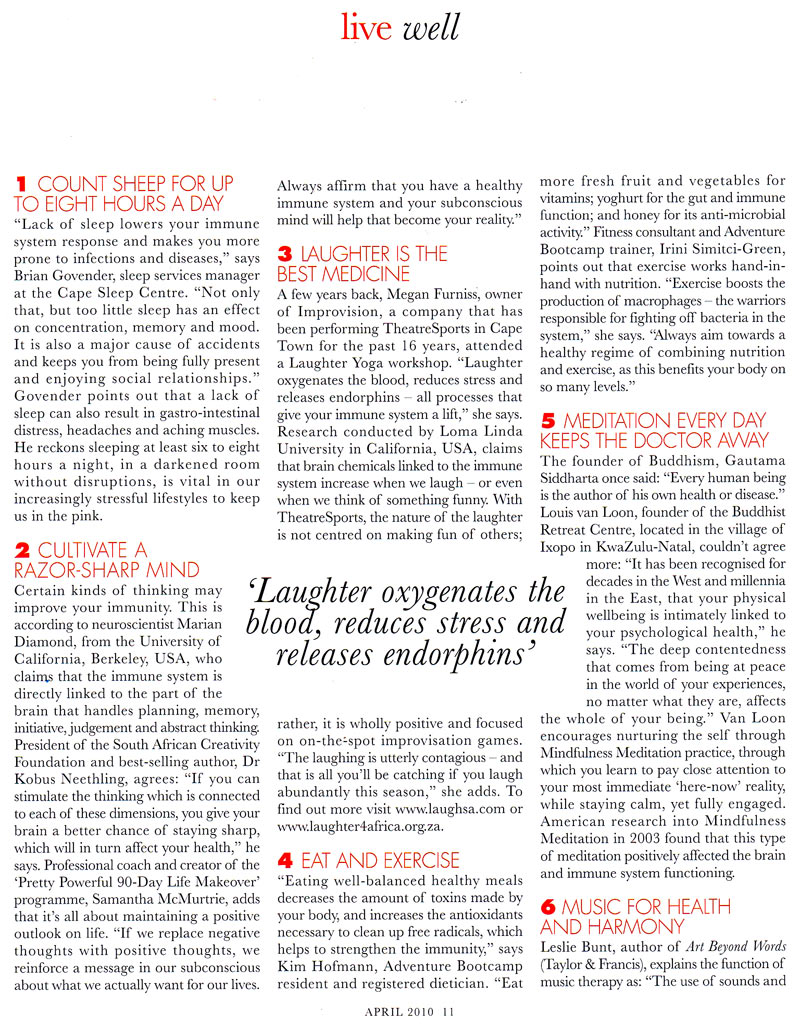
1. Count sheep for up to eight hours a day
“Lack of sleep lowers your immune system response and makes you more prone to infections and diseases,” says Brian Govender, Sleep Services Manager at the Cape Sleep Centre, located in the Gatesville Medical Centre. “Not only that, but too little sleep has an effect on concentration, memory and mood. It is also a major cause of accidents and keeps people from being fully present and enjoying social relationships.” Govender also points out that a lack of sleep also results in gastro-intestinal distress, headaches and aching muscles. Sleep he says, at least six to eight hours a night, in a darkened room without disruptions, is vital to our increasingly stressful lifestyles, to keep us in the pink. 


2. Cultivate a razor-sharp mind
Certain kinds of thinking may improve your immunity. This is according to the neuroscientist, Marian Diamond of the University of California, Berkeley, who claims that the immune system is directly linked to the part of the brain that handles planning, memory, initiative, judgement and abstract thinking. President of the South African Creativity Foundation and best-selling author, Dr Kobus Neethling, agrees. “If you can stimulate the thinking which is connected to each of these dimensions, you give your brain a better chance of staying sharp, which will in turn affect your health,” he says. Professional coach and Author of the Pretty Powerful 90-Day Life Makeover program, Samantha McMurtrie, adds that it’s all about maintaining a positive outlook on life. “It we replace negative thoughts with positive thoughts – we reinforce a message in our subconscious that we actually want for our lives, – so, always affirm that you have a healthy immune system and your subconscious mind will help that become your reality!”


3. Laughter is the best medicine
A few years back, Megan Furniss, owner of Improvision, a company performing the show TheatreSports in Cape Town for the past 16 years, attended a Laughter Yoga workshop. “Laughter oxygenates the blood, reduces stress and releases endorphins – all processes which give your immune system a lift,” she says. Research conducted by Loma Linda University in California claims that brain chemicals linked to the immune system increase when we laugh – or even think of something funny. With TheatreSports, the nature of the laughter is not centred on making fun of others – rather it is wholly positive – and focused on on-the-spot improvisation games. “The laughing is utterly contagious – and that is all you’ll be catching if you laugh abundantly this season,” she adds. 


4. Eat and exercise between your forty winks
“Eating well-balanced healthy meals decreases the amount of toxins made by your body – and increases the anti-oxidants necessary to clean up the free-radicals, which strengthens the immunity,” says Kim Hofmann, Adventure Bootcamp resident and registered dietitian. “Eat more fresh fruit and vegetables for vitamins, yoghurt for the gut and immune function, and honey for its anti-microbial activity.” Fitness consultant and Adventure Bootcamp trianer, Irini Simitci-Green points out that exercise works hand in hand with nutrition. “Exercise boosts the production of macrophages, the warriors responsible for fighting off bacteria in the system,” she says. “Always aim towards a healthy regime of combining nutrition and exercise – as this benefits your body on so many levels.”

5. Meditation everyday keeps the doctor away
The founder of Buddhism, Gautama Siddharta (563-483 B.C.) once said, “Every human being is the author of his own health or disease.” Louis van Loon, founder of the Buddhist Retreat Centre, located in the village of Ixopo in KwaZulu-Natal, concurs. “It has been recognised for decades in the West and millennia in the East, that your physical well-being is intimately linked to your psychological health,” he says. “The deep contentedness that comes from being at peace in the world of your experiences, no matter what they are, affects the whole of your being.” Van Loon encourages nurturing the self through Mindful Meditation practice through which you learn to pay close attention to your most immediate, ‘Here-Now’ reality, whilst staying calm, yet fully engaged. American research into Mindfulness Meditation in 2003 found that this type of meditation positively affected the brain and immune system functioning. 

6. Music for health and well-being
The Music Therapy Community Clinic is the only one of its kind in South Africa. Of the 38 qualified music therapists in the country, seven are located in Cape Town. Explaining the function of music therapy is author Leslie Bunt, (Art Beyond Words) who writes that “music therapy is the use of sounds and music within an evolving relationship between client and therapist, to support and encourage physical, mental, social and emotional well-being.” According to Karyn Lesley Stuart, music therapist and Music for Health project manager for The Music Therapy Community Clinic, music has a profound effect on our brain structure and anatomy. “On an immunological level, listening to certain music can influence the levels of stress hormones, like cortisol, in our bodies, as well as the number of anti-bodies in our system. This in turn has a positive effect on our immune system,” she says. “Music and being involved in music-making can help even the most ill person celebrate the healthy, able side of themselves.”


7. Meet and greet for good health
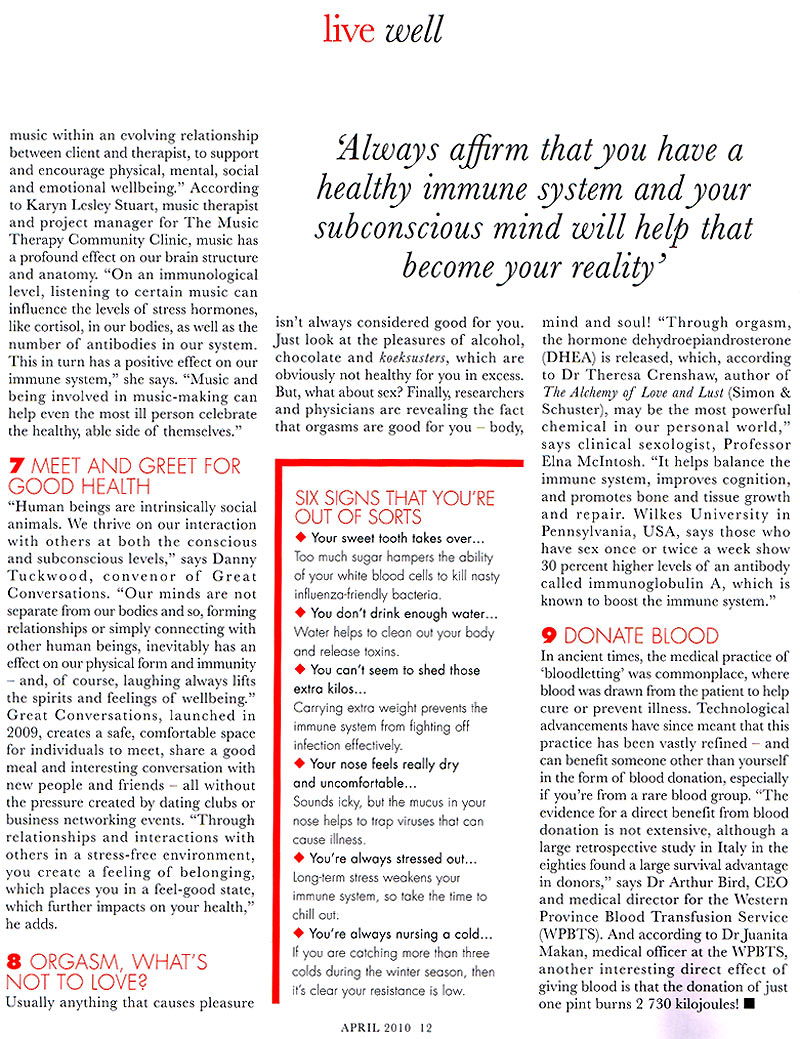
“Human beings are intrinsically social animals. We thrive on the interaction with others at both conscious and sub-conscious levels,” says Danny Tuckwood, convenor of Great Conversations. “Our minds are not separate from our bodies and so, by forming relationships, friendships, simply connecting with other human beings, we will inevitably have an effect on our physical form and immunity – and of course, laughing always lifts the spirits and feeling of well-being.” Great Conversations, launched in 2009, creates a safe, comfortable space for individuals to meet, share a good meal and interesting conversation with new people and friends alike – all without the pressure created by dating clubs or business networking events. “Through relationships and interactions with others in a stress-free environment, you create a feeling of belonging, which places you in the feel-good state, which furthermore impacts on your health,” he adds. 


8. Orgasm, what’s not to love?
Usually anything that causes pleasure isn’t always considered good for us. Just look at the pleasures of alcohol, chocolates or even koeksusters – obviously these are not good for you. But, what about sex? Finally, researchers and physicians are revealing the fact that orgasms ARE good for you – body, mind and soul.  “Through orgasm, the hormone dehydroepiandrosterone (DHEA) is released, which according to Dr Theresa Crenshaw, author of The Alchemy of Love and Lust may be the most powerful chemical in our personal world,” says clinical sexologist, Professor Elna McIntosh. “It helps balance the immune system, improves cognition and promotes bone and tissue, growth and repair. Wilkes University in Pennsylvania says those who have sex once or twice a week show 30% higher levels of an anti-body called immunoglobulin A, which is known to boost the immune system.”
9. Donate blood
In ancient times, the medical practice of ‘bloodletting’ was commonplace, where for over 2000 years until the 19th century, blood was withdrawn from the patient to help cure or prevent illness and disease. Thankfully, due to more research and technological advancements, bloodletting as a practice has been refined and now, in the form of donating blood, benefits someone beyond yourself, in need of your blood type. “The evidence for a direct benefit from blood donation is not extensive, although a large retrospective study in Italy in the 1980’s found a large survival advantage in donors,” says Dr. Arthur Bird, CEO and medical director for the Western Province Blood Transfusion Service (WPBTS). According to Dr. Juanita Makan, Medical Officer at the WPBTS, another interesting direct effect of giving blood is that the donation of one pint of blood burns 650 calories!  


Seven signs and symptoms that you’re out of sorts

  • You sweet tooth takes over…
    • Too much sugar hampers the ability of your white blood cells to kill nasty influenza-friendly bacteria.
  • You don’t drink enough water…
    • Water helps to clean out your body and release toxins.
  • You can’t seem to shed those extra kilo’s…
    • Carrying extra weight prevents the immune system from fighting off infection effectively.
  • Your nose is dry and uncomfortable…
    • Sounds icky, but the mucous in your nose helps to trap viruses which can cause illness.  
  • You’re always stressed out…
    • Long-term stress weakens your immune system, so take time out to chill!
  • You’re always nursing a cold…
    • If you are catching more than three colds in the wintry season then it’s clear that your resistance is low.

Click here to see another version of this story at the Longevity Magazine online portal. 

    Author: Charlene Yared-West. Published in Longevity Magazine, April 2010, p. 11. 

    Declutter your Mind

    It’s only the third month of the year, but it feels like you never had a break away from it all – just when did life get so busy anyway? Modern life is moving you away from being the superwoman you know you are and instead, making you forgetful, flustered and stressed out. Here are nine easy steps to help you clear out the clutter clouding your mind, and navigate your way through the chaos. 


    1. Achieve harmony through yoga
    The entire system of Hatha Yoga, comprising breath-work and postures, is designed to bring balance and harmony to the body on all levels – including the intellect, says qualified yoga instructor, Deevya Vasson. “When you’re stressed, you start thinking of a million different things on your to-do list,” she says. “It’s at those times when you’ll find it most difficult to be still and quieten your mind.” Vasson recommends doing yoga and practising various breathing techniques as a way to relax the body. “Once the body has released tension through physical exertion, stored toxins are freed from the body – and the mind becomes silent,” she says. Independent Marketing and Communications strategist and author, Clive Simpkins, agrees. “We can’t become entirely stress-free and escape the clutter, but what we can do is develop strategies for managing it,” he says. “Because I start my day in a place of calm and peacefulness, I’m able to go back ‘inside’ to that quiet place and re-group, consolidate and remind myself that this is all a game played on the stage of life.”


    2. Connect with horses to live in the now
    At the Mizpah Farm Retreat, it’s the horses that bring life back into equilibrium. Nestled between two rivers, the retreat in the Kwa-Zulu Natal Midlands has been running since 2007 as a sanctuary for anyone feeling fragmented, stressed-out, tired, traumatised or just looking to get away.  Visitors are given the opportunity to experience a guided interaction with one or more of the six horses, where the focus is on personal development, emotional healing and becoming more aware of the present moment. “Horses partner with us in this journey of exploration to help us become more aware and more connected with ourselves, each other and the environment,” says social worker, Equine Facilitated Psychotherapist and Certified Horsemanship trainer, Liesl Jewitt, who runs the retreat. “We spend so much of our energy reliving past moments and worrying about future ones that we lose the only opportunity to really live in the here and now – and these majestic animals help bring us back to the centre, stripped away of what’s superfluous.” 


    3. Karate stills the waters of the mind
    In martial arts literature, there is a phrase; Mizu No Kokuro, which literally means, ‘mind like water’. According to the founder of Black Sword Aikido, Joseph Caulfield, the phrase implies making the mind calm when facing an emergency or an adversary. He writes; “The calm mind, like still water, accurately reflects all that comes before it.” Chief instructor of the Karate Academy of South Africa, Soon Pretorius agrees; “The hard, physical training in karate demands the mind to focus, which not only improves brain capacity, but also helps to increase concentration and memory,” he says. “I believe that a healthy, peaceful mind requires a healthy body – and karate can help with all this, as well as learning about self-defence.” Pretorius points out that we often underestimate the capabilities of our minds. “We wrongly think that the mind is disorderly and has limited space – but through regular, focused training in martial arts, the mind’s capacity increases,” he adds. 

    4. A few minutes for meditation
    Gillian Barton, who coordinated the January level 1 Shambhala meditation course, takes time everyday out of her busy schedule to meditate, even if it’s just for ten minutes a day. “Meditation is incredibly simple, but it is not easy. Once you get a taste of the benefits though, you’ll want to explore this practice further,” she says. “The Shambhala vision is a fresh expression of the spiritual journey for our time and since the 1970s, over 200 centres have been set up all over the world.” Developed by Tibetan lama Chögyam Trungpa Rinpoche, these techniques help to bring clarity, discipline and a sense of spaciousness, helping to free the restless, troubled and crowded mind. “If you find it difficult to meditate by yourself, join a meditation group in your area,” she says. “Importantly, don’t be too hard on yourself if the methods come to you slowly. Don’t get caught up in perfection or the ideal way to meditate – just keep practising everyday – and things can only get better from there.”


    5. Eliminate the extras
    Make the space you live in more habitable by keeping it clear of clutter, which will have an effect on your mind, explains Simpkins. “Leading edge neuro-science indicates that ‘mirror neurons’ in our brain reflect what we see outside and it has an impact on how we think and feel on the inside,” he says. “For example, when you see someone in pain, you empathise and ‘experience’ some of their pain or discomfort. In the same way, cluttered, messy external surroundings will have a reciprocal effect on the mind. It’s not accidental that in Zen gardens, pottery, sculpture and philosophy are minimalist, concise, pristine and uncluttered.” Surrounding yourself with a lot of stuff only serves to further clutter your mind, without your fully realising it. By letting go of the objects which no longer serve a purpose to your life, he says, you make space for new and more useful things.


    6. Eat food for thought
    For nutritional chef and owner of the acclaimed Fresh Earth Food Store in Johannesburg, Matthew Ballenden, it’s simple: supply your body with good food and your brain will function optimally. “Our bodies are designed to maintain homeostasis at all times, providing that we look after it properly. A foggy mind or the inability to concentrate can easily be rectified by a well-balanced holistic eating plan,” he says. “Foods like steamed fish, raw nuts and seeds, freshly squeezed juices with ginger, Gingko Biloba and Ginseng, loads of raw salads and whole grains, will all help to achieve a sharper mind.” Ballenden recommends that refined foods high in carbohydrates and fat, as well as caffeine, sugar and alcohol, be avoided as far as possible. “Sometimes these types of foods offer a temporary solution, but will almost always leave you feeling exhausted, non-productive and somewhat scattered. They also use up valuable resources in the body that otherwise could have gone elsewhere to help you cope with daily challenges,” he adds. 


    7. Paint the town red!
    “Sometimes we think we’re robots, forgetting that we can only do so much in one day. If it’s not grocery shopping, then it’s car-pooling the kids, burning the midnight oil at work, or walking the dogs,” says sexologist and president of the Sub-Saharan Africa Society for Sexual Health Advisors, Educators, Researchers and Therapists, Professor Elna McIntosh. “It’s important to take part in at least one activity every week where you do nothing but enjoy yourself.” McIntosh suggests different activities such as a book club with the girls, a pedicure and lunch with a friend — anything, as long as you take advantage of some chore-free time, while also fostering friendships, which are indispensable to one’s mental health. Says McIntosh; “Remember what made you you before the to-do list took over!”


    8. Think positive to achieve results!
    To live a less harried lifestyle, uncluttered by the unnecessary, Simpkins talks about a solution offered in his book, Change Your Thinking, Change Your Life; “Bad habits consume valuable time, filling your life up with something that does not add value – but instead only adds to the clutter. Habits are nothing more than old thought-pathways we’ve trodden many times, so they’ve just become automated,” he says. “We don’t have to destroy or uproot them. We just need to start walking different neural pathways more frequently. In time, these new thinking patterns of the brain will become the default.” Quantum Neuro-Linguistic Programming Master Practitioner, Warren Munitz, also believes that the mind can easily be changed and that the thoughts we think create our experiences. “Many of us focus on what we don’t want, filling our minds with pointless worry and negativity, and yet, we are surprised when our lives go pear-shaped,” says Munitz. “The secret is about increasing your awareness of the filters you use to gauge incoming information – and these can be anything from core human needs, language, memories and even attitude. Once you’ve realised that these perceptions are only a filter, you can start by changing them to suit your goals.” 

    9. Escape the media once in a while
    In addition to all the responsibilities of your daily life, you end each day watching the television, checking emails or interacting online on a social network. According to Simpkins, choosing to unwind in this way only serves to do the opposite and stress you out even more. “Sensory overload is one of the biggest challenges we face as a society. Feeling strung out has become the norm for many people who don’t know how to take time out for themselves,” he says. “My motto is to reduce or eliminate activities and relationships which are not adding value to my life. So, instead of lying awake in bed thinking about an email you should’ve sent or wondering about the afternoon’s soapies, examine yourself and ask: is the world a better place because I was in it today? Your answer will help you to focus and direct you towards the right things.”


    Bonus tips for your peace of mind

    • Get that niggling thought out and onto paper for dealing with later, instead of letting it cloud your mind.
    • Let go of the idea of multi-tasking; you are a human being, not an automaton. 
    • Get more sleep and regulate your sleeping patterns, as it might be affecting you adversely.
    • Remember, when it comes to finding stillness and calm in your life, less is more – so let go of things you no longer need, whether its emotional, physical or mental. 
    • Get some physical exertion as it helps to relax the body and release stress from the mind.
    • Talk to a friend about what’s on your mind, letting them know all you need is an ear to listen to your ramblings to help clear your head.
    • Find out what your passions are and make an effort to pursue them, whether it’s an art workshop or mountain-climbing. 
    • The best things in life are free – so instead of spending the day shopping for useless things, have a picnic in nature’s great outdoors with someone special.

    Useful Contacts

    Click here to see another version of this story at the Longevity Magazine online portal. 

    Author: Charlene Yared-West. Published in Longevity Magazine, March 2010, p.12. 

    Spice it Up

    Can eating curry really improve your well-being and overall health?  Researchers seem to think so. With impossible-to-ignore health benefits, curry is said to help alleviate a number of health challenges, such as easing inflammation, activating the immune and digestive systems, releasing toxins and even killing cancer cells, amongst other advantages. Try cooking with a few of these colourful spices, good for you on so many levels. 


    Rich in colour. Explosive in flavour. High in nutritional value. Curry has been around for centuries, not only because of its characteristic warm spices, but also for its health benefits on the body and mind. Here’s a look at the ten traditional Indian food spices and why they are good for you.


    1. Gastronomic turmeric
    Often used to colour food, bitter-flavoured turmeric is bright yellow in colour and is one of the most popular of spices used for curry.  Says Enid Hudson, massage therapist, nutritionist and qualified nurse; “Containing a high level of antioxidants, it functions as an anti-inflammatory and antibiotic. Turmeric also fights free radicals, protects the liver, lowers cholesterol and is good for arthritic problems.” According to Faaiza Paruk, registered dietician for Healthinsite, although the spice has been used for centuries, scientists are only now discovering the health benefits associated with the spice. “Studies still being conducted, show that turmeric may have the properties to help prevent or destroy cancer cells, and may also help to prevent blood clotting in heart patients,” she says. 


    2. Genuine cumin
    Another wonder spice, cumin seeds are usually roasted before they are added to the dish, to enhance the flavour of the curry. “Not only is it used for its taste, but cumin is also used as a traditional Indian remedy for indigestion,” says Andrea Jenkins, nutritional therapist. “It aids the process with the secretion of digestive juices and helps to relieve pain and cramps in the abdomen.” Margit Gilliot, Ayurvedic practitioner at the Nalanda Ayurvedic Centre in Greyton, adds that cumin in hot water is excellent as a tonic for alleviating the effects of colds and fevers. “Although it is pungent in taste, cumin can help to boost your immune system. Research on cumin is ongoing, as more health benefits are constantly being discovered.”


    3. Jolly chilli
    “Capsaicin, the substance that gives chillies their heat, varies from one type of chilli to the next,” says Paruk. “This ingredient is essential in most Indian dishes and curries. Chillies are rich in vitamins and minerals, which are important for the optimum functioning of the body.” Hudson agrees; “Chillies aid digestion, improve circulation, stop bleeding from ulcers, are good for the heart, kidneys, lungs, pancreas, spleen and stomach and are useful for arthritis and rheumatism,” she says. “Hot chillies also act as a cooling mechanism for the body, as it can make you sweat and also helps to ward off colds, sinus infections and sore throats.” Chillies, when ingested, also stimulate the release of endorphins, which can help to improve your mood, enhancing feelings of happiness and joy. 

    4. Stellar ginger
    Ginger has been used as a natural remedy for many ailments for centuries in Chinese, Tibetan and Ayurvedic systems of medicine. Besides adding flavour to any dish, research has found that ginger has anti-cancer properties and reduces the growth and causes cell death in ovarian and colorectal cancer. Jenkins explains that ginger can be used for nausea and vomiting, so it’s good to keep on long road trips for motion sickness and even during pregnancy for morning sickness. Similarly to chilli, ginger brings heat into the body and promotes perspiration, which helps to lower the body temperature. 


    5. Superhuman cinnamon
    “The cinnamon tree grows in India, Sri Lanka, Indonesia, Brazil, Vietnam and Egypt. In traditional Chinese medicine, Cassia cinnamon is used for colds, flatulence, nausea, diarrhoea, and painful menstrual periods,” says Paruk. “It’s also believed to improve energy, vitality and circulation, and be particularly useful for people who tend to feel hot in their upper body, but have cold feet.” Used extensively in the system of Ayurveda, cinnamon is used as a remedy for diabetes, indigestion and colds. Recent research has also shown that merely smelling cinnamon, or chewing cinnamon-flavoured gum, actually enhances certain areas of the brain functioning and processing – in terms of memory, attention, focus, visual-motor speed and recognition. 


    6. Eureka paprika
    Paprika, discovered in Mexico, is extraordinarily high in vitamin C, says Paruk. “It is said that paprika contains as much as nine times as much vitamin C as one tomato does in weight. One would think the drying process would lessen the vitamin C potency, but instead it binds it further,” she says. Paprika is good for increasing saliva production, normalising stomach acids to assist with digestion, and it is also known to regulate blood pressure and improve circulation by providing a blood thinning agent and in some countries, it is used as an anti-biotic. As with chillies, it contains capsaicin, which stimulates endorphin production and increases feelings of wellbeing. Contrary to popular belief, the redder the colour paprika appears – the milder it is, whereas the yellow variety is very hot and flavourful. 


    7. Crimson saffron
    According to a 2005 study, a 30-milligram capsule of saffron daily for six weeks was as effective as Prozac in treating mild to moderate depression. Traditionally, the spice was used for hysteria and menstrual disorders. Ongoing research about the world’s most expensive spice suggests that there is still much to learn about this unique ingredient and how exactly it benefits the body. Says Paruk; “Other early research suggests that compounds in the spice may have anti-cancer activity, may stimulate the secretion of stomach acids, and can stimulate the contraction of smooth muscles (such as the uterus). Compounds in saffron may also have some effects on lowering cholesterol levels.”


    8. Lovely cloves
    Cloves have anti-septic, anti-bacterial, anti-viral and anti-parasitic properties and act as a digestive aid for the stomach and are also known to reduce blood sugar levels. Jenkins suggests chewing on one or two cloves to refresh the mouth and overcome bad breath. “Not only are cloves are quite versatile in the kitchen, and can be used in both sweet and savoury dishes, but they are also great for relieving coughs and colds,” she says. “They are also a natural anaesthetic, and can be used to help remedy a toothache.” Not so commonly-known, is that cloves make for a good moth and mosquito repellent and may also help to reduce the craving for alcohol. 

    9. Optimum cardamom
    “Cardamom medicinal uses range from relieving stomach dyspepsia, increasing appetite, soothing the mucus membranes, relieving gas and heartburn, and eliminating bad breath. The health benefits of cardamom are seen in treating diseases such as gonorrhoea, urinary tract disorders, cystitis and nephritis,” says Paruk. “However, care must be taken not to exceed more than a pinch of cardamom seed extracts, as excessive use may lead to impotency. Herbal teas made of cardamom and cinnamon extracts help to relieve sore throats, throat disorders and hoarseness during a bout of flu.” Gilliot points out that cardamom also helps to neutralise caffeine in coffee.


    10. Nutty nutmeg
    Nutmeg, although delicious in curry and other sweet dishes, should be used with caution, explains Jenkins, as too much of the spice is known to have a disorienting effect on the mind, and can cause delirium. “It should be taken sparingly, only by adults, because of its very strong action on the body. It is good, however, as a relaxant, and helps to alleviate insomnia and muscle tension,” she says. Nutmeg also helps to break up chest congestion and stimulate blood circulation, says Hudson. “This spice encourages food absorption, particularly in the small intestine,” she says. 


    What’s for dinner tonight? 
    South Africa’s melting pot of curries includes Indian, Thai and traditional South African styles, all with distinct flavours, unique to each culture. So, what’s the difference between them?

    • Thai Curry
      • Thai curries are the freshest and lightest of all the curries as the meat and vegetables are boiled in the curry sauce. To make them even less fattening, lean meat and light coconut milk, instead of the full cream option can be used.
    • Indian Curry
      • Indian curries are slightly heavier and can be more fattening if too much oil is used or if you have a weakness for Naan bread! On the other hand, Indian curries make for balanced meals, because of their inclusion of foods from all the food groups, such as; proteins, carbohydrates, fibre, vegetables and fats
    • South African Curry
      • South African curries are usually sweeter and fruitier than Indian and Thai curries. These curries usually contain fewer preservatives, as the meals are created from scratch. Raisins, sultanas, sweet chutney and coconut flakes are used in many of the dishes. 

    Celeb chefs curry cravings 
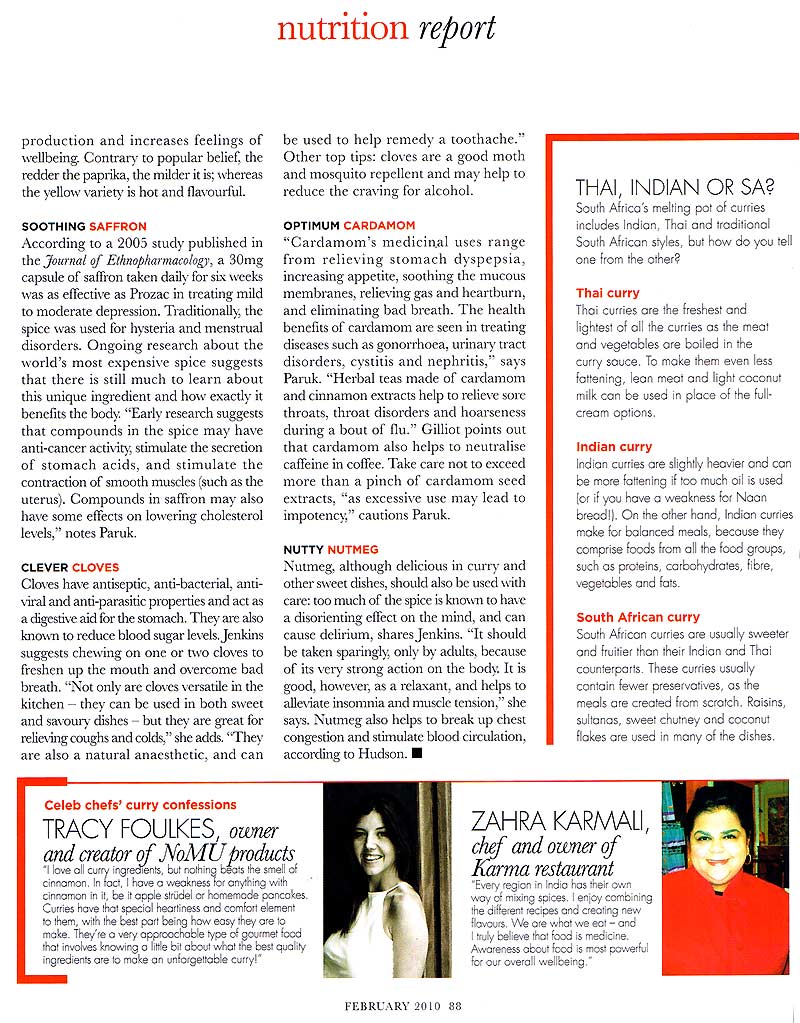
    Tracy Foulkes, owner and creator of NoMU Brands, a Cape Town-based producer and exporter of speciality food products:
    “I love all curry ingredients, but nothing beats the smell of cinnamon to get the taste buds going!  In fact, I actually have a weakness for anything with cinnamon in it, be it apple strudel, cinnamon buns, or our rainy day family favourite; home-made pancakes with cinnamon, sugar and lemon. Curries have that special heartiness and comfort element to them with the best part being how easy they are to make. Curries are a very accessible and approachable type of gourmet food that involves knowing a little bit about what the best quality ingredients will produce in an unforgettable curry!”


    Zahra Karmali, owner and chef of award-winning Karma restaurant, specialising in contemporary Indian food:
    “I love the fact that there are so many spices so full of colour, taste and incredible flavour that can be used for curry. My favourite spice is ginger – it is a wonderful aphrodisiac and is so versatile! Every region in India has their own way of mixing spices and cooking and this has inspired me in my restaurant. I enjoy the fact that I can combine the different recipes and create delicious new and innovative flavours, still using the traditional spices and ingredients. We are what we eat – and I truly believe that food is medicine. On a daily basis we recreate our body, mind and emotions, with what we put into it with nutrition and thoughts. Awareness about food is most powerful for our all over wellbeing!”


    Useful contacts:

    Author: Charlene Yared-West. Published in Longevity Magazine, February 2010, p. 87. 

    Your Feel-Fabulous Vitality Plan

    Remember what good health feels like? Put the spring back into your step this season, the natural way, with nutritional advice from the experts. 


    Whether you are hungover from the party season or just want to kick-start your way into the New Year feeling fabulous, here are nine easy steps to help you replenish, revive and recharge your batteries, so that you can function at your optimum level this summer. 


    1. Portion control for dummies 

    Portion control is important, because too much of a good thing can become bad for you, explains Jeske Wellmann, dietitian and co-author of Snacks and Treats for Sustained Energy (2008). “The key is moderation in all things,” she says. “All meals you consume should contain all the nutrients important for vitality.” Celynn Erasmus, registered dietitian and wellness professional presenter, explains that an easy way to measure portions is to use your hand as a guide. “A healthy, balanced meal should ideally consist of a fistful of slow-release, low-GI or high-fibre carbohydrate, a fistful of lean or low-fat protein, two fistfuls of vegetables or salad and a small portion of a healthy fat,” she says. “After the meal, wait for at least 15-minutes, before you go for a second helping, to give your brain the chance to register that you are satisfied and no longer hungry.”


    2. Good mood food guaranteed 
    Fruits such as berries, citrus and apples in a smoothie can give you an instant lift, says Lesley Scott, nutritionist and partner at Sound Bites Nutrition. “Eating well-balanced meals and snacks regularly throughout the day, helps to control blood sugar levels, so you’re less likely to feel mid-morning or afternoon slumps and have sugar cravings,” she says. According to Erasmus, lean proteins such as fat-free cottage cheese, tuna, legumes, lean biltong, a hard-boiled egg or a protein shake, can help to elevate the mood, as these digest slowly and also help to stabilise the sugar levels. Wellmann also suggests calcium- and magnesium-rich foods to instantly boost your vitality. Good sources of calcium include cheese, milk, yoghurt, spinach, sardines, salmon and pilchards. Foods that contain magnesium are dairy products, cocoa, nuts, pumpkin, sunflower and other seeds and grains. 

    3. Eat 5-a-Day everyday
    Jane Badham, registered dietitian and CEO of the 5-a-Day for Better Health Trust, emphasises that fresh fruit and vegetables are the portable power-packs for the season. “The summer season’s selection of vegetables and fruit is bountiful, so don’t sabotage your healthy eating habits by neglecting your 5-a-Day,” she says. “Most fresh produce is at its most delicious and nutritious when served raw with little adornment, so that the natural flavour and goodness isn’t lost in the cooking process,” she says. Badham further explains that fruit and vegetables consistently come out tops for disease prevention and better health. According to Wellmann, a daily intake of vegetables and fruit provides anti-oxidants, phyto-nutrients, vitamins, minerals, fibre and carbohydrates – all energy and health producing elements.  


    4. Vitamins for vitality
    “It is important to take a multi-vitamin supplement, as we do not always get all the micronutrients our body needs from the food we eat,” says Wellmann. “Speak to your dietitian about this to ascertain the correct multi-vitamin to suit your needs, although usually, any good multi-vitamin supplement will do.” If you are eating a balanced diet, you will inevitably consume most vitamins through the food; however without an adequate variation of foods in terms of colour, shape and texture, you might be lacking some important vitamins. “Try out one recipe every week that has one, or a few, new, tasty ingredients,” says Scott. “Food is not something that you need to eat and then burn off at the gym. It’s a wonderful, scrumptious fuel, filled with vitamins, which give you the energy you need to go out and do all the fabulous things you want to do, so enjoy it.”


    5. Mad about minerals
    Erasmus points out the importance of supplementation with minerals. “Many South Africans could be deficient in one or more minerals and the list of symptoms are long and varied,” she says. “A lack of magnesium, for example, results in food cravings, increased appetite, as well as tiredness, change in mood and a predisposition for muscle cramping.” Zinc, another important mineral for vitality is essential for a strong immune system and for maintaining the senses of smell, taste and sight in good working order. Iron is another important mineral not to have a deficiency of, says Wellmann, as it causes a lack of concentration, loss of appetite and shortness of breath. “Make the commitment to having a variety of foods and maintaining a regime of mineral supplementation, in order to live a healthy life,” she says. 


    6. The skinny on good fats
    Often we think that cutting all fats out of our diet is good for us; however, this could not be further from the truth. Says Scott; “Fat is necessary, especially for the uptake of certain vitamins.” Beneficial fats, that is monounsaturated and polyunsaturated fats, help to cushion and protect the internal organs, as well as serve as a concentrated source of energy. “Consume less trans fatty acids and saturated fats by avoiding fried, fatty and pastry-based foods and rather opt for adding small amounts of fat sources to your balanced meals. You can use avocado, olives, nuts, seeds, plain yoghurt and cheese such as feta; these are flavourful and are not needed in large amounts,” says Scott. According to Wellmann, lean protein, rich in Omega 3 fatty acids, controls the saturated fat intake, which in turn helps to lower cholesterol levels. “A good idea is to supplement with Omega 3, because we often do not get enough of this through our diet,” she says. 

    7. Choosy about carbs
    Scott warns that you should not cut out on carbohydrates in an attempt to lose weight, as they are essential for providing energy. High-fibre versions also keep you feeling fuller for longer. As a staple part of most traditional meals, carbohydrates can be healthy as long as they aren’t smothered in cream, butter and oil. The best type of carbohydrate to eat must have a low to intermediate GI-value, says Wellmann. “Carbohydrate foods that break down quickly during digestion have the highest GI-value (> 70). The blood sugar response is fast and high, which means the glucose in the bloodstream increases rapidly. Lower GI foods are associated with lower insulin levels, which makes fat easier to burn and less likely to be stored,” she says. Good carbohydrate choices include low-GI breads, baby potatoes, sweet potato, Provitas, rice and durum wheat pasta. For a comprehensive list of all GI-tested South African foods, visit http://www.gifoundation.com.  


    8. Feel fabulous fibre
    Fibre helps to keep you feeling full by adding bulk to meals, which increases volume and encourages you to chew, says Erasmus. “Have high-fibre cereal for breakfast, with at least 4grams of fibre per serving,” she says. Explaining that fibre also helps to slow down digestion, Erasmus suggests starting every dinner with a mixed green salad or home-made vegetable soup. Where possible, she encourages the use of high-fibre products, such as a seed-loaf in place of white bread, whole-wheat pasta, brown rice or barley, as a starch accompaniment. Scott agrees; “Go for the brown, whole wheat, whole grain options. Don’t peel your fruit and vegetables otherwise you’ll lose some of the fibre, and remember to remove your vegetables from the pot or steamer while they’re still relatively firm, to obtain the maximum benefit.”


    9. Gut-friendly bacteria
    Good health and vitality also equals regular bowel movements, digestion of food and healthy intestinal flora. If there is irregularity or discomfort in any of these areas of digestion and elimination, such as cramps, constipation, diarrhoea and bloating, it might be a sign of ill-health – and a bacterial imbalance, explains Martie de Wet, registered dietitian. Equilibrium can be restored by boosting the number of good bacteria present in the gastro-intestinal tract. “This is where probiotics, like Lactobacillus acidophilus, are essential. These good guys thwart the overgrowth of toxic bacteria by competing for attachment sites and nutrients in the gastro-intestinal tract, change or improve the intestinal bacterial balance, and boost the health and feeling of ‘wellness’ of the person taking the probiotic,” she says. “To cope with signs and symptoms, due to daily stress and the bad eating habits and busy lifestyles that go along with it, take your daily dose of a high-strength, strain-specific probiotic – and you will feel good!”

    10. BONUS step to vitality: Get active!
    Eating healthy, balanced meals and getting the vitamins and minerals you need is only part of regaining your vitality. Regular exercise is also necessary and promotes cellular growth, helping to rejuvenate the organs of the body. “Exercise strengthens the heart, lowers blood pressure and cholesterol levels,  helps to prevent type II diabetes, strengthens muscles and bones, reduces fat, sharpens the mind, elevates the mood, decreases anxiety and stress, and also promotes sleep, amongst other benefits,” says Dr Susan Bassett, biokineticist  at the University of the Western Cape. “Enhance your longevity by incorporating a regular exercise programme into your life and make your health a top priority!”


    It’s all about choice!
    The old adage ‘all things in moderation’ is key to maintaining your vitality, but when treats become threats and start replacing nutritious foods, then it’s high time you re-evaluate your eating habits! To opt in or to opt out – that is the question…

    • Deep-fried vs. grilled, baked or steamed
      • Opt out: Deep-fried foods are full of bad-for-you trans fatty acids and saturated fat.
      • Opt in: Grilled, baked or steamed foods usually retain more of their nutritional value.
    • Processed and refined vs. high-fibre
      • Opt out: White bread, biscuits, pastries and cakes contain many hidden bad fats, are high in sugar and contain very little fibre, which could leave you feeling sluggish.
      • Opt in: High-fibre, brown and whole-wheat products, encourage healthy digestion and increased energy. 
    • Cold drinks, alcohol and caffeine vs. stimulant-free drinks
      • Opt out: Most fizzy drinks contain high amounts of sugar and preservatives. Alcoholic drinks are high in calories and also cause dehydration. Caffeine intake should also be limited, to avoid free radical damage to the skin.
      • Opt in: It’s easy to confuse hunger with thirst when you are probably dehydrated, so make sure you drink about eight glasses of water a day. Other healthy options include tomato juice, fresh fruit smoothies and 100% pure fruit juice.
    • Sugary, fatty baddies vs. natural goodies
      • Opt out: Sweets, chocolates and ice-cream might hit the spot temporarily, but will not leave you feeling satisfied. High in fat and sugar and low in fibre, these foods should be eaten in moderation. Consumed after a meal or a snack, the portions are usually easier to control. 
      • Opt in: Make your own frozen fruit ice-lollies from real fruit and enjoy the benefits of vitamins, antioxidants and fibre. 

    Super protein-power snack ideas 
    Protein is not only an important building block for each cell of your body; it is also beneficial for a healthy immune system and increased energy levels. Try out one of these five protein-packed snack ideas, as suggested by Lesley Scott, to improve your vitality.

    1. Cocktail-size pita breads topped with tuna, sweet chilli sauce, diced cucumber and tomato.
    2. Provitas with hummus (to make your own version; blend drained tinned chickpeas, plain low-fat yoghurt, a small amount of garlic and lemon juice.)
    3. Skewers with watermelon cubes and soft, low-fat feta cubes.
    4. Plain low-fat yoghurt and papaya. 
    5. Whole-wheat slice of toast with low-fat cottage cheese and balsamic vinegar

    Top tips to help you meet your 5-a-Day quota

    • Get in at least two pieces of fresh fruit per day by starting your morning off with a smoothie.
    • Chop and add fruit to your salads. Apples, peaches, pineapple and paw-paw all work well!
    • Use soft fruits, such as banana, mango and paw-paw as sandwich fillers or toast toppers.
    • Make more vegetable-based meals, such as stir-fries, vegetable curries, soups and stews.
    • If you are eating on the run, take finger vegetables to work, such as baby tomatoes, snap peas, baby corn, baby cucumber, cucumber fingers, mushrooms, baby carrots, blanched broccoli florets, etc.  Use fat-free flavoured cottage cheese or hummus as a delicious dip! 

    Useful contacts:

    Author: Charlene Yared-West. Published in Longevity Magazine, January 2010, p. 86.

      Right Now, You Are…

      … making the most of the recession

      While we’re not suggesting that unemployment is good for you, according to the Canadian Medical Association Journal (2009), smoking, drinking alcohol and over-indulgence in rich foods decline during a recession. Interestingly, the study also showed that during the Great Depression, life expectancy rose from 57.1 in 1929 to 63.3 years in 1932. Moral of the story? What we knew all along: there’s so much more to life than money!


      … being pro-active about your health…


      “Women are taking more preventative measures to maintain their health, like talking to pharmacists about alternatives to medication that can be detrimental to them in the long run.” So says Leslie Green, senior pharmacist at PharmaCross in MediCross Cape Town.


      … single and want a baby? Oh, go on then!


      Women are doing it for themselves according to the 2009 Female Nation Survey (FNS). The study, representative of more than 600 000 South African females, showed that 65% of women have never been married, yet, 57% have children. According to sexologist, Professor Elna McIntosh, single women can buy sperm from literally anywhere in the world – on-line or in person. At pacrepro.com, semen can be purchased and shipped in from California and locally, you can talk to your gynae, or visit the Cryobank in Johannesburg or the Cape Fertility Clinic. “She can choose from any of the sperm available on-line, or at a clinic, all without a man in her life.”

      … not shy to take control in the bedroom


      Searching for something a little saucy? Good news, shopping for something sexy has never been easier – or less cringe-inducing. “Women young and old are talking more openly about sex, being more assertive about their sexual needs, and are feeling free to buy erotic products like sex toys,” says owner of Whet Sensuality Emporium in Cape Town, Marina Green.


      … loving connecting online


      Thought cyberspace was filled with geeky guys bonding over the latest iPhone app? Think again. The bloggosphere has erupted with women creating on-line communities providing a space for comfort, consolation and support. In the US, according to a social media survey by BlogHer.com, over 40-million women participate in blogs every week, with about 15.1-million publishing at least one post a week and 21.1-million reading and commenting weekly. “Blogging gets people in touch with each other that would not have ever communicated before,” says Sue Maude, author and blogger of caffeinefreaks.co.za.


      … caring and sharing


      Local NGO, MaAfrika Tikkun has noticed an increase in the number of women volunteering for their community outreach programmes over the last year. “Generally, women provide so much compassion to people in crisis,” says Amanda Blankfield, marketing manager for the organisation. “There is nothing that can compare to the satisfaction gained from volunteering,” says Susannah Clarke a Master’s student and researcher who volunteers for People Against Suffering, Suppression, Oppression and Poverty in her spare time. “My passion is to make a difference to people’s lives.”


      … no victim


      “South African women have been through so much pre- and post 1994, that they have built exceptionally high levels of resilience,” says Tony Dovale, Chief Resilience coach at LifeMasters.co.za. “Mindsets have also shifted from a victim mentality to taking far more responsibility for the self and ownership of their self-worth.”


      … embracing your grey


      Have a think about who in Hollywood is greying gracefully – George Clooney, Clint Eastwood, possibly even Brad Pitt come to mind? Now add a luscious line-up of ladies to your list because Jamie Lee Curtis, Emmylou Harris, Helen Mirren and Meryl Streep are all sporting silver and looking confident, graceful and stunning while they’re at it. Before going grey in her late 30s, Jackie Burger, Elle fashion director was honey-blonde. “It’s a waste of time to cover up something that happens naturally,” she says. “I’ve made a pact with myself to embrace what age brings – and I encourage all women to do the same.”


      … a dashing beauty


      With life moving as fast as a runaway train, more women are turning to permanent make-up, fake tans and even hair extensions as a way to save time on beauty procedures, says Cape Town make-up artist and hair stylist, Candice Harker. “Because of all the technological advancements and continued research into the ever-booming beauty and health market, beauty procedures are safer than ever before,” she says. Even with these new treatments available, Harker still believes that less is more. “A good lip gloss and a solid eight hours of sleep can do wonders to your look.”


      … putting family first


      What we look for in a man has changed radically since the 1930s according to a study from the University of Iowa. Researchers compared studies from the 1930s with ones conducted in 2008. In the early part of the 20 century we wanted a man who was kind, dependable and ambitious but these days we favour a man more interested in having a family and a home, ambition be damned! Men too have changed their thinking: back then prowess in the kitchen and chastity were the stuff of true romance, these days it’s love and brains. We can live with that.

      Author: Charlene Yared-West. Published in The Oprah Magazine, April 2010, Vol.9, No. 4, p. 126.(Please note that the copy posted above is the unedited version of what was published in the magazine and will differ slightly. To read the edited version of the article, please click on the images for an expanded view.)