Polycystic Ovarian Syndrome: A lifestyle-related disease?

Polycystic Ovarian Syndrome (PCOS) is common in South African women and affects about one in 10 women globally. It is caused by a complex imbalance of hormones in the ovaries.  Charlene Yared West spoke to Life Kingsbury endocrinologist, Dr Jocelyn Hellig and gynaecologist Dr Philip Zinn to find out more about this condition. 

So what is PCOS?

In a woman’s body, the ovaries release eggs each month as part of a healthy menstrual cycle.  However, with PCOS the egg is not released as easily, which leads to irregular ovulation and menstruation and can impact fertility. “The ovaries are described as polycystic because there is an excess of the fluid-filled, egg-containing sacs called follicles, all of a similar size, when seen on an ultrasound image,” says Dr Zinn. “This excess occurs due to disturbance of the growth of follicles – to the size required for ovulation.”

It’s all about the hormones… or is it? 

Dr Hellig explains that the exact cause of PCOS is unknown. “There is no one singular factor which causes PCOS. It is considered to be a complex trait arising from the interaction of genetic and environmental factors, usually first presenting when mature gonadotropin levels (hormones essential for reproduction)are achieved at puberty. It occurs naturally in primates as well as humans,” she says. “The disorder arises clinically by the presence of two out of three criteria: irregular periods or the absence of ovulation, features of high androgen levels (acne or excess hair growth) and a certain appearance of polycystic ovaries on ultrasound,” she says. 

You could be predisposed to PCOS if…

  • You have insulin resistance.
  • You have Type 2 diabetes.
  • You have unhealthy eating habits.
  • You do not exercise regularly.
  • You are overweight or obese.

Trying to fall pregnant?

If you are trying to fall pregnant, but it is proving difficult, PCOS might be the culprit, says Dr Zinn. “Many women are unaware that they even have PCOS until they start trying to have a baby. Once they start treatment and their symptoms are managed, then their chances of conceiving are increased.”

QUIZ: ✓Tick the boxes below to see if you might have symptoms of PCOS

  •  Irregular menstrual cycle 
  • Thinning hair or hair loss on the scalp (male-pattern baldness).
  • Acne on the face, back and chest. 
  • Too much hair on the face or areas where men usually have hair (hirsutism affects up to 70% of women with PCOS). 
  • Weight gain and difficulty losing weight. 
  • Darkening of skin pigmentation, along the neck, groin and under the breasts. 
  • Skin tags in the armpits or neck area. 

How is PCOS diagnosed? 

“If you think you have PCOS, make an appointment with your gynaecologist. There is no single test to diagnose PCOS, but we take your medical history and can conduct a physical exam with a pelvic ultrasound and do some blood tests,” says Dr Zinn.  Dr Hellig adds: “Of utmost importance is that PCOS is a diagnosis of exclusion and it is important for your medical professional to look for other causes of your symptoms before ascribing it to PCOS.”

  • Physical exam: Checks your blood pressure, BMI and waist size. Also checking for extra hair on the body, skin discolouration, hair loss and any other signs of excess testosterone such as an enlarged clitoris. It is important to exclude other health conditions. 
  • Pelvic ultrasound: A sonogram will examine the lining of the uterus and check the ovaries for the polycystic features. 
  • Blood tests: To check your androgen hormone levels, as well as other hormone checks, including your thyroid. 

Can I be cured from PCOS?

8Dr Hellig explains that there is no cure for PCOS, but symptoms can be effectively managed and therefore treated. “We take into account if you want to conceive, your risk of long-term health problems, especially diabetes and cardiovascular disease, and will help formulate an effective treatment plan through lifestyle changes and medication where necessary,” she says. 

What can I do to alleviate my symptoms?

Dr Hellig and Dr Zinn agree on the following steps that women can take to treat PCOS: 

  • Lose weight: This will help to stabilise your blood glucose levels and alleviate insulin resistance. Even a 5 – 10% loss in body weight can improve your chances of conceiving. 
  • Remove hair: Using facial hair removal creams, laser hair removal or electrolysis. Medication is not very effective for permanent hair removal. 
  • Hormonal birth control for women not wanting to conceive: Can help to regulate  menstruation cycles, stabilise weight, improve acne and reduce new hair growth on face and body. 
  • Anti-androgen medicines: Although not safe for pregnancy, can help reduce PCOS symptoms. 
  • Metformin: A drug used to treat type 2 diabetes and may help some women with PCOS symptoms in certain circumstances. 
What the fitness experts want you to know…

It’s time for me-time this month, and here’s some sound expert advice to help get you moving for better health and fitness.

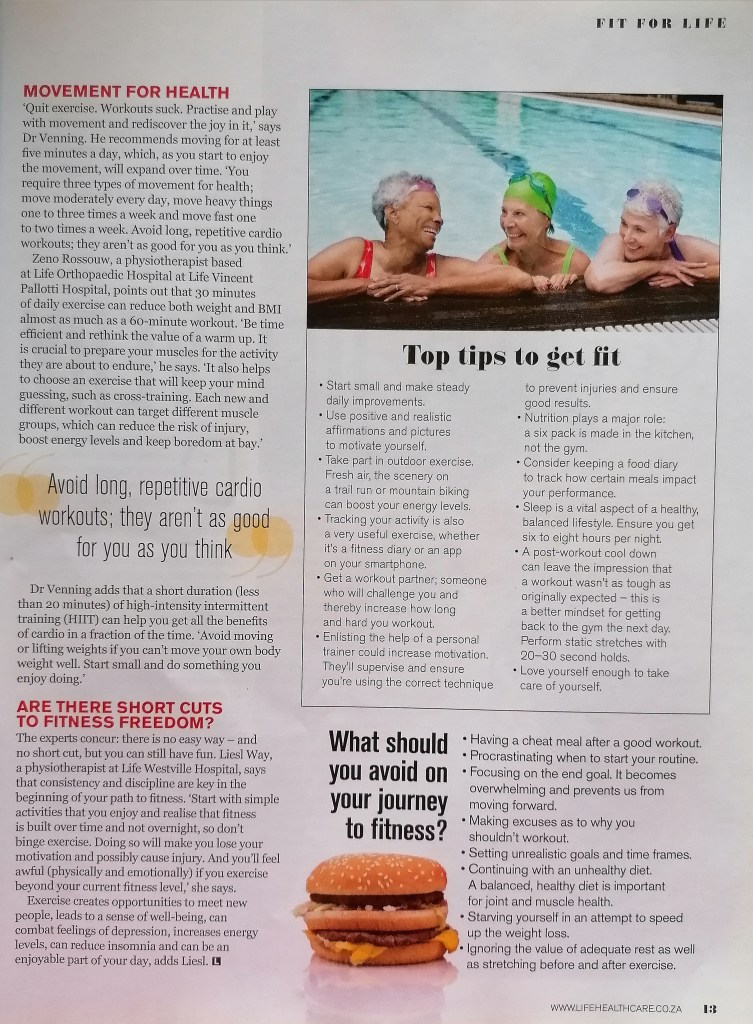
Sometimes, becoming fit and healthy is easier said than done – and for many, seems like an insurmountable challenge in their life. According to the World Health Organization, obesity has more than doubled since 1980 and in 2014, more than 1.9-billion adults were overweight. One of the best ways to avoid becoming a statistic is prioritise your health and wellness, which encompasses better nutrition, more movement and improving your fitness levels. Charlene Yared-West speaks to the experts to find out more about what you should and shouldn’t be doing to get fit – and stay fit. 

Just move!

Movement can happen in the gym or it can be tickle fights, sex, a walk on the beach, playing sport and anything that gets you moving, explains Dr Greg Venning, author and chiropractor at Peak Chiropractic in Cape Town  (capetownchiro.com). “Fitness has at least ten different components to it and human beings do best when they have competence in each of these ten. They are; strength, speed, endurance, stamina, power, accuracy, mobility, co-ordination, balance and agility,” he says. “How each person archives these is going to be personalised, as there is no single path to fitness. Find the things you love and approach them playfully and practice them for mastery. That will accelerate your short-term results as well and give you long-term staying power.” Adele Pudney, physiotherapist from ADK Physio & Hydrotherapy (wellspringcentre.co.za) agrees. “You must learn to love yourself and the movement you’re doing to be successful in maintaining your exercise goals. Be kind to yourself and reward yourself for small improvements,” she says. “See it as a journey; there will be times of great enthusiasm and other moments of total disinterest – and have ways to cope with both ends of the spectrum.” 

Movement for health

“Quit exercise. Workouts suck. Practice and play with movement and rediscover the joy in it,” says Dr Venning. He recommends moving for at least five minutes a day, which, as you start to enjoy the movement, will expand over time. “You require three types of movement for health; move moderately everyday, move heavy things one to three times a week and move fast, one to two times a week. Avoid long, repetitive cardio workouts, they aren’t as good for you as you think,” says Dr Venning. Zeno Rossouw, physiotherapist based at Life Orthopaedic Hospital at Vincent Pallotti agrees and points out that 30 minutes of daily exercise can reduce both weight and BMI almost as much as a 60 minute workout. “Be time efficient and rethink the value of a warm up. It is crucial to prepare your muscles for the activity they are about to endure,” he says. “It also helps to choose an exercise that will keep your mind guessing, like cross training. Each new and different workout can target different muscle groups, which reduce the risk of injury, boost energy levels and keep boredom at bay.” Dr Venning adds that a short duration (less than 20 minutes) of high intensity intermittent training can help you to get all the benefits of cardio in a fraction of the time. “Avoid moving weights around if you can’t move your own body weight around well. Start small and do something you enjoy doing,” he says. 

Are there shortcuts to fitness freedom?

The experts concur: there is no easy way – and no shortcuts, but you can still have fun anyway!Liesl Way, physiotherapist at Life Westville Hospital says that consistency and discipline are key in the beginning of your path to fitness. “Start with simple activities that you enjoy and realise that fitness is built over time – and not overnight, so don’t binge exercise. Doing so will make you lose your motivation and possibly cause injury – and you will feel awful (physically and emotionally) if you exercise beyond your current fitness level,” she says. Exercise creates opportunity to meet new people, it leads to a sense of well being, can combat feelings of depression, increases energy levels, can reduce insomnia and can be a very enjoyable part of your day, adds Liesl. 

<SIDEBAR> What you should be avoiding on your journey to fitness?Having a cheat meal after a good workout.Procrastinating when to start your routine.Focusing on the end goal. It becomes overwhelming and prevents us from moving forward.Making excuses as to why you shouldn’t workout.Setting unrealistic goals and time frames.Continuing with an unhealthy diet. A balanced, healthy diet is important for joint and muscle health.Starving yourself in an attempt to speed up the weight loss.Ignoring the value of adequate rest and stretching before and after exercise.
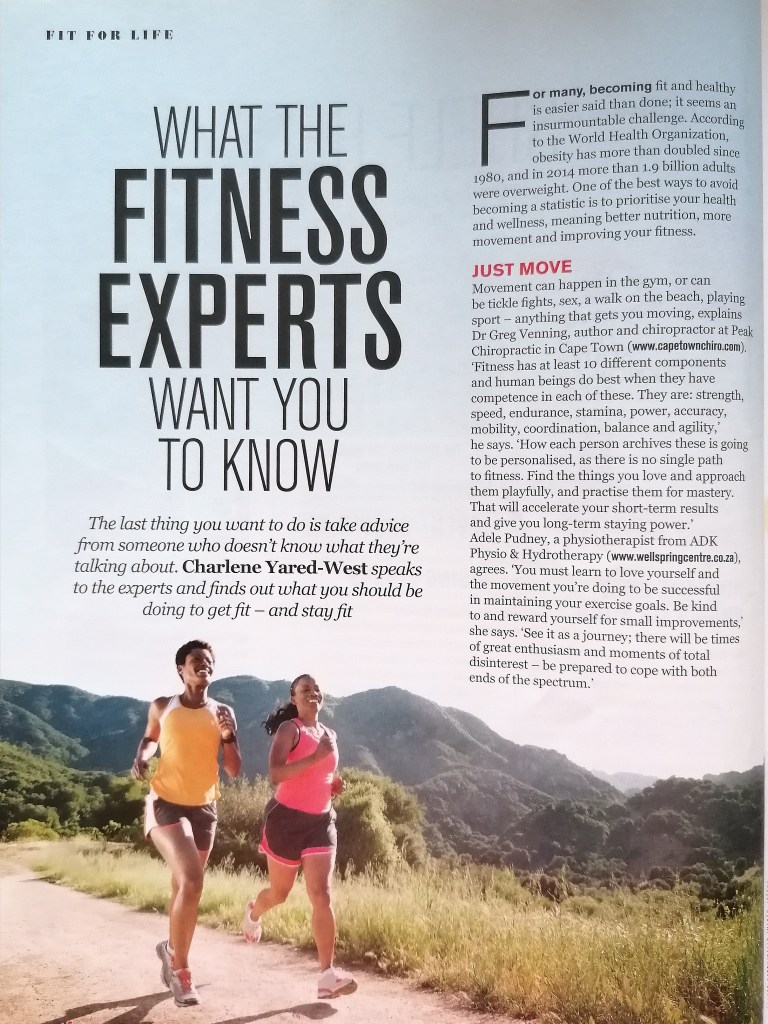
<SIDEBAR> Top tips for getting fitStart small and make steady daily improvements.Use positive and realistic affirmations and pictures to motivate yourself.Take part in outdoor exercise … Fresh air, scenery like a trail run or mountainbiking can boost your energy levels.Tracking your activity is also a very useful exercise, whether it’s a fitness diary or a high-tech app on your smartphone.Grab a workout partner, but also someone that will challenge you and thereby increase how long and hard you workout.Enlisting the help of a personal trainer could help to motivate you. They can supervise and ensure that your technique is flawless preventing injuries and ensuring good results.Nutrition has a major role to play, as people have heard that the six pack is made in the kitchen and not at the gym. People should consider keeping a food diary to track how certain meals impact their performance.Sleep is also a vital aspect of a healthy balanced lifestyle. Ensuring that we have between 6-8 hours will also help boost our fitness levels. A post workout cool down can leave the individual with the notion that the workout wasn’t as tough as they originally expected. A better mindset for getting back to the gym the next day. Performing static stretches whereby a 20-30 second hold is best.Love yourself enough to take care of yourself.