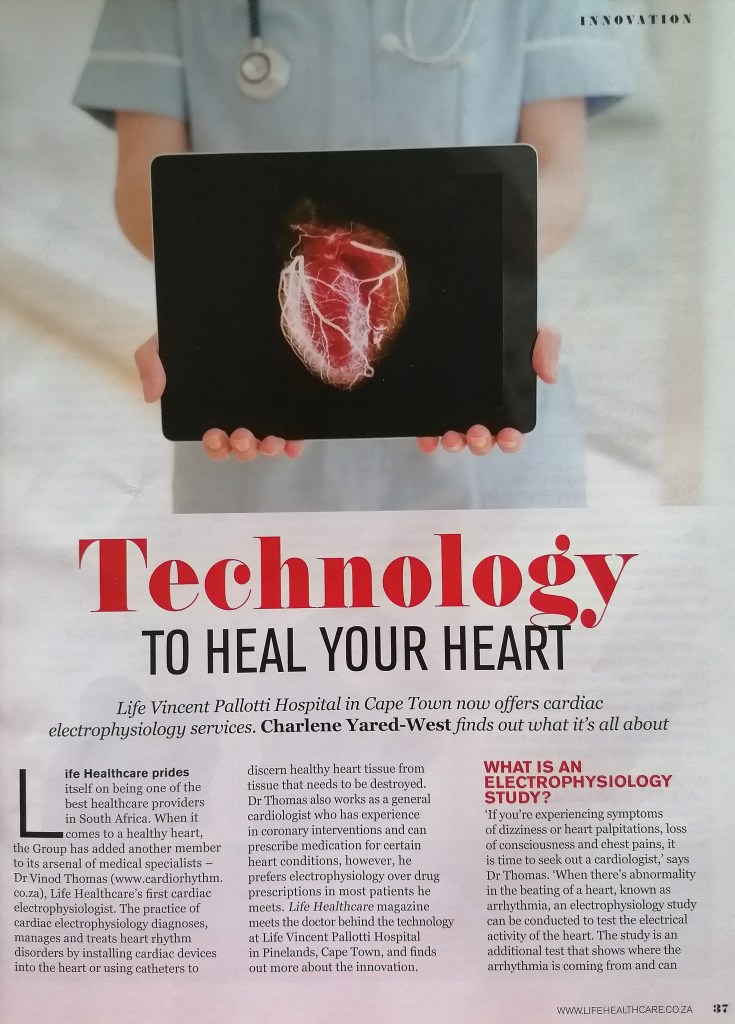
Novalis Tx leading the way in cancer treatment on the African continent
Life Healthcare Vincent Pallotti Hospital in Cape Town has just made substantial upgrades to its successful “first for Africa” multimillion-Rand Novalis Tx radiotherapy equipment, otherwise known as Novalis Radiosurgery, which allows for faster and more accurate targeting and treatment of previously untreatable tumours. Charlene Yared-West finds out more and meets the team behind the technology.
Can cancer really be beaten?
Cancer has become so common as more and more people are diagnosed with some form of the disease. Sadly, we are all programmed to think it could never happen to us or to someone we love, but then it does… A family member, a friend or a colleague. The question we want answered then is; can cancer be beaten? Research from the University College of London School of Pharmacy projects that worldwide, cancer is expected to reach 26-million new diagnoses and 17-million deaths by 2030, however, because of the new therapies, pharmaceuticals and technologies that are constantly being developed, like the Novalis Tx equipment, many forms of cancer could be eradicated for most age groups by the year 2050.
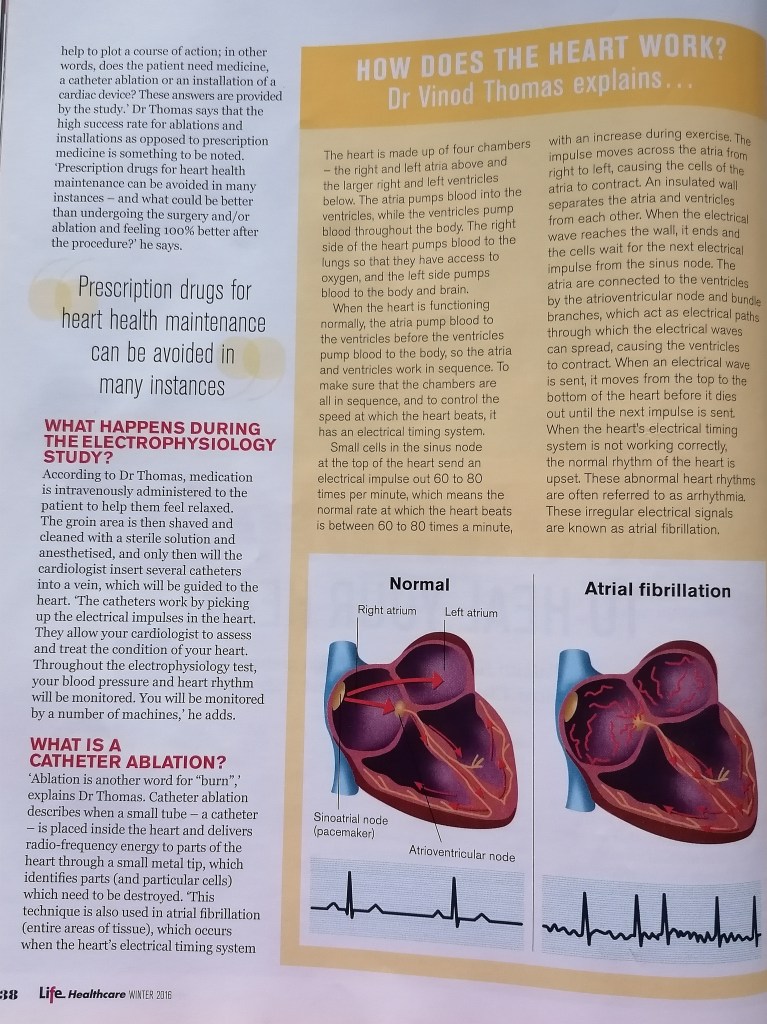
Last year, it was reported that over 1-million patient treatments worldwide had been performed with the Novalis Tx machine, since it was created in 2003, calculated at an estimate of 200-thousand treatments per year. Studies have shown that one out of every two cancer patients can benefit from Novalis Radiosurgery, which is good news for people diagnosed with various forms of cancer. “I believe that this machine offers top-end technology which allows us to treat our patients with a high degree of accuracy and due to its high output can also minimise treatment times,” says Dr Rainer Fröhling, Radiation and Clinical Oncologist at Life Healthcare Vincent Pallotti Hospital in Cape Town. “It allows us to target cancers in sensitive areas and minimise side effects and in conjunction with other treatment modalities, offers the chance of better outcomes to our patients.”
Novalis Radiosurgery: Saving lives without the need for scalpels
The Novalis Tx has been in operation since 2003 in selected countries around the world and was launched in South Africa at Life Healthcare Vincent Pallotti in December 2013, ten years after its inception. It is a non-invasive radiotherapy which uses state-of-the-art high-tech systems to destroy cancer anywhere in the body in short 20-minute sessions, without the need for surgical incisions or serious operations.
So, how does it work?
The machine with it sleek design, rotates around the patient from every angle, delivering the radiation beams where needed onto the body. The team of attending medical professionals including oncologists, a medical physicist and radiotherapists manage and guide the Novalis Tx skillfully, obtaining the necessary information about the tumour during the treatment.
“The Novalis Tx is used to treat both malignant and benign conditions. In simplest terms, it produces radiation in the form of photons and electrons used in radiotherapy, which cause damage to the structure of a tumour cell which causes the tumour cells to die and for the tumour to shrink – and this can be seen in follow-up scans,” explains Dr Fröhling. “The Novalis Tx produces the radiation which then enters the patient from the outside and targets the tumour on the inside of the patient. The machine has technology to make its treatment as accurate as possible and has an array of imaging tools to ensure precision.”
The machine is so smart, says Dr Fröhling, that it can take into account the patient’s breathing, so as to focus the radiation beam on the tumour only, while minimising the radiation dose to the normal tissues around the tumour. “These highly focused treatments are particularly useful for brain tumours, as well as those found in the lung, pancreas, spine and liver, where one has to be extremely careful not to damage surrounding tissues – and where surgery would be very difficult,” he says. Dr Fröhling adds that the machine is linked to sophisticated software to plan the treatment, assess the dose and positioning of the radiation in the patient and deliver the radiation with a high degree of accuracy.

How does it compare to other cancer therapies?
Besides its acute precision to the millimetre, normal tissues are increasingly spared of radiation damage and this can therefore also lower the side effects of the treatments and the Novalis TX shapes the radiation beam precisely to match the tumour or lesion. Conventional radiotherapy also usually takes place over an extended time frame of between two and six weeks, whereas Novalis Radiosurgery is much shorter and can be done in as little as one treatment in certain cases. “I do believe that the technology available to us with the Novalis Tx allows for highly accurate radiotherapy and, in the correct indication, this accuracy is clinically relevant,” says Quinton Africa, Lead Therapist at the Novalis Tx unit at Life Healthcare Vincent Pallotti Hospital, Cape Town. “Chemotherapy and surgery maintain a vital role in the successful treatment of many cancers and all available treatment options should be accessible to our patients to maximise their results. Radiotherapy on certain brain tumours may lower the extent or eliminate the need for surgery and so, decrease surgery-related death.” The cost of treatment with the Novalis Tx is more than conventional radiotherapy but with the correct motivation for the correct indication it is considered by most medical aids. Eligibility for radiosurgery depends on the type and location of the tumour and the extent of the patient’s disease and is determined on a case by case basis.
Minimal side effects
Novalis Radiosurgery does not require anaesthesia and usually, there is no scarring and very little risk of infection when compared to conventional surgery, explains Mr Africa. “You might however experience a headache, dizziness and fatigue immediately after treatment, so it would be advisable to arrange for transport home after the treatment,” he says.
Meet the team behind Novalis Tx Radiosurgery at Life Healthcare Vincent Pallotti Hospital
The specialised Oncology Centre at Life Healthcare Vincent Pallotti hospital embodies a multidisciplinary team approach to cancer care – a distinction the unit is very proud of. Patients are treated by a team of oncologists, radiotherapists, medical physicists, nurses, surgeons, psychologists and other cancer specialists that work together for a truly multidisciplinary approach to cancer treatment in a modern, convenient and comfortable setting. One member of the treatment team, radiotherapist, Lesle Campbell, explains that it is her responsibility to deliver accurate treatment and ensure that patients are informed, happy and well cared for. “I respect the fact that I am helping patients at a very difficult time in their lives. I am able to listen, encourage and support as well as actively partake in helping them overcome cancer,” she says. “I also love that my job is technically challenging and that each day brings a new challenge. It is not an easy career path , but a rewarding one.” Another staff member, radiotherapist, Jamie-Lee van Niekerk ensures that treatment given on the Novalis Tx is administered with minimal discomfort for patients. “It is amazing to see how technology has changed the landscape of cancer care,” she says. “It is a very fast-paced job that advances and changes all the time. This is part of why I love what I do.” Radiotherapist, Lucinda Oosthuizen, also part of the team explains that a large part of her role is to listen to the stories of the families she sees. “We have to inform the families about treatment and the side effects – we really do build strong relationships with our patients,” she says. “The gratitude most patients display for the role we have played in their lives and their treatment journey and seeing their condition improve is rewarding and fruitful.”
<TEAM PHOTO WITH CAPTION DETAILING NAMES AND ROLES OF EACH TEAM MEMBER TO WORK ON THE NOVALIS TX – PIC TO COME ON MONDAY.>
| <Sidebar> Novalis Tx equipment to be rolled out in Pietermaritzburg later this year Hopelands Cancer Centre has the largest group of specialist oncologists in Kwazulu-Natal, caring for patients with cancer across the province. “After its successful launch in Cape Town, we are excited to be able to offer access to this unparalleled treatment equipment to our patients at what will be only the second Novalis Tx facility on the continent,” says Dr Ziad Seedat, Radiation and Clinical Oncologist at Hopelands Cancer Centre in Kwazulu-Natal. “Life Healthcare is currently assembling a talented and experienced team to operate the equipment and achieve the highest levels of service quality for patients. Our doctors have been training in Germany over the past three years to improve our skills and make maximum use of capabilities of the new equipment. In conjunction with our surgical colleagues, this facility will allow for curative therapy of tumours that cannot be completely removed safely.The speed and precision of this machine in targeting both malignant and benign tumours in intra- and extracranial locations is beyond compare.” |
| <Sidebar> Other treatable conditions with Novalis Radiosurgery According to Dr Fröhling, the machine can be used to treat malignancies, benign tumours and some non-cancerous conditions, included in the list below. “We are finding new ways of using the technology to treat various conditions all the time, the sky is the limit,” he says. “The patients who entrust us with their care are our daily motivation. Working with a team of dedicated radiotherapists, planners, a physicist and oncologists allows us to get the best out of our equipment for our patients.” Some of the conditions that can potentially be treated include;Malignant brain tumours ( metastasis from other cancers, primary brain tumours, tumours of the skull )Benign tumours of the brain and in the head and neck area ( meningiomas, acoustic schwannomas, pituitary adenomas), Functional pain conditions ( trigeminal neuralgia)Blood vessel malformations ( arterio-venous malformations)tumours involving the occular structurestumours close to the spine where radiation dose to the nerves/ spinal cord needs to be minimisedMalignant tumours of the pancreasLiver tumours such as metastasis Lung tumours – primary lung cancers and metastasis |
 Charlene Yared West