Healing from incontinence

Urinary incontinence is common in pregnancy and is reported by about 60 percent of women. For these women, the severity of their condition can increase during the course of their pregnancy, especially peaking in the second and third trimesters. Of these women who experience incontinence in pregnancy, 70 percent go on to resolve the condition postpartum – and within the first year, the prevalence of incontinence drops down to 11 to 23 percent. Dr Bongi Makhubo, obstetrician gynaecologist from Life Anncron in Klerksdorp sheds more light on the topic. 

Early incontinence is normal

Pregnancy can affect the normal way your urethra relaxes and contracts and many women, particularly those who had a vaginal birth, can experience incontinence after childbirth. “The pubic and pelvic muscles and the anal sphincter can be injured in up to 40-80% of births and so, leaking a little bit after birthing your baby vaginally is quite within the normal range, but it is not normal if it lasts for months afterwards,” says Dr Makhubo. “Directly after birth, using a thick maternity pad helps to absorb the leaks, but once you have stopped bleeding and incontinence persists, you might need a specialist appointment to discuss the problem further.” 
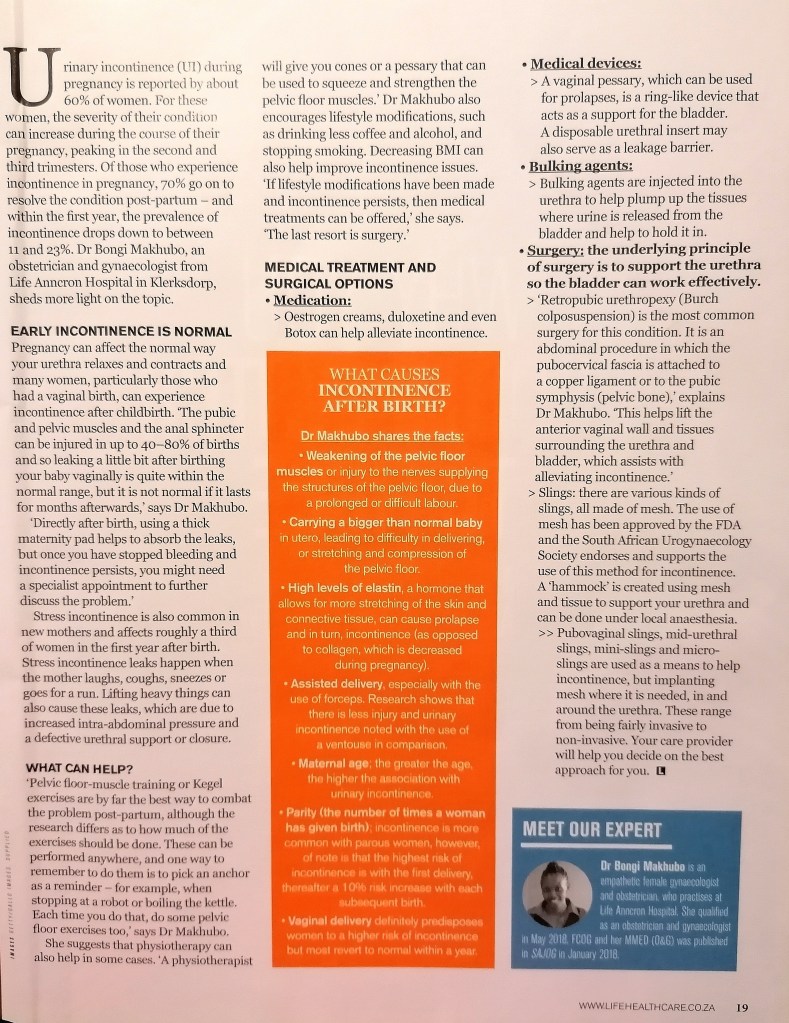
Stress incontinence is also quite common in new mothers and affects roughly a third of women in the first year after birth. Stress incontinence leaks happen when the mother laughs, coughs, sneezes or goes for a run. Lifting heavy things can also cause these leaks,  which are due to increased intra-abdominal pressure and a defective urethral support or closure.

<FACT BOX>What causes incontinence after birth? Dr Makhubo shares the facts: 

  • Weakening of the pelvic floor muscles or injury to the nerves supplying the structures of the pelvic floor, due to a prolonged or difficult labour. 
  • Carrying a bigger than normal baby in utero, leading to difficulty in delivering or stretching and compression of the pelvic floor.
  • High levels of elastin, a hormone which allows for more stretching of the skin and connective tissue, can cause prolapse and in turn, incontinence (as opposed to collagen, which is decreased during pregnancy).  
  • Assisted delivery, especially with the use of forceps. Research shows that there is less injury and urinary incontinence noted with the use of ventouse in comparison. 
  • Maternal age; the higher the age the higher the association with urinary incontinence.
  • Parity; incontinence is more common with parous women, however of note is that the highest risk of incontinence is with the first delivery, then 10% risk increase with each subsequent birth.
  • Vaginal delivery definitely predisposes women to a higher risk of incontinence and most women will be incontinent for a few weeks; however most will be normal within a year.

What can help?

“Pelvic floor muscle training or kegels exercise are by far the best way to combat the problem postpartum, although the research differs as to how much of the exercises should be done. However, these can be done anywhere, and one way to remember to do them is to pick an anchor which will remind you to do them. For example, when stopping at a robot or boiling the kettle: each time you do one of these activities, do some pelvic floor exercises too,” says Dr Makhubo. 

She suggests that physiotherapy can also help in some cases. “A physiotherapist will give you cones or a pessary that can be used to squeeze and strengthen the pelvic floor muscle.” Dr Makhubo also encourages lifestyle modifications, such as drinking less coffee and alcolhol and stopping smoking. Decreasing BMI can also help improve incontinence issues. “If lifestyle modifications have been made and incontinence persists, then medical treatments can be offered,” she says. “The last resort is surgery.”

Medical treatment and surgical options

  • Medication:
    • Estrogen creams, duloxetene and even botox can help to alleviate incontinence. 
  • Medical devices:
    • A vaginal pessary, which can be used for prolapses. It is a ring-like device and acts as a support for the bladder. A disposable urethral insert may also be prescribed and serves as a leakage barrier. 
  • Bulking agents:
    • Bulking agents are injected into the urethra to help plump up the tissues where urine is released from the bladder and help to hold it in. 
  • Surgery: The underlying principle of surgery is to support the urethra, so that the bladder can work effectively. 
    • “Retropubic urethropexy ( Burch’s Colposuspension ) is used most common surgery for this condition. It is an abdominal procedure, where the pubocervical fascia is attached to a copper ligament or to the pubic symphysis (pelvic bone),” explains Dr Makhubo. “This helps lift the anterior vaginal wall and tissues surrounding the urethra and bladder, which helps to alleviate incontinence. 
    • Slings: There are various kinds of slings and they are all made of mesh. The use of mesh has been approved by the FDA and the South African Urogynaecology Society endorses and supports the use of this method for incontinence. A ‘hammock’ is created using mesh and tissue to support your urethra and can be done under local anaethesia.
      • Pubovaginal slings, mid-urethral slings, mini-slings and micro-slings are used as a means to help incontinence, but implanting mesh where it is needed, in and around the urethra. These range from being quite invasive to non-invasive. Your care provider will help you decide on the best approach for you. 
Healing… after miscarriage

Miscarriage is the most common type of pregnancy loss and according to the American College of Obstetricians and Gynaecologists, 10-25% of all recognised pregnancies end in miscarriage and about 80% of all pregnancy loss occurs in the first trimester. Unrecognised pregnancies, which are also known as ‘chemical pregnancies’ account for 50-75% of all miscarriages, where the pregnancy is lost shortly after implantation, where bleeding occurs around the time of the woman’s expected period. Charlene Yared West unpacked the topic with Dr Francis Maleka from Life Mercantile Hospital. “In short, miscarriage is more common than we think,” he says. 

Why does miscarriage happen?
“Not every miscarriage has a clear cut reason and often the cause isn’t identified. Women will ask themselves why – and often blame themselves, but the truth is, there is very little you can do to prevent a miscarriage,” says Dr Maleka. Reasons include chromosomal abnormality, hormonal problems, infections, maternal health problems, maternal age, maternal trauma, lifestyle (smoking, drugs, malnutrition) and implantation of the egg that does not occur properly. “Things that do not cause miscarriage are sex, working outside of the home and moderate exercise,” he adds. 

Men – the forgotten grievers

Women are the ones who have to cope physically and emotionally after the loss of a baby. Often, the grief men experience goes unacknowledged. According to research carried out in 2014 by Dr Petra Boynton at the University College London, dads said they felt happy, excited, thrilled or delighted about the pregnancy before the miscarriage – and 55% of those men had already picked out a name for the baby. After the loss, many fathers reacted with feelings of sadness (85%), grief (63%) and shock (58%), but nearly a quarter didn’t share their feelings with their partner, usually for fear of upsetting her more or saying the wrong thing. “I encourage couples to talk about what happened and also to see a therapist if they find it difficult to access those emotions,” says Dr Maleka.

Getting pregnant after miscarriage

Deciding to have another baby after miscarriage can cause mixed emotions for both parents. “On one hand they want a baby, but the next time around is often fraught with fear of another loss. We have to pay special attention to the next pregnancy even more carefully,” says Dr Maleka. Parents may choose to delay falling pregnant again due to surgery from the miscarriage, a delay in menstrual cycles, genetic testing and autopsy reports, and emotional issues and readiness. “Seek support from family and friends, as well as your doctor or midwife and professional support groups, to help you heal after miscarriage,” he says. “Remember that you are still grieving the loss of your baby while attempting to get pregnant again. Be gentle on yourself.” 

A case study: “How I moved forward”

We fell pregnant for the first time in 2011 and were so excited. We decided not to wait until the 12 week time period to share our news with friends and family – as for us, a life is a life and we told everybody! I had all the pregnancy symptoms; sore breasts and bouts of nausea. Then I was at work one day and started bleeding heavily. The doctor confirmed the miscarriage and we were distraught. I was so heartbroken and this heaviness weighed down on me for weeks. My husband and I went away on a relationship workshop weekend camp and for me that was the turning point. The camp was situated in a beautiful place in nature, which brought me a lot of comfort. There was also a small chapel there that my husband and I would visit. In the quiet of this tranquil place, I came to the realisation that I had to give her a name as I sensed she was a girl and that I needed to somehow name her. So, we named her Faith and I think just the act of giving her a name gave me such a sense of relief. I was much better afterwards and  fell pregnant soon after… and gave my baby the second name of Faith, so that I would never forget the first little life that came to me. I think a lot of people after miscarriage tend to want to close it off and not talk about it – and try their best to forget about it. I somehow embraced the experience as painful as that was and named her, letting myself to feel the loss that occurred. This is what gave me closure. We have two daughters now, but have never forgotten baby Faith.  

Caesarean birth: Safety is the priority

When planning for your birth, you must consider your options; an attempt at vaginal birth, which may or may not result in an emergency caesarean, or choosing to have a caesarean, also called a Caesarean Delivery on Maternal Request. Charlene Yared West spoke to Dr Jacky Searle, an obstetrician-gynaecologist at Life Vincent Pallotti about the risks and benefits of caesarean section. 

Reasons for a planned caesarean include: 

  • Placenta praevia (a low-lying placenta)
  • Breech presentation
  • Previous caesarean section 
  • Previous shoulder dystocia 
  • An elective caesarean delivery, also called Caesarean Delivery on Maternal Request (CDMR) in the absence of a medical or obstetric reason for avoiding a vaginal birth.

Reasons for an emergency caesarean include: 

  • Cephalo-pelvic disproportion (baby’s head does not fit through the mother’s pelvis) 
  • Fetal distress
  • Congenital malformations of the baby
  • Pelvic abnormalities
  • Infection of the mother
  • Situations where labour isn’t recommended such as; eclampsia (seizures resulting from high blood pressure) or prematurity of the baby

BEFORE: Preparing for a Caesarean

“For a scheduled caesarean, a protocol is followed, which includes not eating or drinking for six to eight hours before surgery and shaving the bikini area where the incision will be made.” Says Dr Searle. “On arrival at hospital, there are forms to fill out and the anaesthetist will meet you and make a pre-operative assessment before surgery. You will also meet the attending paediatrician shortly before the procedure.” Dr Searle adds that women may choose to have a doula to accompany them for their caesarean. “She will often arrive with you at the hospital and pamper you before going into theatre. This can help a mother relax and connect to her baby and the imminent birth.”

In the case of an emergency caesarean, the surgery is usually done within 30 minutes of the decision being made. The mother will be accompanied by her partner, and her doula, if she has one. “This can be stressful, and even traumatic for the parents, but an adequate explanation of the necessity of the caesarean should always be provided, enabling them to understand and process the experience. All pregnant women should understand that the outcome of labour is unpredictable, but a caring team can support her through the process of childbirth and help her to feel cared for and held throughout.”

DURING: In theatre for a caesarean

In theatre, the mother will have a drip inserted and anaesthesia is almost always regional (awake) – either spinal or epidural. A urinary catheter will be inserted once the anaesthetic is working. “Women, especially those who have not chosen a caesarean, are often pleasantly surprised to find that caesarean birth can be a truly beautiful experience for a mother and her partner,” says Dr Searle. 

A gentle caesarean

A ‘gentle caesarean’refers to minimising the medicalisation of the process where possible and enhancing the gentleness. “I am proud to say that this is routine at Life Vincent Pallotti,” says Dr Searle. 

A gentle caesarean includes;

  • Limiting unnecessary noise and chatter
  • Dimming the lights, playing the mother’s choice of music
  • Not removing the baby from its mother after birth
  • Early skin-to-skin contact and early latching 


AFTER: Post-recovery form a caesarean

A regimen of analgesia will be prescribed to ensure that any post-operative pain is manageable, explains Dr Searle. “Mothers generally recover well post-caesarean, as they are motivated to get up and moving, and are distracted from post-operative discomfort by their baby! Breastfeeding is encouraged and assistance is provided for all new mothers in the maternity wards at all Life Healthcare hospitals. Mothers usually stay in hospital for four days/three nights after a caesarean section,” she says. 

VBAC: Vaginal Birth After Caesarean

“It is appropriate for any woman who has a single pregnancy, with a baby in the head down position, and who has had one previous lower section caesarean, to consider a VBAC,” says Dr Searle. “A successful VBAC is more likely in women who have also had a previous vaginal birth, taller women, women less than 40 years old, where labour occurs before 40 completed weeks, and where birth weight is less than 4kg.”

<Case Study>

Sam Suter’s empowering emergency caesarean

I had always wanted a natural birth, although I am hesitant to use that word now, as no birth is unnatural. A birth is birth, no matter how a baby comes. At 39 weeks pregnant, I was induced to attempt a vaginal birth, because my blood pressure reading was climbing and continued to increase to dangerous levels. This was around at 10am in the morning and at 10pm at night, although contractions had begun, they were ever so slight and my blood pressure was rising. The decision to have a caesarean was made because of the risk of a stroke.

 I believe all birth experiences have an element of trauma, and this is all part of it – but for me the euphoria and the memory of seeing Tom for the first time, far outweighed any trauma. What I didn’t know is that even if you’ve had a caesarean, nature takes over and the ‘love and bonding’ hormone oxytocin is released – in both mom and baby. I was definitely feeling the oxytocin and looking back, the experience is such a happy one. Happy is in fact not the word to describe it… It was the most incredible human experience I have ever had. 

The whole birth experience was not ‘perfect’ or how I had envisioned it, but I had to go with the flow, what was best for my baby and I, and I think that is a huge learning for parenthood overall.

‘Surrogacy gave us the gift of twins’

Tasha and Wayne McKenzie wanted a baby even before they said their vows on their wedding day. After four years of trying to fall pregnant naturally and after six unsuccessful rounds of IVF, their friend Lee-Ann Laufs said she would be their surrogate. Charlene Yared West sat down with Tasha, Wayne and Lee-Ann to learn more about their surrogacy journey. 

Surrogacy chose us

Wayne and Tasha felt that they had exhausted all their options to have a baby, save the adoption route. Their friend, Lee-Ann Laufs worked closely with with a safe house for abused and abandoned children called Miracle Kids in Cape Town. “I emailed her to get the details and she called me back saying that she had been telling my wife Tash for months that she would be our surrogate – and that she really meant it. I was blown away by what she said and wanted to laugh and cry simultaneously. I knew this could finally be it… We could have our baby!” 

Tasha recalls how she got to know Lee-Ann in her beauty salon; “When she came for treatments, we got to know each other and would start chatting about where I was in fertility treatment. She always mentioned wanting to be our surrogate, but sometimes people say things they don’t really mean and I wasn’t sure if this was one of those times, so I left it at that. She gave birth to her second son and after the caesarean messaged me from the hospital saying she would do this for us. She told us to be patient and wait a little while longer until she had healed and was ready to be pregnant again. We left it at that and I still didn’t believe her!” 

It was only after Lee-Ann and Wayne had spoken that the offer of surrogacy became real to Tasha. “Unless you have been through the process, you will never know the heartache of infertility and I was terrified to allow someone else to carry my baby.” adds Tasha. “It was the best news to hear that both eggs survived and we were expecting twins. Prof Thinus Kruger from the Aevitas Clinic dealt with the embryo transfer and making us pregnant.”

Lee-Ann recalls how during the pregnancy, Wayne started calling her “Smeg”, which was a code word for oven. “That was exactly how I viewed the pregnancy; I was an oven for their babies. Simply put; their sperm and eggs, my uterus. The babies don’t receive anything from the surrogate mom except food and a warm comfy womb.This is known as gestational surrogacy,” explains Lee-Ann. “There were no feelings afterwards of ‘I wish they were mine.’ The joy it gives others is so worth it and helps erase all the heartache they went through to finally have their babies.”

The medical side

“The surrogate and the commissioning mother need to sync their monthly cycle,” says Professor Thinus Kruger from Aevitas Fertility Clinic in Cape Town. “Hormone injections are administered to the surrogate to stop her from ovulating at this time. Her uterine lining also needs to be a certain thickness so that the embryo can be transferred into the lining to grow.” He explains how the commissioning mother’s eggs are stimulated to get as many as possible and are then grown until they are mature enough to be harvested and then fertilized by sperm from the father. “The laboratory scientist selected eight eggs based on quality and and then fertilized those. They are then grown and allowed to undergo cell-division outside of the body between three and five days. Not all the eggs will go through these stages of cell division and then another selection process takes place where only two embryos are transferred into the surrogate’s uterus at this time. After the transfer, there is a waiting period of ten days before seeing if the pregnancy is viable.” Prof Kruger explains that there are variations to this process and it is not successful at every stage.

Gynaecologist and obstetrician Dr Gary Groenewald was chosen by Lee-Ann to continue his care as her primary caregiver. “Lee-Ann is an extremely giving person and to do this for friends – to undergo pregnancy and surgery via caesarean section – is a major sacrifice. It really takes a special, very generous person to do this for someone else,” he says.

Since the McKenzies’ case, Life Healthcare developed a very practical and sensitive protocol to deal with future surrogacy cases. Wayne shared how special the caesarean was at Life Kingsbury and that he and Tasha were allowed to be there as well as Lee-Ann’s husband, Shaun. “It was the best day of our lives and we are forever grateful to Lee-Ann for what she did for us. We are adjusting to life with our baby girls, Lea and Madi and being parents,” says Tasha. “It has been an amazing journey and all the pain and disappointment of infertility is slowly fading, but it still feels like a dream sometimes… but then I see my daughters and I am so proud and happier than I could ever have imagined possible.” 

Surrogacy Quick Facts 

  • According to Surrogacy.co.za, women who want to be a surrogate need to have had experienced pregnancy and birth and have at least one living child of their own. 
  • A surrogate also needs to be in good physical, emotional and mental health. A thorough medical and psychological examination is carried out to ascertain suitability of the surrogate and the parents. 
  • Since 2010, new laws about surrogacy were passed and women wanting to be surrogates may no longer gain financially from the process. However, all medical bills for the pregnancy must be footed by the commissioning parents. You may only be a surrogate for altruistic reasons. 
  • Commissioning parents opt for surrogacy because they are unable to conceive their own child via fertility treatment or otherwise. Many gay couples who want a child of their own often look for a surrogate to help them achieve this. 
  • As a surrogate you have no rights to the child after birth. 
  • A contract is drawn up with the Surrogate Lawyer so that your surrogate does not run away with your unborn child. In the contract it also states how many IVF processes the surrogate is willing to do and how many IVF processes the parents to be are able to afford before cancelling the contract. 
  • Check out www.surrogacy.co.za for more info. 

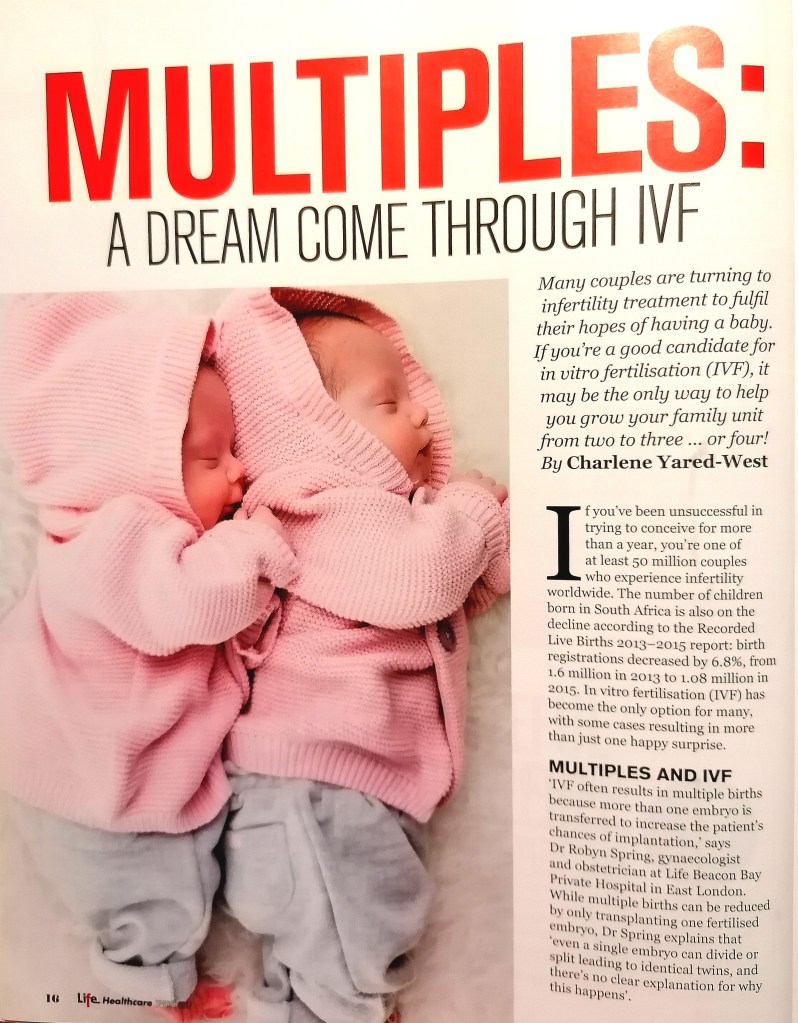
Multiples: A dream come true through IVF

If you have been trying for a baby for more than a year, but have been unsuccessful, you are one of at least 50-million couples who experience infertility worldwide. The number of children being born in South Africa is also on the decline and according to the Recorded Live Births 2013 to 2015 report, the number of birth registrations decreased by 6.8% from 1.6-million in 2013 to 1.08-million in 2015.  As a result, many couples are turning to infertility treatment to fulfil their hopes of having a baby. If you’re a good candidate for In Vitro Fertilisation, it may be the only way to help you grow your family unit from husband and wife to three… or even four… or more! 

Multiples and IVF

“IVF treatment can result in multiple births because, often, more than one embryo is transferred into the uterus of the mother,” says Dr Henk Burger, gynaecologist and obstetrician at Life Carstenhof in Gauteng. “The chance of having multiple births can be reduced considerably by only putting one embryo back into the womb.” The cost of IVF ranges from R30k to R50k per attempt, which explains why many couples opt for implanting more than one embryo to increase their chances of a successful pregnancy the first time around, explains Dr Burger. He notes that sometimes a termination of one of the embryos is requested after implantation, but this is very difficult and dangerous for the embryo that stays behind. 

Multiples and risk

We all know how adorable twins are – and they make for an instant family unit, but they also come with a certain level of high risk in pregnancy. “Around 30% of multiples are prone to prematurity – and born before their due date. There is also the risk of intrauterine growth retardation, birth defects and miscarriage. The mother is also five times more likely to get pre-eclampsia and six times more likely to have polyhydramnios and antepartum haemorrhage,” says Dr Burger. “Mothers carrying multiples must ensure they attend each and every antenatal consult; every four weeks up to 20 weeks, every two weeks up to 28 weeks and every week up to birth thereafter. The aim is to get the mother to carry her baby to at least 36 weeks, but this is often not the case.” He also advises mothers to eat a  balanced diet, not to smoke and to take antenatal supplements. “Simple things like positioning of the safety belt in the car when driving are also important to remember to reduce risk,” he adds. 

Natural or Caesarean birth for multiples

According to Dr Burger, birth by caesarean section is the safest for multiples, because of the risk, especially for the babies born after the first one. “There is positional risk such as breech or transverse positioning, especially for the second baby. There is also the risk of premature labour, placental abruptia, fetal distress and even early closure of the cervix,” he says. “There was a case reported where the cervix closed after the mother had naturally birthed the first of her twin babies. Her cervix remained closed for 56 days before she birthed the second one! It is the longest reported period between delivery of the two babies.” 

Breastfeeding your babies

Dr Rebecca Makate is a paediatrician at Life Carstenhof and is experienced in helping parents adjust to life with their new babies. “Breastfeeding for any baby offers major health advantages such as less infections and better neurodevelopment. The breast can make enough breastmilk for two or more babies as breastfeeding is based on supply and demand,” she says. “In other words, the more you breastfeed the more milk your breast produces. It is also possible to breastfeed twins at the same time on different breasts. Having said that, having more than two babies can come with huge challenges during feeding time.Even if you breastfeed, occasional supplementing your babies formula will give you some much needed freedom and sleep.”

<Sidebar> So what is life like with multiples?Despite some challenges and drawbacks, having multiples is a great joy, says Dr Makate. “There is a level of convenience and efficiency in parenting children simultaneously; some of the unpleasant aspects are sleepless nights, feeding times, potty training and teenage troubles which all have to be endured at once. Mostly though, there is a great pleasure and enjoyment in parenting multiples, every moment is multiplied and every simple joy is magnified,” she says. Dr Makate lists the following challenges couples should consider before IVF:-Pregnancy and birth risks when carrying multiples.-Fetal complications and time in the NNICU.-Lack of sleep.-Difficulty bonding.-Economic impact on the family unit.-Relationship with your spouse is put under pressure.-The need for extra help with caring for the babies. 
<Sidebar> What are Monozygotic and Dizygotic multiplesMonozygotic multiples: In monozygotic multiples, the embryo splits and the babies are born identical. In utero, they share one placenta and one amniotic sac. Dizygotic multiples: In dizygotic multiples, there are two separate embryos, each with their own placenta. Monozygotic multiples are higher risk for a few reasons: Placenta abruptia: where the placenta tears away from the uterus during birth and deprives one or more of the babies from it’s life source of oxygen and blood. Cord prolapse: where the umbilical cord of the second baby born prolapses out of the mother’s vagina. Twin-to-twin transfusion syndrome: where the babies share a joint blood circulation through the placenta, which contains abnormal blood vessels, where blood is transfused disproportionately from one twin (the donor) to the other twin (the recipient).
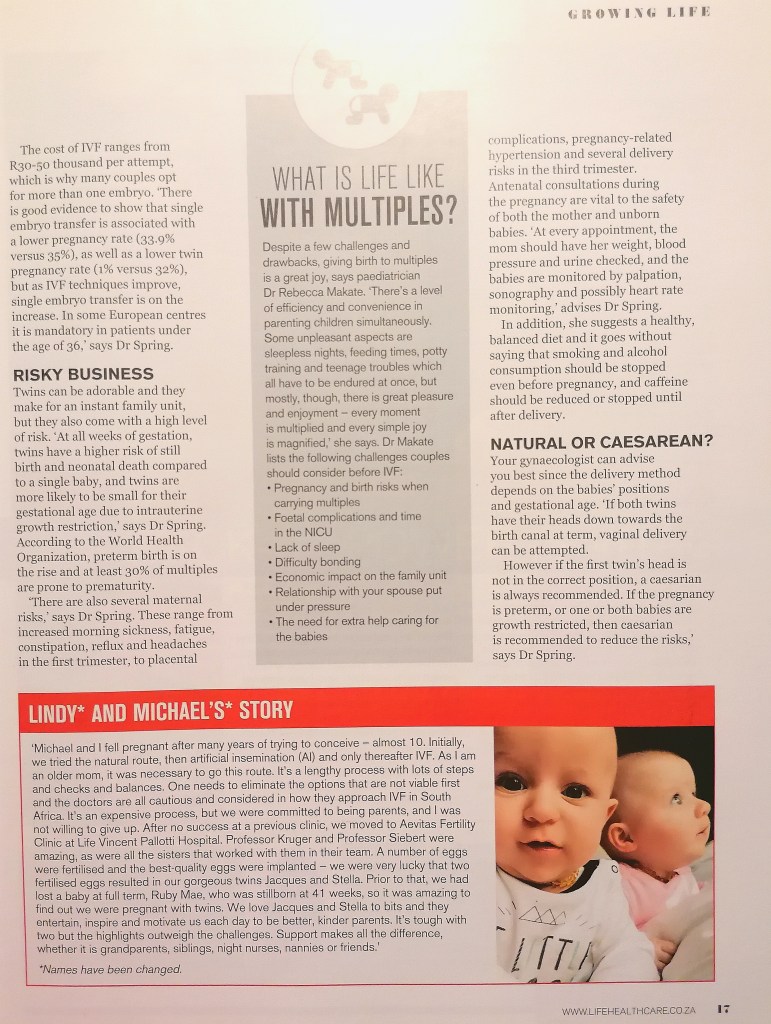
Lindy and Michael’s* story
We fell pregnant after many, many years of trying to conceive – almost ten years. Initially we tried naturally, then Artificial Insemination and then only In vitro Fertilisation. As I am an older mom it was necessary to go this route. It’s a very drawn out process with lots of steps and checks and balances. One needs to eliminate the options that are not viable first and the doctors are all very cautious and considered in how they approach IVF in South Africa. It is a very expensive process, but we were committed to being parents, and I was not willing to give up, so we just kept on trying until we had a positive outcome. We first attended the Cape Fertility Clinic but after no luck there, we moved to Aevitas which is based at Life Vincent Pallotti. Prof Kruger and Prof Siebert from Aevitas were absolutely amazing, as were all the sisters that worked with them in their team. A number of eggs were fertilised and the best quality eggs were implanted and we were very lucky that two fertilised eggs resulted in our gorgeous twins, Jacques and Stella. It was a very long and stressful process. We lost a baby at full term, Ruby Mae, who was stillborn at 41 weeks.  Soon after this loss, we tried again to conceive and with the help of Aevitas got pregnant with the twins who were born on 1 May 2015. It was amazing and unbelievable to find out we were pregnant with twins after losing our previous baby.  We were elated and also scared as twins are a major change in one’s life. On the 13th of January we felt our first big kick after steak strips with Szechuan pepper and salad for dinner, it was wonderful! We made it through to 38 weeks and delivered them with the help of Dr Marie Pienaar and her team and Panorama Mediclinic. We love them to bits and they entertain, inspire and motivate us each day to be better, kinder parents. Its tough with two but the highlights are by far in excess.  It is stressful and one learns how to cope. Support makes all the difference, whether it is grandparents, siblings, night nurses, nannies or friends. Also each baby is so unique and has their own personality and it’s such a joy to experience the gift of twins.*Names have been changed. 
Vanessa and Philipp’s storyWe had been trying to conceive for a long time, but I knew that with my pre-existing conditions of Polycystic ovarian syndrome and Hashimoto’s Thyroiditis, it would not be without some challenges. In 2015 I had a molar pregnancy – very rare – where a non-viable fertilised egg implants in the uterus and grows as abnormal tissue.In that time, we had been in touch with an adoption agency to come ‘kangaroo parents’, which are like safety parents for babies under 3 months old, where we would care for them for up to 90 days until they were transferred to their forever homes. When we started the paperwork, I found out I was pregnant and we felt it might be too much to go through with the adoption agency, but then later that year, I miscarried and this broke me on so many levels. After that I left for Europe and shortly after we received a call from the adoption agency to know if we were perhaps keen to foster twins who were 6.5 months old. We slept on it and the next morning we decided that we would do it and eight days later they arrived. We lost our hearts completely to the babies and decided to start the process of legally adopting them. We still kept our sights on having our own biological child one day, so we kept on trying naturally at first and then decided on IVF at the Aevitas Clinic at Life Vincent Pallotti. On the day of the transfer they implanted two eggs and at the 9 week scan we heard three heartbeats! The two boys shared one placenta, but each had their own sac and the girl had her own placenta and sac. I honestly felt as though I lost the ground under my feet and the world was spinning… we would be parents to five children now, the twins included! My pregnancy was easy until 26 weeks when I started having contractions and had to have bedrest at Life Vincent Pallotti until my caesarean birth on the 24th of April at 30 weeks pregnant with Dr Jacky Searle at Life Vincent Pallotti. My precious babies weighed 1290g, 1220g and 1540g at birth and now we are a beautiful family of seven. I am thankful for blessings in abundance and the good health of all my children. 

Dealing with infertility, when he has the problem

It’s not just a women’s issue

Struggling to fall pregnant? Usually women are the first to seek help when trying to conceive. However, if the woman has been thoroughly examined and it is not due to her that she is unable to fall pregnant, it falls to the male partner to be tested. According to a study published in 2015, infertility affects about 15 per cent of couples globally, amounting to about 48.5-million couples. The study also found that males are found to be solely responsible for 20-30 per cent of infertility cases and contribute to about 50 per cent of cases overall. Furthermore, at least 30 million men worldwide are infertile with the highest rates in Africa and Eastern Europe. If a male factor is what’s making it tough for a woman and her partner to conceive, it’s important to understand what may be causing his infertility and what the couple’s options are. Charlene Yared West speaks to the experts to find out more… 

Infertility and feelings of inadequacy and impotence

“Research indicates that the male partner is not willing to seek medical advice about infertility. They feel embarrassment for not being able conceive naturally and suffer guilt, self-blame and shame,” says Dr Liezel Anguelova, Counselling Psychologist at Life Roseacres Hospital. “Many men do not feel comfortable with the testing procedure as it includes the examination of their testicles and penis and the production of a sperm sample. As such, men often associate infertility with impotence, when they are actually unrelated.” Dr Anguelova explains how infertility can be devastating to the man who experiences the failure of his procreative nature, as it is so intrinsically linked to his sexuality. “It is often an assault on the masculinity of the male partner and it is not uncommon for him to develop sexual problems such the loss of sexual desire or erectile dysfunction, which can leave him feeling that he is ‘less of a man’,” she says. 

What causes male infertility?According to Dr Sulaiman Heylen, Specialist in reproductive medicine at Life Kingsbury Hospital, male infertility is diagnosed by an abnormal semen analysis. “We always start at the beginning of the fertility testing with the semen analysis. We don’t want to do a lot of testing on the female without knowing what the male factor is. Semen analysis is very easy and inexpensive.”
There are three parameters important in the semen analysis according to 2010 WHO criteria:
1. sperm count: must be over 15 million sperm per milliliter.
2. sperm motility (how they move): 50% of sperms cells must be motile.
3. sperm morphology (their shape): at least 4% of the sperm cells must have a normal morphology.
“If one of these parameters is abnormal we speak of male infertility in combination with an inability to conceive,” he explains. Dr Heylen lists the following as possible causes of male infertility;Varicocele: These are varicose veins of the testis, they can contribute to up to 30% of all cases of male infertility. Trauma of the testicles; related to accidents or sports injuries.Sexual transmitted disease which can lead to infections of the testis and blockage of the epididymis (tubes of the testis)Mumps of the testis.Pollution and environmental factors (estrogen like factors in the environment): These are called xenoestrogens. Estrogen is the normal female hormone. Xenoestrogens are chemical compounds that mimic estrogen. There is more and more evidences that pollution and environmental factors can contribute to male infertility.Unhealthy lifestyle: Obesity, excessive alcohol, smoking and drugs. Anabolic drugs are well known to cause low sperm counts. Antibodies that attack sperm: Anti-sperm antibodies are immune system cells that mistakenly identify sperm as harmful invaders and attempt to destroy them.Undescended testes: During fetal development one or both testicles sometimes fail to descend from the abdomen into the scrotum. Genetic: there are genetic defects in the chromosomes or small defects of the Y-chromosome. Unknown: We not always can identify the cause of the low sperm count. 

How is male infertility uncovered?

Urologist, Dr Dap Louw from Life Beacon Bay Hospital explains how the physical examination entails a general exam, evaluation of the testes ( volume, masses, varicocele, infections, etc) and a prostate exam if needed. “The basis of the evaluation starts with taking  a thorough medical history. We normally do a pelvic and scrotal ultrasound as well, to evaluate the testicular tissue and to look for signs of sperm transport blockage. Other more invasive diagnostic methods can be used especially when there is little or no sperm seen in the ejaculate. This would then be aimed at distinguishing between abnormal sperm production or blockage of sperm transport,” he says. 

What treatment is available? 

Dr Louw explains that treatment is aimed at the underlying problem whether it is advice on a healthier lifestyle, surgical correction of a testicular abnormality or medically treating an underlying infection, sexual dysfunction or hormonal abnormality. “When there is no urological correctable contributing cause to the infertility, I then like take a multidisciplinary approach and get the infertility specialists and/or gynaecologists involved,” says Dr Louw. “Together we can then decide on further optimal treatment, according to their hormonal levels, semen analysis and then also female factors. These can then vary from medical treatment, sperm washing with artificial insemination, IVF (in-vitro fertilization) or ICSI (intracytoplasmic sperm injection).” Dr Louw always emphasises to his patients that 20-30% of sub-fertile couples end up falling pregnant without any further help, which is positive – as nature is on their side! “Anxiety about infertility also plays a significant role and it is important to explain the normal conceiving time of 6-12 ovulatory cycles,” he says. “It does unfortunately happen where our patient is not able to have children and the couple would need to discuss alternate options like sperm donation or adoption.” 

Can a couple survive infertility treatment?Infertility can be a relationship maker or breaker depending on how it is managed says Dr Anguelova. “It will put your relationship to the test, but if you focus on the importance of your relationship, it could be used as a opportunity to make your relationship stronger.” She shares some tips for surviving infertility;Stay in the moment, because it can be very overwhelming.  Wait for each doctor’s visit to gather information on the process before making decisions and planning ahead.  Communicate openly and honestly to address unmet expectations, fears, frustrations and  stress. Find professional assistance and counselling if you are not communicating effectively.  Do not get caught in a blame game of resentment, but rather become committed as a team. Remain positive about yourself and your partner.Keep your sexual relationship spontaneous and full of fun and nurture intimacy by touching, hugging and kissing outside of a sexual connotation.Do not let your entire life be merged into the fertility treatment process. Continue with other hobbies and keep other dreams alive.Build a support system. Support each other and include friends and family in the process.

Useful Resources

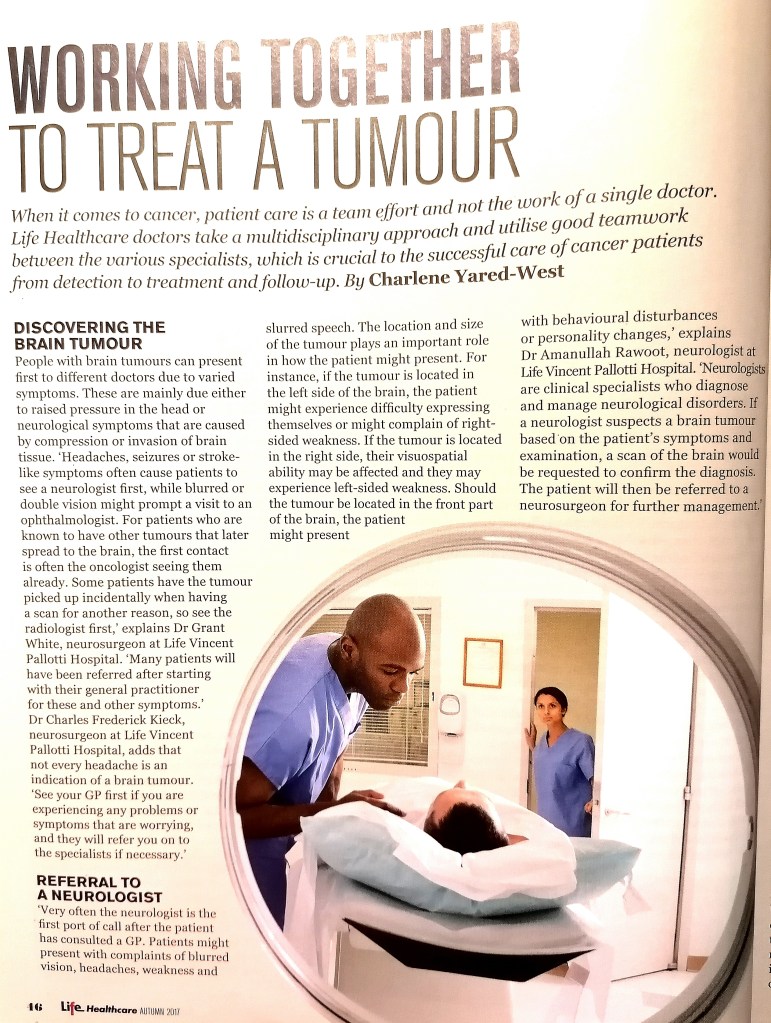
Working together to treat a tumour

When it comes to cancer, patient care is a team effort and not the work of a single doctor. Life Healthcare doctors take a multidisciplinary approach and utilise good teamwork between the various specialists, which is crucial to the successful care of cancer patients from detection to treatment and follow-up.

Discovering the brain tumour

People with brain tumours present first to many different doctors due to the varied symptoms caused by brain tumours. These symptoms are mainly due either to raised pressure in the head or neurological symptoms that are caused by compression or invasion of brain tissue. “Headaches, seizures or stroke-like symptoms often cause patients to see a neurologist first, whilst blurred or double vision might prompt a visit to an ophthalmologist. For patients who are known to have other tumours that later spread to the brain the first contact is often the oncologist seeing them already. Some patients have the tumour picked up incidentally when having a scan for another reason, so see the radiologist first,” explains Dr Grant White, neurosurgeon at Life Vincent Pallotti Hospital. “Many patients will have been referred after starting with their General Practitioner for these and other symptoms.” Dr CF Kieck, neurosurgeon at Life Vincent Pallotti Hospital adds that not every headache is an indication of a brain tumour. “See your GP first if you are experiencing any problems or symptoms which are worrying and they will refer you on to the specialists.”

Referral to a neurologist
“Very often the neurologist is the first port of call after the patient has consulted a GP.  Patients might present with complaints of blurred vision, headaches, weakness, slurred speech, etc. The location and size of the tumour plays an important role in how the patient might present.  For instance, if the tumour is located in the left side of the brain, the patient might experience difficulty expressing themselves or might complain of right-sided weakness. If the tumour is located in the right side of the brain, their visuospatial ability might be affected and they might experience left-sided weakness. Should the tumour be located in the front part of the brain, the patient might present with behavioural disturbances or personality changes,” explains Dr A Rawoot, neurologist at Life Vincent Pallotti. Neurologists are clinical specialists who diagnose and manage neurological disorders. If a neurologist suspects a brain tumour based on the patient’s symptoms and examination, a scan of the brain would be requested to confirm the diagnosis. The patient will then be referred to a neurosurgeon for further management.”

Meeting the radiologist
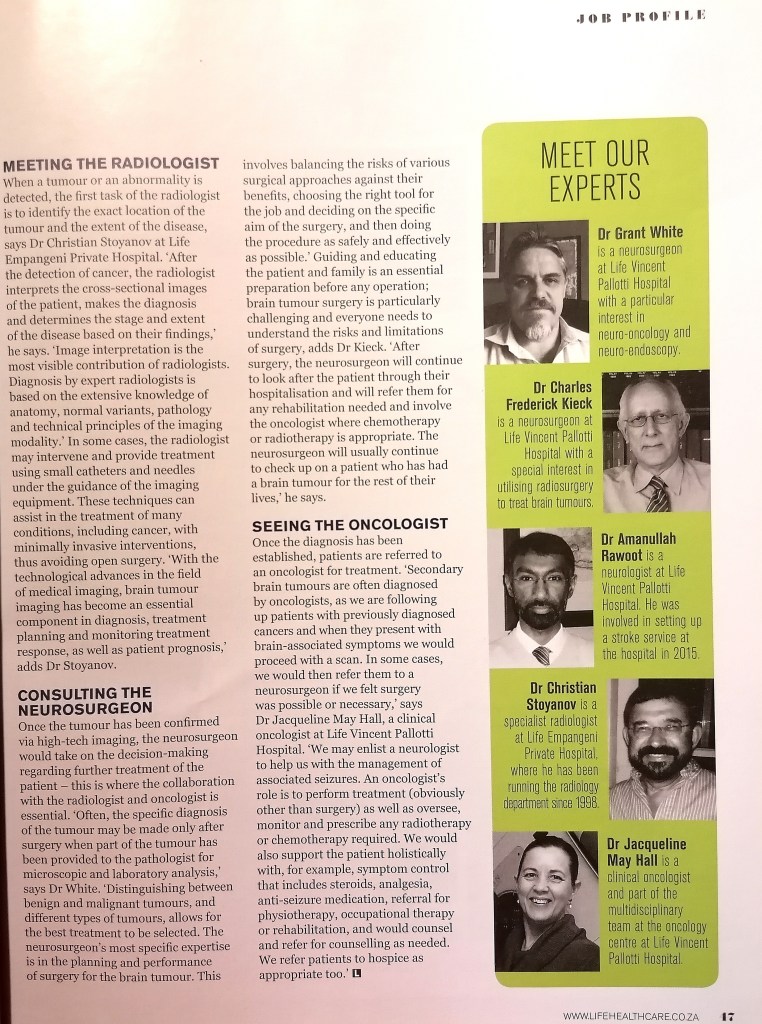
When a tumour or an abnormality is detected, the first task of the radiologist is to identify the exact location of the tumour and the extent of the disease, says Dr Christian Stoyanov of Life Empangeni Private Hospital, “C Stoyanov Radiological Services Inc.” “After the detection of cancer, the radiologist interprets the cross-sectional images of the patient, makes the diagnosis and determines the stage and extent of the disease based on their findings,” he says. “Image interpretation is the most visible contribution of radiologists. Diagnosis by expert radiologists is based on the extensive knowledge of anatomy, normal variants, pathology and technical principles of the imaging modality.” In some cases, the radiologist may intervene and provide treatment using small catheters and needles under the guidance of the imaging equipment.  These techniques can assist in the treatment of many conditions, including cancer, with minimally invasive interventions, thus avoiding open surgery. “With the technological advances in the field of medical imaging, brain tumour imaging has become an essential component in diagnosis, treatment planning, and monitoring treatment response as well as patient prognosis,” adds Dr Stoyanov. 

Consulting the neurosurgeon

Once the tumour has been confirmed via high-tech imaging, the neurosurgeon would take on the role of decision-making regarding further treatment of the patient and this is where the collaboration with the radiologist and oncologist is essential. “Often, the specific diagnosis of the tumour may be made only after surgery when part of the tumour has been provided to the pathologist for microscopic and laboratory analysis.” says Dr White. “Distinguishing between benign and malignant tumours and between different types of tumours allows for the best treatment to be selected for a patient. The neurosurgeon’s most specific expertise is in the planning and performance of surgery for the brain tumour. This involves balancing the risks of various surgical approaches against their benefits, choosing the right tool for the job and deciding on the specific aim of the surgery and then doing the procedure as safely and effectively as possible.” Guiding and educating the patient and family is an essential preparation before any operation; brain tumour surgery is particularly challenging and everyone needs to understand the risks and limitations of surgery, adds Dr CF Kieck; “After surgery, the neurosurgeon will continue to look after the patient through their hospitalisation and will refer them for any rehabilitation needed and involve the oncologist where chemotherapy or radiotherapy is appropriate. The neurosurgeon will usually continue to check up on a patient who has had a brain tumour at intervals for the rest of their lives.” he says.

Seeing the oncologist

Once the diagnosis has been established, patients are then referred to an oncologist for treatment. “Secondary brain tumours are often diagnosed by oncologists, as we are following up patients with previously diagnosed cancers and when they present with brain associated symptoms we would proceed with a scan. We would then sometimes refer them to a neurosurgeon if we felt surgery was possible or necessary,” says Dr Jacqueline May Hall, clinical oncologist, Life Vincent Pallotti Hospital. “We also sometimes enlist a neurologist to help us with the management of associated seizures. An oncologist’s role is to perform treatment (obviously other than surgery) and would oversee, monitor and prescribe any radiotherapy or chemotherapy required.  We would also support the patient holistically with for example – symptom control that includes steroids, analgesia, anti-seizure medication; referral for physiotherapy, occupational therapy, rehabilitation and we would also counsel and refer for counselling as needed. We also refer to Hospice as appropriate.”

Less is more when it comes to salt

Cutting out or reducing sugar intake has become very fashionable over the last few years, but what about salt? Charlene Yared-West makes a strong case for the latter.

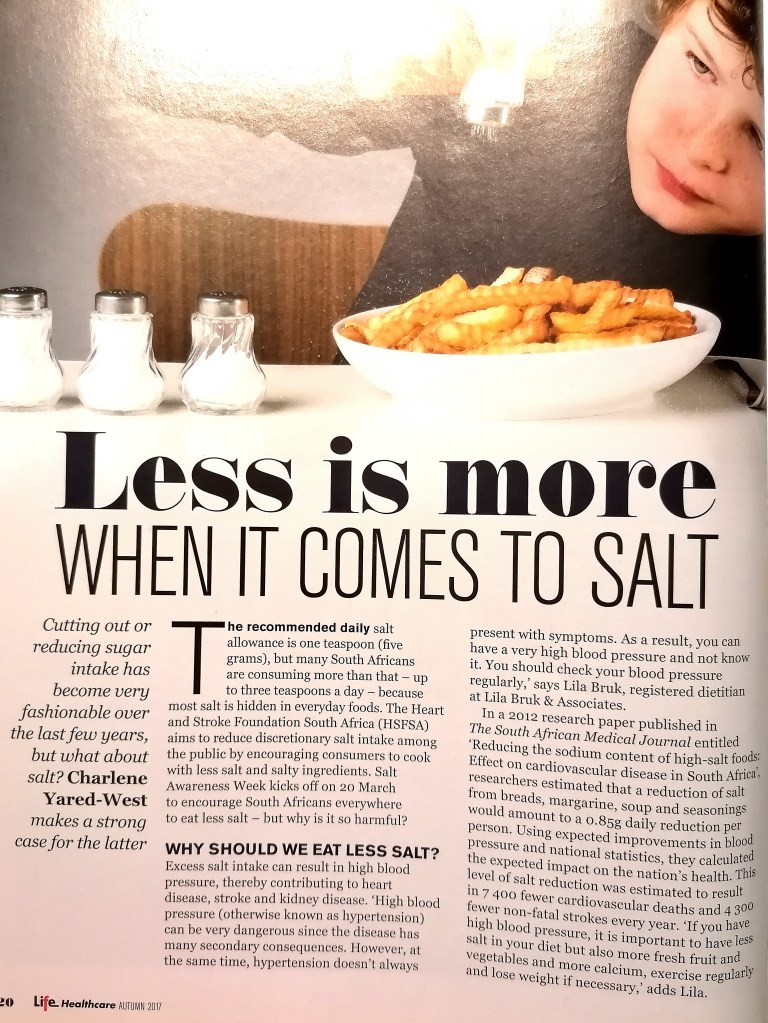
The recommended daily salt allowance is one teaspoon, but many South Africans are consuming more than that; up to three teaspoons a day because most salt is hidden in everyday foods. The Heart and Stroke Foundation aim to reduce discretionary salt intake among the public by encouraging consumers to cook with less salt and salty ingredients. Salt Awareness Week kicks off on March 20 to March 26 to encourage South Africans everywhere to eat less salt, but why is salt so harmful?

Why should we eat less salt?

Excess salt intake can result in high blood pressure, thereby contributing to heart disease, strokes and kidney disease. “High blood pressure (otherwise known as hypertension) can be very dangerous since the disease has many secondary consequences. However, at the same time hypertension doesn’t always present with symptoms. As a result, you can have a very high blood pressure and not know it. Hence you should check your blood pressure regularly,” says Lila Bruk, registered Dietitian at Lila Bruk & Associates.

In a 2012 research paper entitled Reducing the sodium content of high-salt foods: Effect on cardiovascular disease in South Africa, researchers estimated that a reduction of salt from breads, margarine, soup and seasonings would amount to a 0.85 gram daily reduction per person. Using expected improvements in blood pressure and national statistics, they calculated the expected impact on the nation’s health. This level of salt reduction is estimated to result in 7 400 fewer cardiovascular deaths and 4 300 fewer non-fatal strokes every year. “If you do have high blood pressure, it is important to have less salt in your diet, but also to have more fresh fruit and vegetables, more calcium, exercise regularly and lose weight if necessary,” adds Bruk. 

Salt is hidden in everyday foods

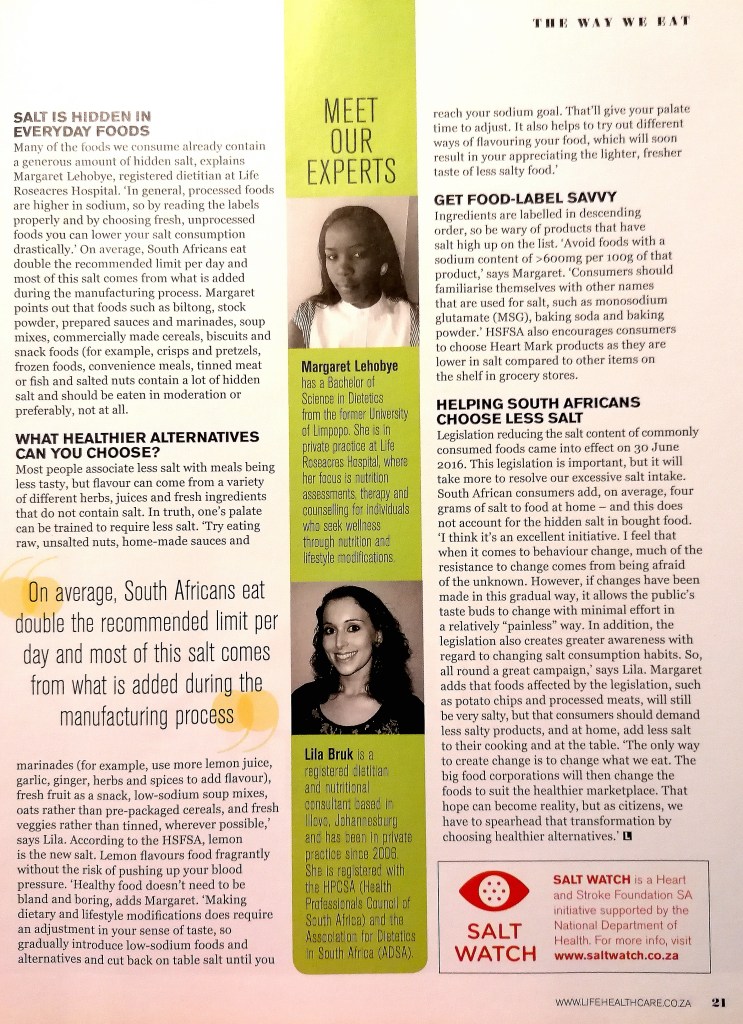
A lot of foods that we consume already contain a generous amount of hidden salt, explains Margaret Lehobye, registered dietitian at Life Roseacres. “In general, processed foods are higher in sodium, so by reading the labels properly and by choosing fresh, unprocessed foods you can lower your salt consumption drastically.” On average, South Africans eat double the recommended limit per day and most of this salt comes from what is added during the manufacturing process. Lehobye points out that foods like biltong, stock powder, prepared sauces and marinades, soup mixes, commercially made cereals, biscuits and snack foods (e.g. crisps and pretzels, frozen and tinned foods, convenience meals, tinned meat or fish and salted nuts are examples of foods that contain a lot of hidden salt – and should be eaten in moderation or preferably; not at all.

Are there healthier alternatives?

Most people associate less salt with meals being less tasty, but flavour can come from a variety of different herbs, juices and fresh ingredients which do not contain salt. In truth, one’s pallet can be trained to require less salt. “Try eating raw, unsalted nuts, homemade sauces and marinades (for example, using more lemon juice, garlic, ginger, herbs and spices to add flavour), fresh fruit as a snack, low sodium soup mixes, oats rather than pre-packaged cereals, and fresh veggies rather than tinned wherever possible,” says Bruk. According to the Heart and Stroke Foundation, lemon is the new salt! Lemon flavours food fragrantly without the risk of pushing up your blood pressure. “Healthy food doesn’t need to be bland and boring, adds Lehobye. “Making dietary and lifestyle modifications does require an adjustment in one’s sense of taste, so gradually introduce low-sodium foods and alternatives and cut back on table salt until you reach your sodium goal. That’ll give your palate time to adjust. It also helps to try out different ways of flavouring your food, which will soon result in one appreciating the lighter, fresher taste of less salty food.” 

Get Food label savvy  

Ingredients are labelled in descending order. Consumers should avoid products which have salt high up in the ingredients list. “Avoid foods with a sodium content of > 600mg per 100g of that product,” says Lehobye. “Consumers should familiarise themselves with other names that are used for salt such as Monosodium Glutamate (MSG), Baking soda and baking powder.” HSFSA also encourages consumers to choose Heart Mark products as they are lower in salt as compared to other items on the shelf in grocery stores. 

Helping South Africans choose less salt

Legislation reducing the salt content of commonly consumed foods came into effect on 30 July 2016. This legislation is important, but it will take more to resolve our excessive salt intake. South African consumers add on average 4 grams of salt to food at home – and this does not account for the hidden salt in bought food. “I think it’s an excellent initiative. I feel that when it comes to behaviour change, much of the resistance to change comes from being afraid of the unknown. However, if changes have been made in this gradual way, it allows the public’s taste buds to change with minimal effort in a relatively “painless” way. In addition, the legislation also creates greater awareness with regard to changing salt consumption habits. So, all round a great campaign,” says Bruk. Lehobye adds that foods affected by the legislation like potato chips and processed meats will still be very salty, but that consumers should demand less salty products – and at home, add less salt to their cooking and at the table. “It is the only way to create change is to change what we eat. The big food corporations will then change the foods to suit the healthier marketplace. That hope can become reality – but as citizens, we have to spearhead that transformation by choosing healthier alternatives.” 

Prenatal Surgery: Saving a baby’s life in utero

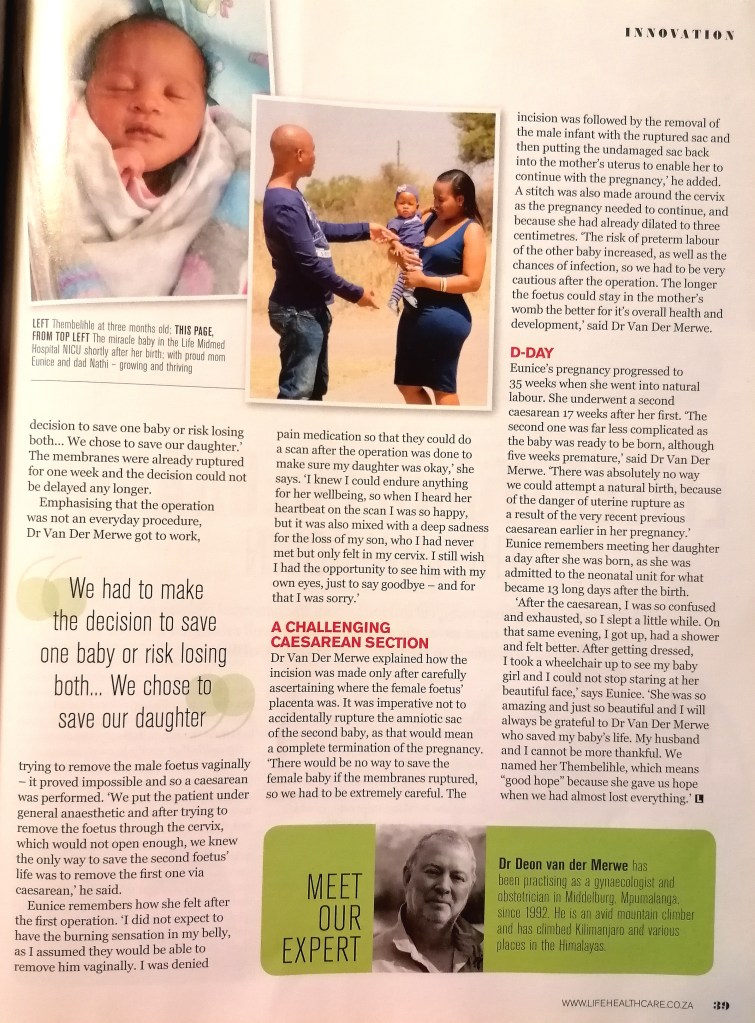
In July 2015, Eunice and Nathi Motha finally became pregnant via in-vitro fertilisation and their joy at the news turned to pure elation when they found out they were pregnant with twins; a boy and a girl. After an uncomplicated pregnancy until 18 weeks, the couple readied themselves for the arrival of their babies. Sadly, however, the amniotic sac of the boy foetus ruptured and his leg protruded through the cervix. This made life in the womb for the boy unviable and the pregnancy needed to be terminated – or did it? According to gynaecologist obstetrician, Dr Deon Van der Merwe at Life Midmed Hospital, the girl foetus could be saved and the pregnancy for one of the twins could continue, the boy however, had to be removed from the uterus either vaginally or via caesarean birth.  

Not just another day at the hospital

It was the second time in 15 years that Dr van der Merwe performed an operation of this nature and he consulted with colleagues to gauge their informed opinions. “It is not an operation that is taken lightly as the dangers are immense; there is the risk of uterine rupture to carry the second twin to term after a caesarean at 19 weeks, there is also the risk of bleeding and sepsis and lastly, miscarriage, as the cervix was already dilated to 3 cm,” said Dr van der Merwe. “Even with all these risks, I had to help Eunice, as she had conceived under trying circumstances through IVF and she wouldn’t entertain me terminating the pregnancy.” 

Eunice relates how Dr van der Merwe explained the termination procedure and how she refused to listen to his words. She believes that after seeing their desperation and sadness in addition to her husband Nathi’s pleas to save one of the babies, he decided to do the work. “Even before Dr van der Merwe saw that my son’s leg was protruding through my cervix, I just knew something was wrong. For me his little leg kicking felt like a wriggling worm – a feeling I would never wish on anyone. It broke my heart to know that he would not make it,” says Eunice. “When they did the scan, I could still hear his heartbeat and I was so worried about if he would be hurt when the procedure was done; either vaginally or via caesarean. There was also no time for me to process all of these thoughts and we had to make the decision to save one baby or risk losing both babies… We chose to save our daughter.” The membranes were already ruptured for one week and the decision could not be delayed any longer. 

Emphasising that the operation was not an everyday procedure, Dr van der Merwe set to work, trying to remove the male foetus vaginally, but it was not possible and so a caesarean was performed. “We put the patient under general anaesthetic and after trying to remove the foetus through the cervix, which would not open enough, we knew the only way to save the second foetus’s life was to remove the first one via caesarean.” he said. 

Eunice remembers how she felt after the first operation. “I did not expect to have the burning sensation in my belly, as I assumed they would be able to remove him vaginally. I was denied pain medication so that they could do a scan after the operation was done to make sure my daughter was ok,” she says. “I knew I could endure anything for her well being, so that when I heard her heartbeat on the scan I was so happy, but it was also mixed with a deep sadness for the loss of my son, who I had never met, but who I had only felt – in my cervix. I still wish I had had the opportunity to see him with my own eyes, just to say goodbye – and that I was sorry.” 

A challenging caesarean section

Dr van der Merwe explained how the incision was made only after carefully ascertaining where the girl foetus’s placenta was. It was imperative not to accidentally rupture the amniotic sac of the second baby, as that would mean a complete termination of the pregnancy. “There would be no way to save the female baby if the membranes ruptured, so we had to be extremely careful. The incision was followed by removing the male infant with the ruptured sac and then putting the undamaged sac back into the the mother’s uterus to enable her to continue with the pregnancy,” he added. A stitch was also made around the cervix, as the pregnancy needed to continue – and because she had already dilated to 3 cm. “The risk of preterm labour of the other baby increased, as well as the chances of infection and so we had to be very cautious after the operation too. The longer the foetus could stay in the mother’s womb the better for it’s overall health and development,” said Dr van der Merwe. 

D-day for the girl twin to be born

Eunice’s pregnancy progressed to 35 weeks when she went into natural labour. She proceeded to go to the hospital immediately and underwent a second caesarean in the space of 17 weeks after her first caesarean. “The second caesarean was far less complicated; as the baby was ready to be born, although five weeks premature,” said Dr van der Merwe. “There was absolutely no way we could allow for an attempt at natural birth either, because of the danger of uterine rupture as a result of the very recent previous caesarean earlier in her pregnancy.” Eunice remembers meeting her daughter a day after she was born, as she was admitted to the neonatal unit for what became 13 long days after the birth. 

“After the caesarean, I was so confused and exhausted, so I slept a little while. On that same evening, I got up, had a shower and felt better. After getting dressed, I took a wheelchair up to see my baby girl… and I could not stop staring at her beautiful face,” says Eunice. “She was so amazing and just so beautiful and I will always be grateful to Dr van der Merwe who saved my baby’s life. My husband and I cannot be more thankful than we will always be to him. We named her Thembelihle, which means Good Hope; as she gave us hope when we almost lost everything.”

To dairy or not to dairy…

Dairy does not agree with everyone, so how do you know if you’re lactose intolerant or if you have a milk allergy? 

Some favour dairy and others oppose it vehemently…  The Prevalence towards food allergies worldwide is increasing. Studies show an early introduction to food allergens – before six months – can increase the risk of developing food allergies and why recommendations suggest only introducing those foods after six months. We speak to two experts in the field of nutrition who shed light on the topic of lactose intolerance and milk allergy; registered dietician Marijke Pienaar at Life Robinson Hospital Randfontein and gastroenterologist, Dr Hilda Smith at Life Wilgeheuwel Hospital. 

Firstly, see an expert… 

“If you suspect you have a possible dairy sensitivity, see your doctor for a food allergy test,” says dietician Marijke Pienaar. “Both allergies and intolerances can be managed, but should not be done in isolation – and it is strongly advised to see your dietician to prevent any deficiencies or to properly treat the food allergy or intolerance. Do not eliminate any foods from your diet unless it has been clinically proven that you do have a milk allergy or milk intolerance by your doctor.” 

How are food allergies diagnosed?

No single test can be fully depended on in the diagnosis of food allergies, explains dietician Marijke Pienaar. Testing food allergies usually starts off by taking a detailed history of a patient’s diet and also allowing the patient to do 7-day detailed food and symptom record. “Once a food has been positively identified to cause allergic symptoms, a skin-prick test can be performed. The choice of allergens to be tested should be guided by the food and symptom record. Skin-prick tests are preferred as the initial test as its low cost, convenient and relatively accurate. After a food or allergen has positively reacted with the skin (meaning the skin will inflame where the allergen was added to the skin), a serum (blood) specific IgE test can be performed to positively diagnose the food allergy,” she says. “One could simply try by diagnosing food allergy by eliminating the allergen from the diet for a set period of time (usually between 2-6 weeks) followed by planned and intentional re-introduction, but this process can be lengthy and often results in unclear answers or diagnosis.”

What is lactose intolerance?

Lactose intolerance, also known as lactose malabsorption is the inability to fully digest the sugar lactose in milk products due to a lactase deficiency, explains Dr Smith, and symptoms include diarrhoea, gas, bloating, nausea and cramps. “Most patients can manage without giving up all dairy products. Lactase breaks down the the sugar in milk (lactose) to glucose and galactose for absorption in the small intestine,” she explains. 

SIDE BAR: Types of Lactose Intolerance, according to Dr SmithPrimary lactose intolerancePatient starts life with a normal amount of lactase and during childhood, the enzyme decreases as the diet changes from milk to solids. Production continues to decrease into adulthood – and if production decreases significantly, the patient will become symptomatic when consuming dairy products. Secondary lactose intoleranceIn this instance, there is a decreased lactase production by the small intestine after illness, such as celiac disease and Crohn’s disease. Once the disease is treated in the small bowel, then the lactase production usually recovers. Congenital or developmental lactose intoleranceHere, the patient is born with a complete absence of lactase, which is very rare. Premature infants may also present like this due to the immaturity of their gut –  as production most often develops in the third trimester of pregnancy. 

How can lactose intolerance be treated? 

“Sadly, we are unable to boost lactase production, but encourage patients to avoid discomfort and symptoms by decreasing their dairy intake and also adding enzyme products to assist with the breakdown of dairy in the gut,” says Dr Smith. “Limit dairy products by taking smaller servings and experimenting with different dairy-containing products and choosing lactose free products can really make a difference. Lactase enzyme tablets or drops can also help.” 

What is a milk allergy?

There are two main proteins in cow’s milk that can cause an allergic reaction and they are casein (found in the solid part of milk that curdles) and whey (found in the liquid part of milk that remains after the milk curdles.) The allergic reaction happens when the immune system identifies certain milk proteins as harmful and as a result triggers the release of immunoglobulin E antibodies to neutralise the protein allergen. “Symptoms can be mild to severe and you can break out in hives or experience wheezing or vomiting. Other symptoms also include a loose stool, often containing blood, diarrhoea, cramps, coughing, runny nose, itchy skin rashes, often around the mouth,” says Dr Smith. “Avoid milk-containing products, especially from the obvious sources like milk, butter, yoghurt, ice-cream and cheese.” 

SIDE BAR: No dairy? No problem! Here are some healthy calcium-rich foodsCalcium-fortified bread and cerealsCanned salmon and sardines with the bones Fortified orange juiceBeans, legumes, chickpeasRhubarbDark green leafy vegetables like spinach, kae, broccoli and okraDried figsSoy products and tofuAlmonds
Delicious milk alternatives to try…“The most important factor to look for when purchasing milk alternatives, is to choose milk alternatives that have been fortified with calcium. In terms of what milk alternative to use from a dietetic point of view, it does not matter, it’s all about individual preferences,” explains dietician Marijke Pienaar. 
Soy Milk – Soy milk is probably the most popular and recognisable alternative to cow’s milk. Like cow’s milk, soy milk is often fortified with calcium, Vitamin A, Vitamin D, riboflavin and often has the same protein amount as cow’s milk. It is therefore the most similar milk alternative to cow’s milk in terms of nutrition profile, but often patients complain of the “nutty” taste and not a favorite in terms of flavor.
Almond Milk – Almond milk contains a much lower amount of protein than dairy and soy milk, but people prefer the Almond milk above soy due to the sweet flavor and creamy texture that is similar to dairy milk. Most almond milks are fortified with calcium, but if not, almond milk is considered low in protein, vitamins, minerals and fatty acids present in dairy milk. Other common nut milks include cashew, hazelnut and walnut milk.
Rice milk – Rice milk is the most hypoallergenic of any of the milk alternatives, free from soy, gluten and nuts. Rice milk is high in carbohydrates but low in protein compared to dairy milk. Rice milk is quite thin and watery and not suited for use in cooking and baking and unfortunately if not fortified, low in calcium.
Coconut Milk – Due to the Banting craze, coconut milk became quite popular in the last couple of years. Coconut milk is relatively high in fat and therefore does appear to resemble in terms of texture closest to that of whole milk. Despite the similarities in texture, coconut milk does not have a nutritional profile comparative to that of cow’s milk. One serving (250ml) of coconut milk contains 80 calories, 1 g protein and 100 mg calcium, while 1 cup of 1% dairy milk contains 100 calories, 8 g protein and 300mg calcium.
Hemp Milk – Hemp milk is another good alternative for those allergic to soy, nuts and gluten and is made from hulled hemp seeds, water and (in most cases) sweeteners. It contains a good amount of protein and has an excellent fatty acid profile, but is relatively low in calcium, unless fortified.
Cow’s Milk alternatives for infantsBreastfeedingHypoallergenic formulasSoy-based formulas

Read the labels! 

According to dietician Marijke Pienaar, The South African Food Labelling Regulations (under the Foodstuffs, Cosmetics and Disinfectants Act, No 54 of 1972)  requires that all packaged food products sold in South Africa that contain milk as an ingredient, must be listed in the ingredients as  ‘milk’ on the label and identified as an allergen in a separate part of the food label. “Read all product labels carefully before purchasing and consuming any item. It is part of the dietician’s education to teach patients what foods contain milk and how to read food labels properly,” she says. 

Got milk? I’ll have some goat’s milk, thank you!

Goat’s milk is believed to be more easily digestible and less allergenic than cow’s milk. The fat globules in goat’s milk are smaller than in cow’s milk resulting in an easier digestion process. Goat’s milk is also naturally homegenized, as opposed to cow’s milk, which must be homogenised in a factory. Another plus is that goat’s milk contains about 10% less lactose than cow’s milk and is easier to digest for those suffering with a lactose intolerance. Goat’s milk is high in potassium, a micronutrient lacking in cow’s milk.