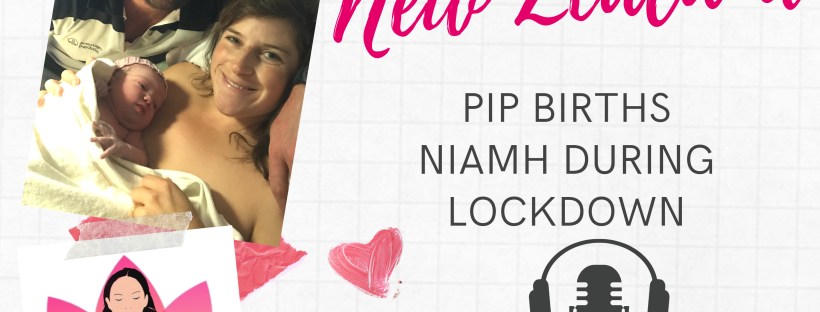
Pip and Josh share their New Zealand birth story and Pip shares how she overcame her extreme anxiety so that she could birth without fear – and birth without fear she did! “You couldn’t have come at a better time for me as the anxiety was getting the better of me as time progressed. I remember around 26 weeks in tears at my midwife appointment feeling completely overwhelmed and not knowing what to expect. I spoke to my dear friend Felicity Meek who put me in touch with you. As soon as I started listening to your affirmations and then doing your course from around 33 weeks my mind set started to change and I began to relax! Your course allowed me to understand the process but in a way that wasn’t scary but beautiful, something to look forward and that my body was going to do it. I had no idea how powerful hypnobirthing could be, but it was the best thing I could have done to prepare myself. I can not thank you enough Charlene – you are incredible and what an amazing birthing experience you and your course have given me.” Listen to her story in this episode…
DO THE COURSE IN YOUR OWN TIME, WHEN YOU WANT TO! Relax Into Birth is the most comprehensive online Hypnobirthing course available and features over 250 minutes of video course content, including a ‘doula in my pocket’ guide for dads / partners and mandy downloadable audio hypnobirthing tracks and downloadable e-Books. Visit www.relaxintobirth.com for more info. Check out the course by clicking here.
Dr Frances Straeuli and her husband, Dr Chris Straeuli share their birth story and the tools that helped them on their journey to meeting their baby girl Sienna Ruth. “It was a Saturday morning around 9.30 and I had just finished having some breakfast. As I got up to start my day I felt a small gush of water. Naturally, as every mom who’s ever had their waters break I thought to myself “this is it. I’ve now reached the part of pregnancy where I am incontinent” a few moments after that on my way to the loo, a bigger gush! That’s when I realised (initially feeling relieved that I hadn’t peed my pants, which was quickly taken over by fear) what was actually happening. I had ruptured membranes too early! I was only 34 weeks pregnant.” Keep listening for the rest of their birth story 🙂
DO THE COURSE IN YOUR OWN TIME, WHEN YOU WANT TO! Relax Into Birth is the most comprehensive online Hypnobirthing course available and features over 250 minutes of video course content, including a ‘doula in my pocket’ guide for dads / partners and thirteen (and counting!) downloadable audio hypnobirthing tracks and downloadable e-Books. Visit www.relaxintobirth.com for more info. Check out the course by clicking here.
Breath is your best and most accessible tool when it comes to mental preparation and relaxation for birth. Your breath is powerful and can get you out of a fear state (the sympathetic mode) into your birthing state (parasympathetic mode), which can make your labour feel instantaneously more manageable. You want to sink into your limbic centre, where the mind lets go and your body goes into a state of allowing your baby to come down and out. Breath helps to move you from survival mode into birthing mode, gently and effectively. These tracks have been created for your convenience and can be played in pregnancy, during birth and even as a calming visualisation after birth. They are included in the Relax Into Birth Hypnobirthing Online course of prerecorded packaged video, audio and e-book content.
DO THE COURSE IN YOUR OWN TIME, WHEN YOU WANT TO! Relax Into Birth is the most comprehensive online Hypnobirthing course available and features over 250 minutes of video course content, including a ‘doula in my pocket’ guide for dads / partners and thirteen (and counting!) downloadable audio hypnobirthing tracks and downloadable e-Books. Visit www.relaxintobirth.com for more info.
Tracy shares her birth story… Listen to the podcast above, or watch her tell it below.
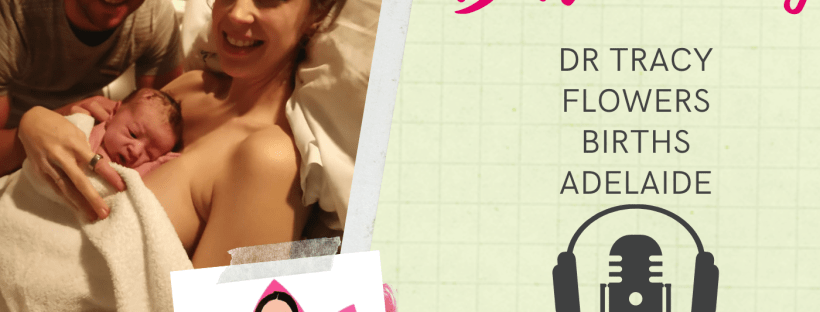
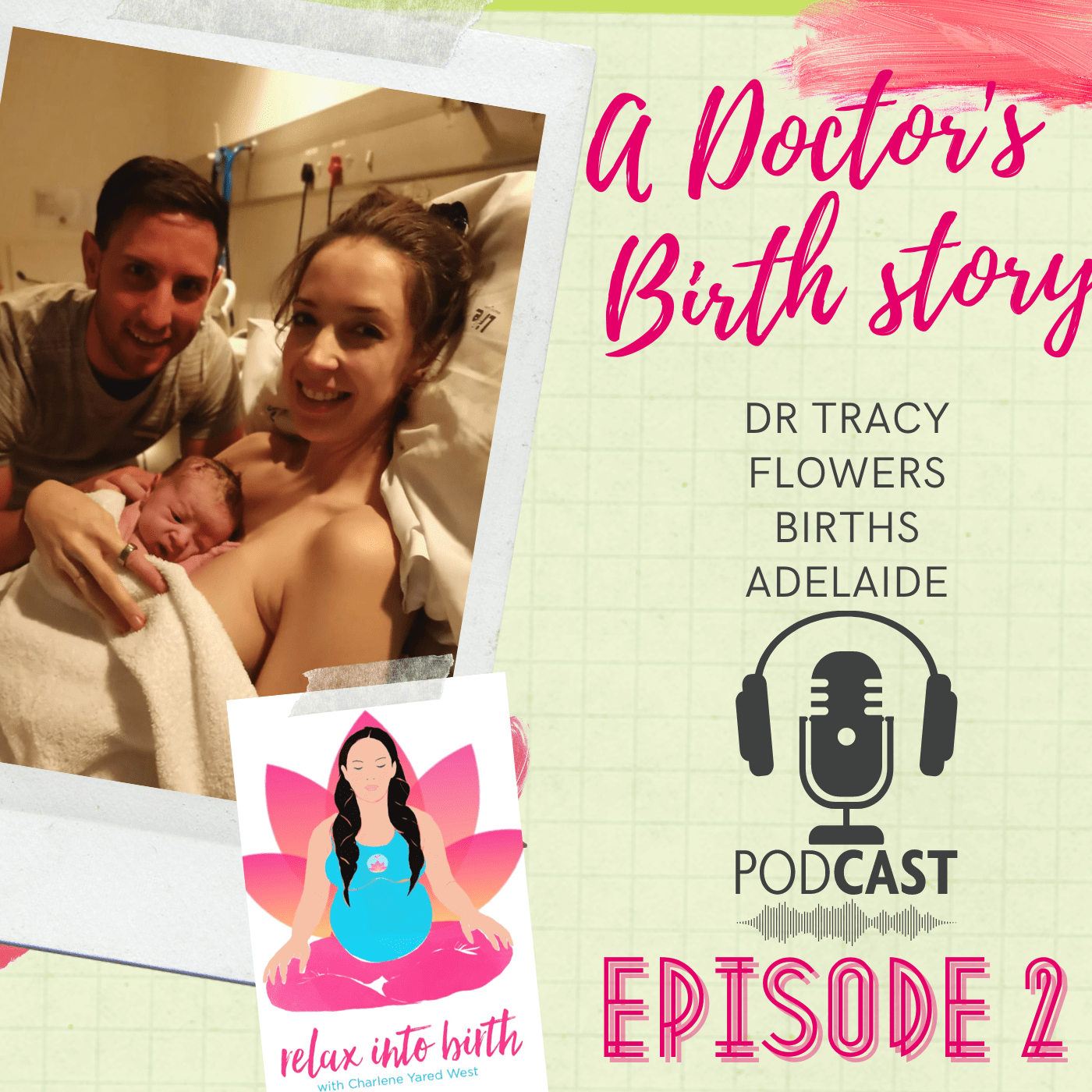
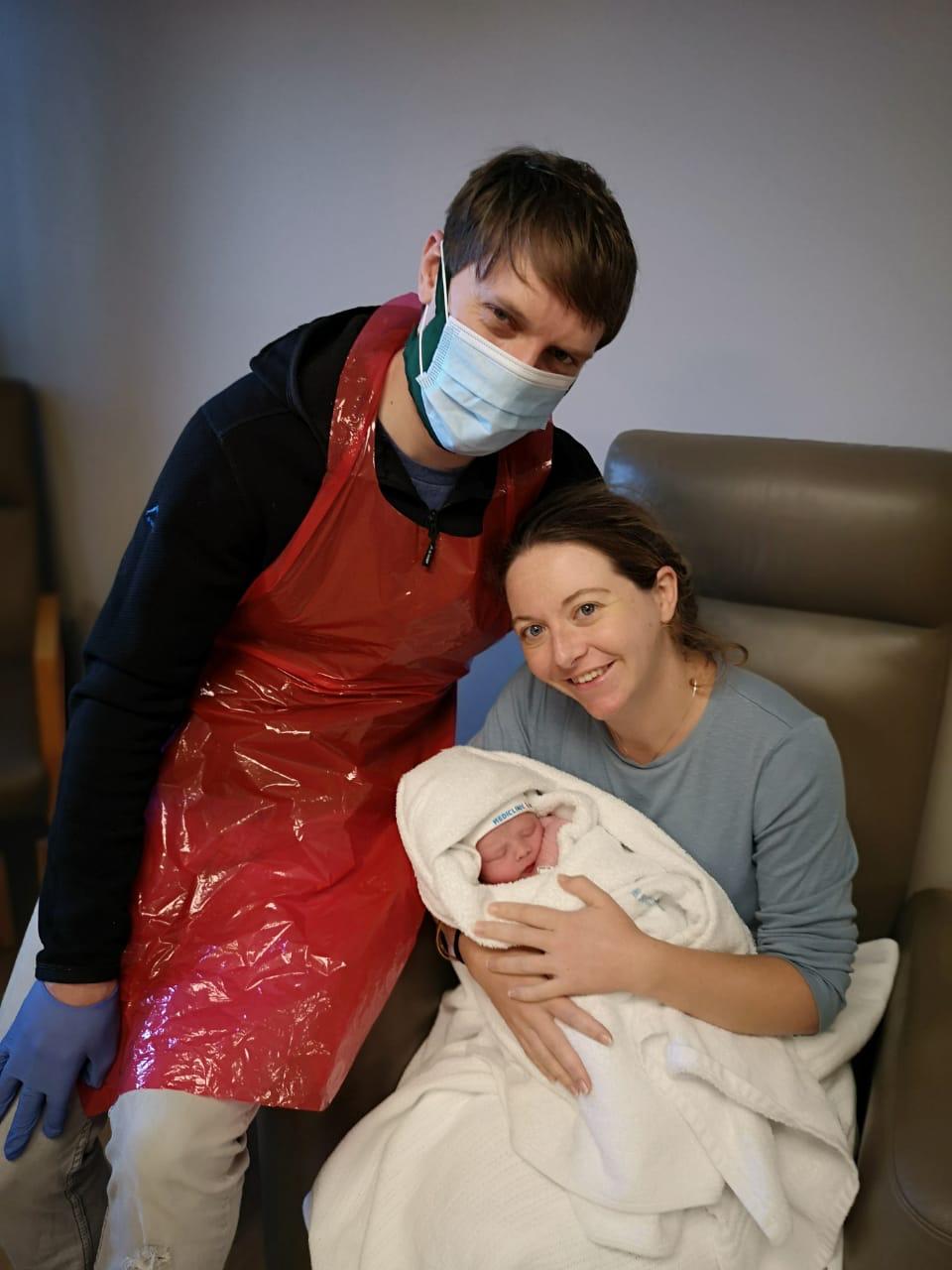
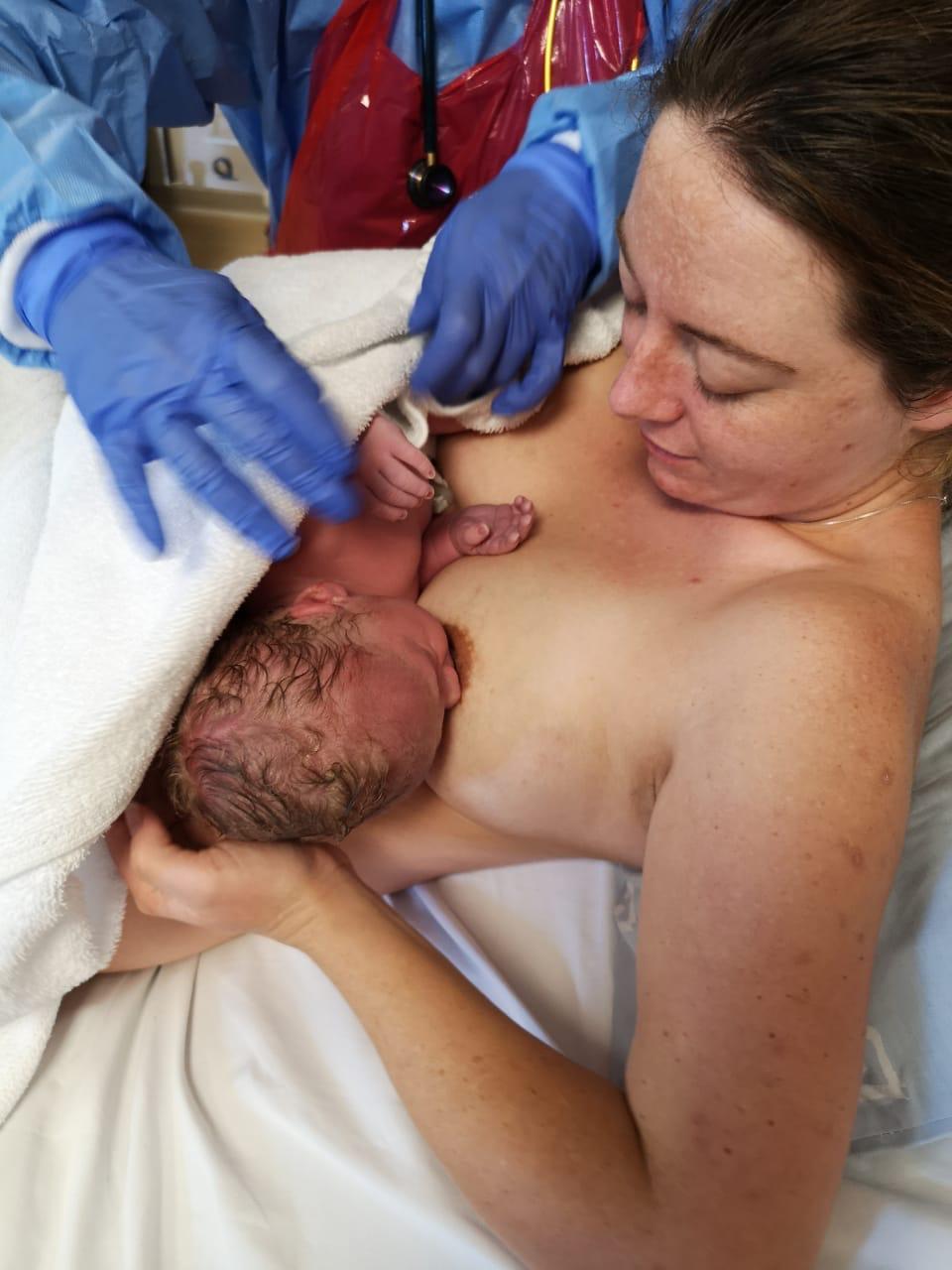
Dr Tracy Flowers (of Médecins Sans Frontières) shares her birth story. Here’s an excerpt… “”As a doctor, I always imagined I would want a caesar, but then I fell pregnant and everything changed. There’s no doubt that the Relax Into Birth course and the preparation really made it such a wonderful event for us. We went into the birth feeling confident, calm and peaceful despite doing all this through Covid-19. Relax Into Birth helped me to normalise birth through daily listening to the hypnobirthing tracks. When I was in labour, I used the tools I had learnt about breathing, relaxation and visualisation, which all helped me keep calm. The surges felt so manageable and the techniques helped us both so much,” says Tracy.
Her husband Ryan Flowers, adds; “As a very inexperienced dad, the course gave me ultimate confidence and preparedness for the birth. I found the partner tracks handy, which helped me know what was to come and I enjoyed learning massage techniques too. I also used the course as a resource I could go back to anytime. Speaking to other dads who hadn’t done the Relax Into Birth course, I realised they had quite a different mindset on birth than me.”
Dr Tracy Flowers (of Médecins Sans Frontières) shares her birth story. Here’s an excerpt… “”As a doctor, I always imagined I would want a caesar, but then I fell pregnant and everything changed.There’s no doubt that the Relax Into Birth course and the preparation really made it such a wonderful event for us. We went into the birth feeling confident, calm and peaceful despite doing all this through Covid-19. Relax Into Birth helped me to normalise birth through daily listening to the hypnobirthing tracks. When I was in labour, I used the tools I had learnt about breathing, relaxation and visualisation, which all helped me keep calm. The surges felt so manageable and the techniques helped us both so much.”
Relax into Birth is the first proudly South African Online Birth Preparation School, of international standard, teaching women and their partners Hypnobirthing techniques and deep relaxation methods for a more comfortable and manageable birth experience at home or at hospital, for natural or caeasarean births.
DO THE COURSE IN YOUR OWN TIME, WHEN YOU WANT TO! Relax Into Birth is the most comprehensive online Hypnobirthing course available and features over 250 minutes of video course content, including a ‘doula in my pocket’ guide for dads / partners and thirteen (and counting!) downloadable audio hypnobirthing tracks and downloadable e-Books. Visit www.relaxintobirth.com for more info.
Caitlyn shares her birth story… Listen to the podcast above, or watch her tell it below.
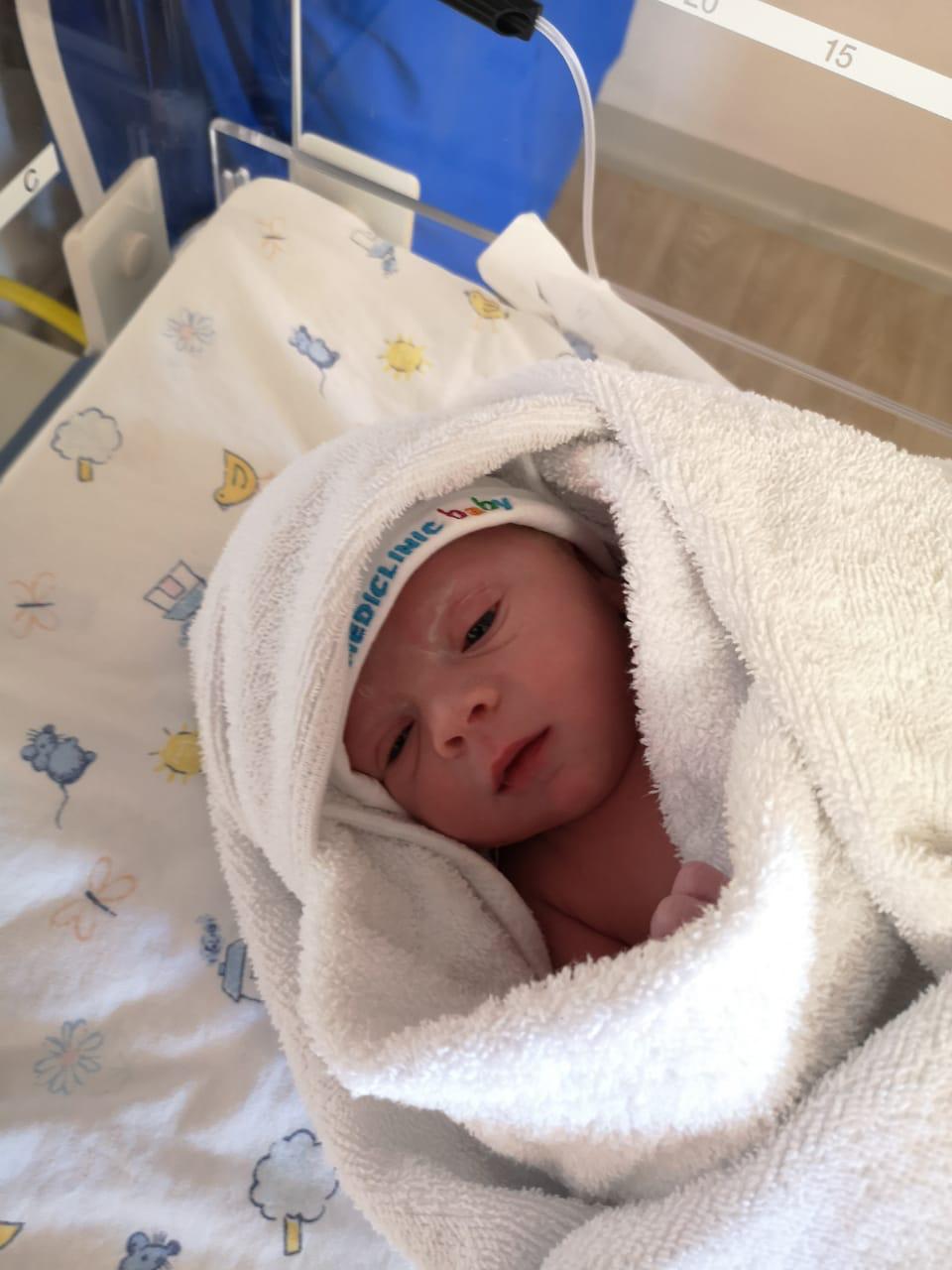
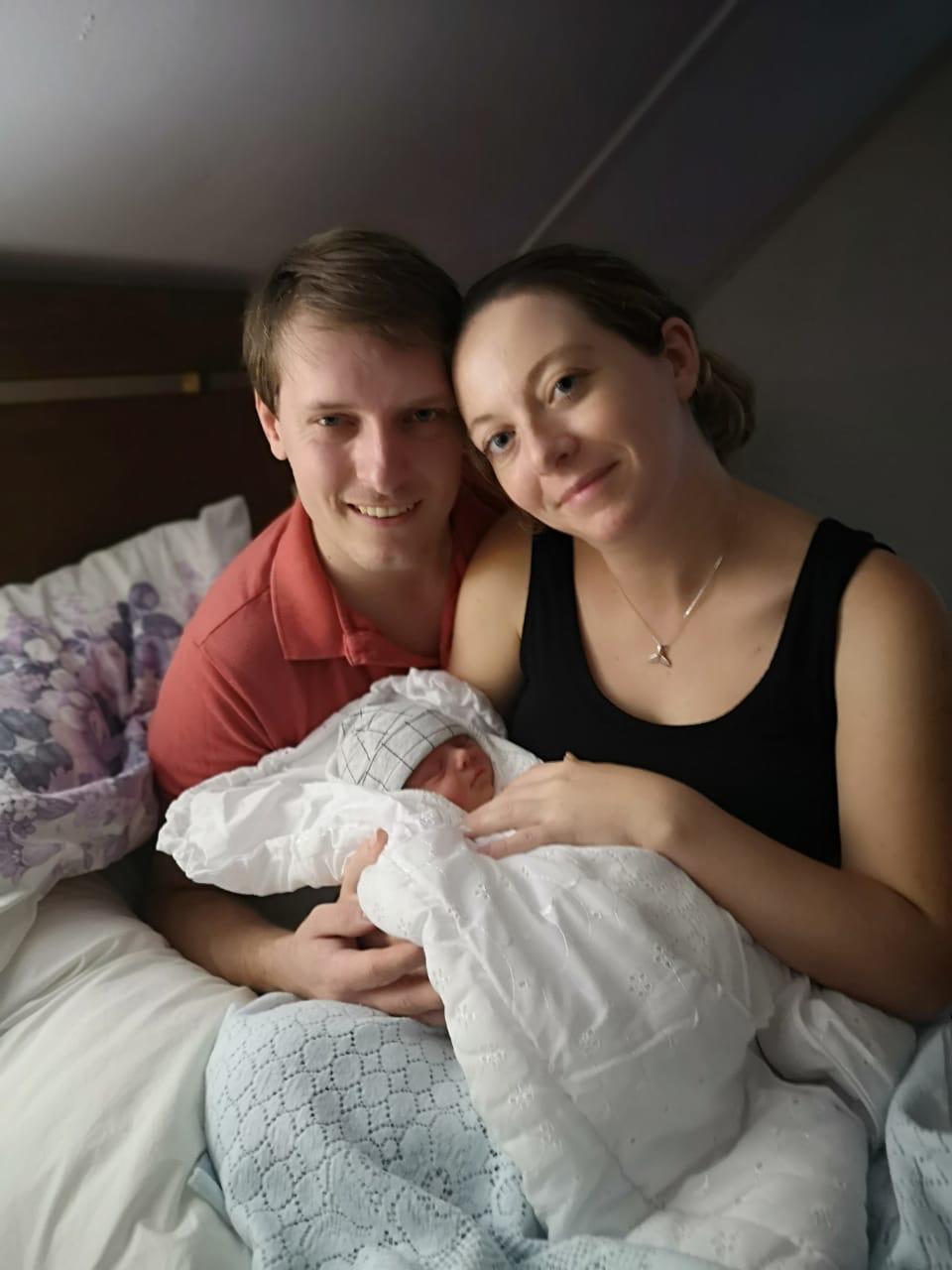
Meet Cealyn Gary Goldring Poorter. Born 25 May at 9:59am at 3,13kg. Baby and mommy are doing well and hopefully going home today. Our birth was a whirlwind but what an adventure. I ended up with an unmedicated Natural Vaginal Delivery at 37weeks; what a wild ride!
My waters broke while I was asleep and at 1:15am I awoke to a popping sensation. We monitored the flow of fluids and there was no sign of contractions, so I decided I’d lie down in bed for a while. At around 4am I felt the first surge and from there on it was a crazy beautiful blurr, the storm outside was raging and we began timing the surges – and the next thing I knew it was 6am (I have no idea where time went) and we hopped in the car.
We arrived at emergencies and I was wheeled in. They monitored my contractions, which had advanced pretty intensely and the midwife thought I was already fully dilated. They rushed me up to the delivery rooms and the madness began 😋
We had been tested a week ago for COVID-19, in case baby came early and my tests were negative, but Corbs had somehow come back positive. He was entirely asymptomatic and it was quite a week for me – taking care of everything while he was locked up in isolation. It was not the nicest way to spend our last few days. There was no clear direction on what would happen and honestly we’d expected to let him remain in isolation and re-test in two weeks – and be all clear, but our baba had other plans!
We didn’t know what to do, but I couldn’t drive myself to hospital and my mum wasn’t able to drive in the storm and when the time came to leave, whether or not he had to be in isolation any longer was the last thing on our minds.
Corbs dropped me at emergencies and I didn’t see him again until he was kitted out with PPE, and I was in a lot of pain. I didn’t question if he should be there or not, I was just glad he was. Our doctor arrived and was very upset and immediately took Corbs aside as he should’ve been isolation (she was right I know, but when you’re in that situation and he’s just trying to be there for me – your brain isn’t focused on much! This was all new to us and being in labour is a whole new ball game. I know for one I lost my pants at some point – no idea where or when!)
The Dr rechecked and I’d only dilated to 3cm, but honestly it felt like 20cm and our boy was in a posterior position, which meant, his spine on mine, which meant it could be a longer labour.
The doctor came over and told me she was going to leave as I’d be in labour for about another seven hours. We discussed that I’d use Entonox (nitrous oxide) until the epidural arrived (“if” it arrived). I never imagined it wouldn’t!
And then Cealyn, our baby boy, decided he had other plans. The contractions came fast and hard and within three hours I was fully dilated and seeing the face of the doctor telling me there was no epidural coming, there was no pain relief coming – and that this was it, I had to push! And then the urge to push really kicked in.
Corbs was incredible and he held space for me in the most massive way. I know at the end of the day we could have caused a huge problem at the hospital (because he was COVID-19 positive), even though it was unintentional, but I honestly could not have done it without him. We also had the most incredible midwife who guided me and talked me through it all, telling me to let go now the baby can come (I realised that I could have been holding him back as I had been telling him to stay put for the two weeks of Corbin’s isolation), so hearing that from the midwife gave me permission to let go. The words sank in like hot butter on toast and the next thing I knew, the doctor looked at me sternly, held eye contact and told me to hold my own legs, deep breath in, no sounds, no breathing out put your all into it hold and push! And all I remember next was her saying “Caitlyn, Caitlyn give me your hands here he comes” and there he was, I caught my little bean! Everything and everyone left that room and I was on another planet entirely. My birthing experience was nothing like I’d imagined. There were no dim lights, candles, soft music, there was no gentle aromatherapy oil smells wafting around me while Corbs massaged my back gently and spoke mantras over me. My birth experience felt primal and it was fast! I could hear Charlene’s voice through Corbin, as he kept reminding me of my breath and speaking to me telling me I could let go.
I progressed very quickly, which is unusual for a first time mom, and I truly believe it’s because of the Relax Into Birth Hypobirthing course. I forgot most of everything I learned, but Corbs reminded me when I needed reminding). I guess when the baby’s ready he’s ready! There was this tiny bubble around me and Corbs and it was spectacular. I’d have loved the warm bath or the dim lights, but I wouldn’t change a single thing not for all the world. It was perfect and I’d do it all over again. Hypnobirthing helped me prepare from the inside out – so that the environment became secondary.
For precaution and safety even though I tested negative, I’d been told I was going to be treated as positive and re-tested. This meant we would not leave the birthing room, Corbs would not be allowed to stay and baby’s and my first night together would be without any help. However, I did have Liz, the expectional midwife until 7pm who never left my side. She’s heaven sent and made the entire experience so much more beautiful than it might have ended up. They tested us both, but the results only came back late evening. The good news was that Corbs was negative and so was I.
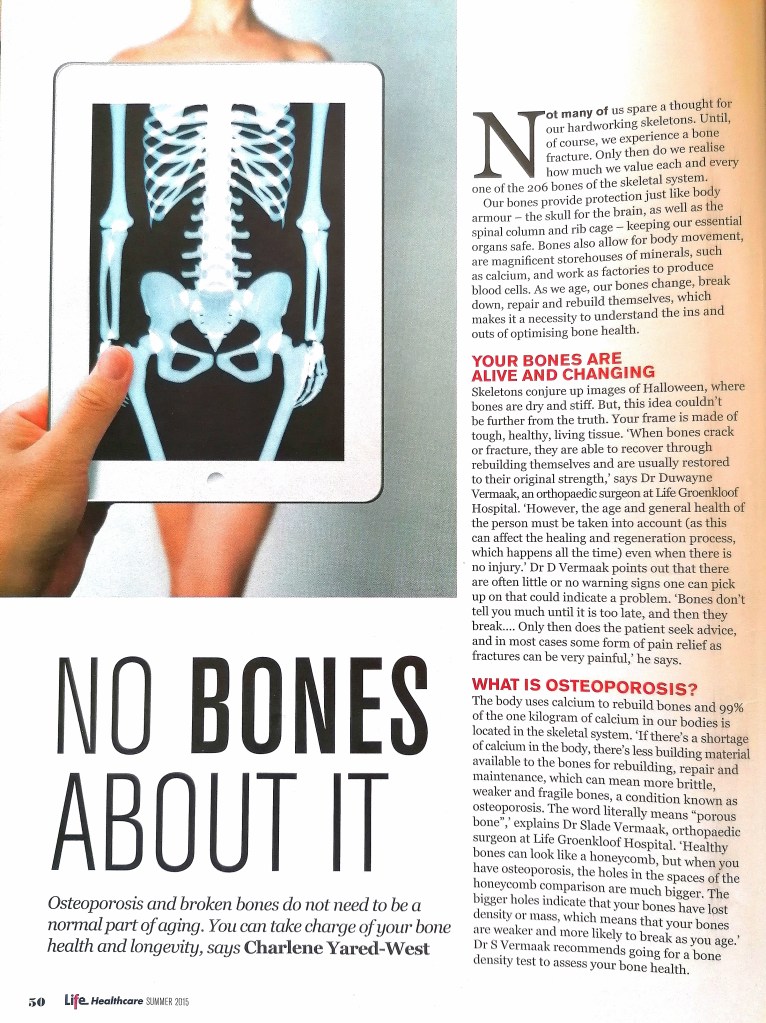
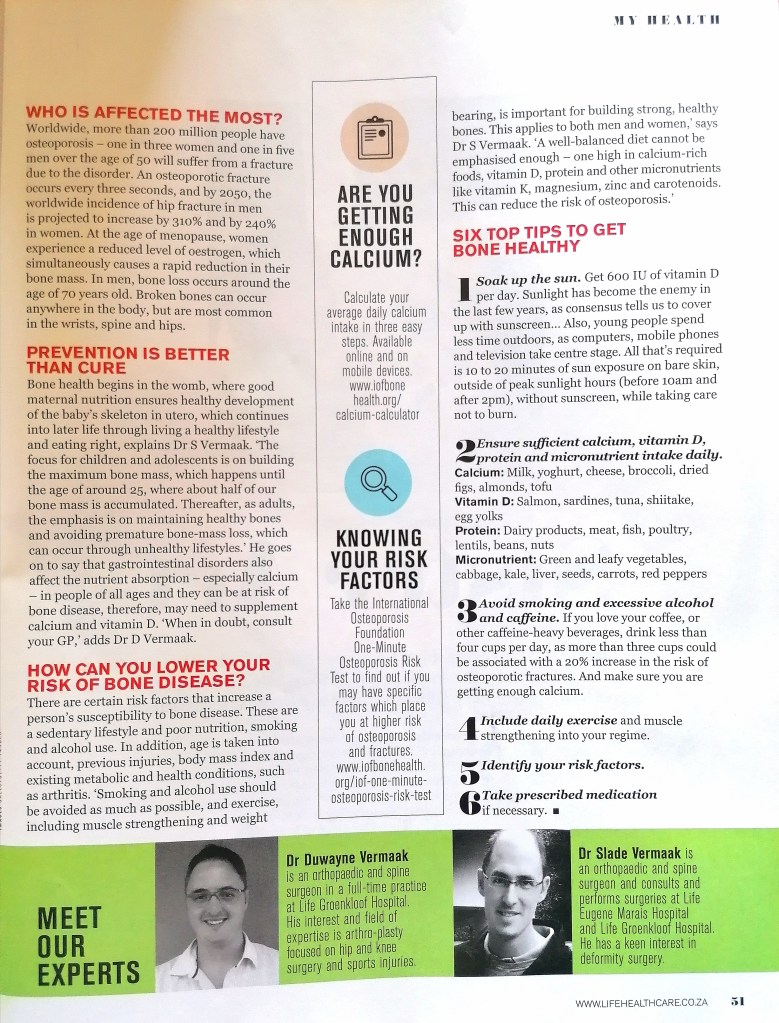
Osteoporosis and broken bones do not need to be a normal part of aging… you can take charge of your bone health and longevity.
Not many of us spare a thought for our hardworking skeletons, until of course, we experience a bone fracture. Only then do we realise how much we appreciate each and every one of the 206 bones of the skeletal system. Our bones provide protection just like body armour, keeping our essential organs safe, such as the skull for the brain and the spinal column and the rib cage. Our bones also allow the body movement, through the leverage of the muscles and are also magnificent storehouses of minerals, such as calcium and also work as factories to produce blood cells. As we age, our bones change, break down, repair and rebuild themselves throughout our lives, which makes it a necessity to understand the ins and outs of optimising our bone health. Charlene Yared-West speaks to Life Healthcare Orthopaedic Surgeons and brothers, Dr Duwayne Vermaak and Dr Slade Vermaak on the topic and finds out how to achieve this lifelong goal.
Your bones are alive and changing Skeletons conjure up images of Halloween, where bones are dry and stiff. However, this idea couldn’t be further from the truth of the bones which are in your body. In truth, your bones are made of tough, healthy, living tissue. “When bones crack or fracture, they are able to recover through rebuilding themselves and are usually restored to their original strength,” says Dr Duwayne Vermaak, Orthopaedic Surgeon at Life Healthcare Little Company of Mary. “However, the age and general health of the person must be taken into account – as this can affect the healing and regeneration process, which happens all the time – even when there is no injury.” Dr D Vermaak points out that there are often little or no warning signs that one can pick up on that could indicate a problem. “Bones don’t tell you much until it is too late – and then they break… Only then does the patient seek advice – and in most cases, some form of pain relief, as fractures can be very painful,” he says.
What is osteoporosis?
The body uses calcium to rebuild bones and 99% of the 1kg calcium in our bodies is located in the skeletal system. “If there is a shortage of calcium in the body, there is less building material available to the bones for rebuilding, repair and maintenance, which can mean more brittle, weaker and fragile bones; a condition known as osteoporosis. The word literally means ‘porous bone’,” explains Dr Slade Vermaak, Orthopaedic Surgeon at Life Healthcare Little Company of Mary. “Healthy bones can look like a honeycomb, but when you have osteoporosis, the holes in the spaces of the honeycomb comparison, are much bigger.The bigger holes indicate that your bones have lost density or mass, which means that your bones are weaker and more likely to break as you age.” Dr S Vermaak recommends going for a bone density test to assess your bone health.
Who is affected the most?
Worldwide, over 200 million people are affected and one in three women and one in five men over the age of 50 will suffer from a fracture due to osteoporosis. An osteoporotic fracture occurs every three seconds and by 2050, the worldwide incidence of hip fracture in men is projected to increase by 310% and by 240% in women. At the age of menopause, women experience a reduced level of oestrogen, which simultaneously causes a rapid reduction in their bone mass. In men, bone loss occurs at the age of 70 years old. Broken bones can occur anywhere in the body, but most commonly occur in the wrists, spine and hips.
When it comes to bone health… prevention is better than cure
Bone health begins in the womb, where good maternal nutrition ensures the healthy development of the baby’s skeleton in utero, which continues into later life, through living a healthy lifestyle and eating right, explains Dr S Vermaak. “The focus for children and adolescents is on building the maximum bone mass, which happens until the age of around 25, where about half of our bone mass is accumulated. Thereafter, as adults, the emphasis is on maintaining healthy bones and avoiding premature bone mass loss, which can occur through unhealthy lifestyles,” he says, adding that gastrointestinal disorders also affect the nutrient absorption – especially calcium, in people of all ages – and they can be at risk of bone disease, and therefore, may need to supplement with calcium and vitamin D. “When in doubt, consult your GP,” adds Dr D Vermaak.
How can you prevent osteoporosis?
There are certain risk factors which increase a person’s susceptibility to bone disease and these are a sedentary lifestyle and poor nutrition, smoking and alcohol use. In addition, the age is taken into account, previous injuries, the body mass index and existing metabolic and health conditions, such as arthritis. “Smoking and alcohol use should be avoided as much as possible and exercise, including weight bearing and muscle strengthening is important for building strong, healthy bones. This applies to both men and women,” says Dr S Vermaak. “A well-balanced diet cannot be emphasised enough – and one that is high in calcium-rich foods, vitamin D and proteins, as well as other micronutrients, including vitamin K, magnesium, zinc and carotenoids – can reduce the risk of osteoporosis.”
Six top tips to get bone healthy…
Soak up the sun! Get 600 IU of vitamin D per day. Sunlight has become the enemy in the last few years, as consensus tells us to cover up with sunscreen… Also, young people spend less time outdoors, as computers, mobile phones and television take centre stage. All that is required is 10 to 20 minutes of sun exposure on bare skin, outside of peak sunlight hours (before 10am and after 2pm), without sunscreen, while taking care not to burn.
Ensure sufficient calcium, vitamin D, protein and micronutrient intake daily.
Micronutrient-rich foods: green and leafy vegetables, cabbage, kale, liver, seeds, carrots, red peppers.
Avoid smoking and excessive alcohol and caffeine. If you love your coffee, or other caffeine-heavy beverages, drink less than four cups per day, as more than three cups could be associated with a 20% increase in the risk of osteoporotic fractures… and make sure you are getting enough calcium!
Include daily exercise and muscle strengthening into your regime.
Take the International Osteoporosis Foundation One-Minute Osteoporosis Risk Test to find out whether you may have specific factors which place you at higher risk of osteoporosis and fractures.
“One day, like any other day, I was making my bed and as I lifted the corner of mattress slightly, I heard something crack in my back. I lay down on the half-made bed and prayed that when I got up, I would be able to walk. Luckily I could walk after a rest and so I continued with my day, not giving the niggling sensation in my back a second thought. The sensation became painful as it became evening and in the morning, I visited my GP, who prescribed pain medication. No medication seemed to work; it only got worse. Two weeks later after seeing numerous doctors and having an XRAY, I was diagnosed with osteoporosis, a condition I had never heard of. I am a diabetic and have been living with the condition since 1957, so it was bad news that I now had to contend with another ailment. One thing I didn’t know was that as a diabetic, it is even more important to consume calcium-rich foods, which is now a priority in my diet. I have since been on medication to treat the osteoporosis and have made certain lifestyle adjustments and thankfully, I am pain-free and living a full and happy life.”
Polycystic Ovarian Syndrome (PCOS) is common in South African women and affects about one in 10 women globally. It is caused by a complex imbalance of hormones in the ovaries. Charlene Yared West spoke to Life Kingsbury endocrinologist, Dr Jocelyn Hellig and gynaecologist Dr Philip Zinn to find out more about this condition.
So what is PCOS?
In a woman’s body, the ovaries release eggs each month as part of a healthy menstrual cycle. However, with PCOS the egg is not released as easily, which leads to irregular ovulation and menstruation and can impact fertility. “The ovaries are described as polycystic because there is an excess of the fluid-filled, egg-containing sacs called follicles, all of a similar size, when seen on an ultrasound image,” says Dr Zinn. “This excess occurs due to disturbance of the growth of follicles – to the size required for ovulation.”
It’s all about the hormones… or is it?
Dr Hellig explains that the exact cause of PCOS is unknown. “There is no one singular factor which causes PCOS. It is considered to be a complex trait arising from the interaction of genetic and environmental factors, usually first presenting when mature gonadotropin levels (hormones essential for reproduction)are achieved at puberty. It occurs naturally in primates as well as humans,” she says. “The disorder arises clinically by the presence of two out of three criteria: irregular periods or the absence of ovulation, features of high androgen levels (acne or excess hair growth) and a certain appearance of polycystic ovaries on ultrasound,” she says.
You could be predisposed to PCOS if…
You have insulin resistance.
You have Type 2 diabetes.
You have unhealthy eating habits.
You do not exercise regularly.
You are overweight or obese.
Trying to fall pregnant?
If you are trying to fall pregnant, but it is proving difficult, PCOS might be the culprit, says Dr Zinn. “Many women are unaware that they even have PCOS until they start trying to have a baby. Once they start treatment and their symptoms are managed, then their chances of conceiving are increased.”
QUIZ: ✓Tick the boxes below to see if you might have symptoms of PCOS
Irregular menstrual cycle
Thinning hair or hair loss on the scalp (male-pattern baldness).
Acne on the face, back and chest.
Too much hair on the face or areas where men usually have hair (hirsutism affects up to 70% of women with PCOS).
Weight gain and difficulty losing weight.
Darkening of skin pigmentation, along the neck, groin and under the breasts.
Skin tags in the armpits or neck area.
How is PCOS diagnosed?
“If you think you have PCOS, make an appointment with your gynaecologist. There is no single test to diagnose PCOS, but we take your medical history and can conduct a physical exam with a pelvic ultrasound and do some blood tests,” says Dr Zinn. Dr Hellig adds: “Of utmost importance is that PCOS is a diagnosis of exclusion and it is important for your medical professional to look for other causes of your symptoms before ascribing it to PCOS.”
Physical exam: Checks your blood pressure, BMI and waist size. Also checking for extra hair on the body, skin discolouration, hair loss and any other signs of excess testosterone such as an enlarged clitoris. It is important to exclude other health conditions.
Pelvic ultrasound: A sonogram will examine the lining of the uterus and check the ovaries for the polycystic features.
Blood tests: To check your androgen hormone levels, as well as other hormone checks, including your thyroid.
Can I be cured from PCOS?
8Dr Hellig explains that there is no cure for PCOS, but symptoms can be effectively managed and therefore treated. “We take into account if you want to conceive, your risk of long-term health problems, especially diabetes and cardiovascular disease, and will help formulate an effective treatment plan through lifestyle changes and medication where necessary,” she says.
What can I do to alleviate my symptoms?
Dr Hellig and Dr Zinn agree on the following steps that women can take to treat PCOS:
Lose weight: This will help to stabilise your blood glucose levels and alleviate insulin resistance. Even a 5 – 10% loss in body weight can improve your chances of conceiving.
Remove hair: Using facial hair removal creams, laser hair removal or electrolysis. Medication is not very effective for permanent hair removal.
Hormonal birth control for women not wanting to conceive: Can help to regulate menstruation cycles, stabilise weight, improve acne and reduce new hair growth on face and body.
Anti-androgen medicines: Although not safe for pregnancy, can help reduce PCOS symptoms.
Metformin: A drug used to treat type 2 diabetes and may help some women with PCOS symptoms in certain circumstances.
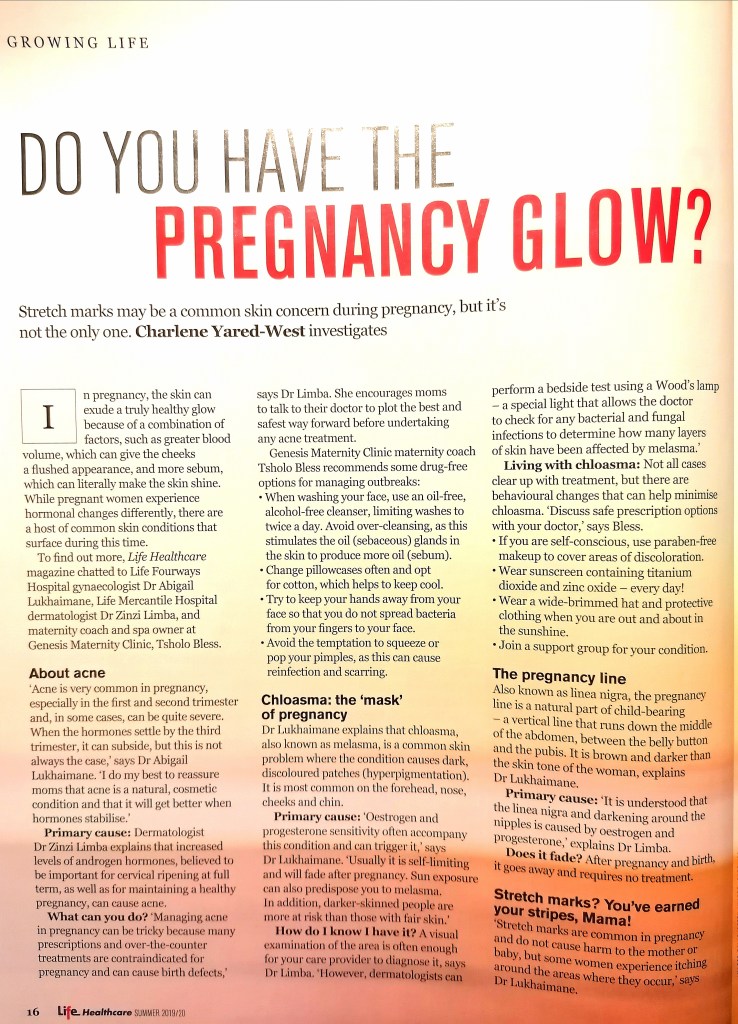
In pregnancy, your skin can exude a truly healthy glow because of a combination of factors, such as greater blood volume, which can give the cheeks a flushed look and more sebum on the skin, which can make the skin shine. While every woman experiences hormone changes in pregnancy, not every woman will get that pregnancy glow. It is well-documented that pregnancy brings with it a whole new set of skin concerns – not just the most common of problems, namely stretchmarks. Charlene Yared West spoke to Life Fourways Hospital Gynaecologist, Dr Abigail Lukhaimane, Life Mercantile Hospital Dermatologist, Dr Zinzi Limba and Genesis Maternity Clinic Maternity Coach & Spa owner, Tsholo Bless, to find out more about skin conditions in pregnancy.
Acne-oh-no!
What is it? “Acne is very common in pregnancy, especially in the first and second trimesters and in some cases can be quite severe. When your hormones settle by the third trimester it can subside for most women, but this is not always the case” says Dr Abigail Lukhaimane. “I do my best to reassure moms that it is a natural , cosmetic condition and that it will get better when hormones stabilise.”
Primary cause: Dr Zinzi Limba explains that increased levels of androgen hormones, believed to be important for cervical ripening at full term, as well as for maintaining a healthy pregnancy, can cause acne.
What can you do? “Managing acne in pregnancy can be tricky because many prescriptions and over the counter treatments are contraindicated for pregnancy and can cause birth defects,” says Dr Limba. She encourages moms to talk to their doctor to plot the best and safest way forward before taking any acne treatment.
Tsholo Bless recommends some easy drug-free options for managing zit outbreaks:
When washing your face, use an oil-free, alcohol-free cleanser, limiting washes to twice a day. Avoid over-cleansing as this stimulates the oil glands in the skin to produce more oil.
Change your pillowcases often – use cotton pillow cases which encourage the skin to breathe.
Keep your hands away from your face so that you do not spread bacteria from your fingers to your face. This goes for your mobile phone too – a device dripping in bacteria, even on the best days!
Avoid the temptation to squeeze or pop your pimples, as this can cause re-infection and scarring.
If you have clogged pores, treat yourself to a professional salon facial.
Chloasma: The Mask of pregnancy
Dr Lukhaimane explains that chloasma, also known as melasma, is a common skin problem where the condition causes dark, discoloured patches on your skin (hyperpigmentation). Most common on the forehead, nose, cheeks and chin. According to the American Academy of Dermatology, 90% of people who develop this condition are women. Primary cause: “Estrogen and progesterone sensitivity often accompany this condition and can trigger it,” says Dr Lukhaimane. “Usually it is self-limiting and will fade after the pregnancy. Sun exposure can also predispose melasma. In addition, darker skinned people are more at risk than those with fair skin.”
How do I know I have it? A visual exam of the area is often enough for your care provider to diagnose it, says Dr Limba. “However, dermatologists can perform a bed-side test using a Wood’s Lamp – a special kind of light that allows the doctor to check for any bacterial and fungal infections to determine how many layers of skin the melasma has affected.”
Living with melasma: Not all cases clear up with treatment, but there are methods of behavioural changes that can help minimise the worsening of the condition. “Visit your doctor to discuss prescription options that are safe to use for pregnancy,” says Tsholo.
Use Paraben-free makeup if you are self-conscious to cover up areas of discolouration.
Wear a wide-brimmed hat and protective clothing when you are out and about in the sunshine.
Seek out support groups for your condition.
The Pregnancy Line
The pregnancy line is also known as linea nigra and is a normal and natural part of pregnancy. It is brown and darker than the skin tone of the woman and is a vertical line running down the middle of the belly, between the belly button and the pubis, explains Dr Lukhaimane.
Primary cause: “It is understood that the linea nigra and the darkening around the nipples is caused by the hormones estrogen and progesterone, which stimulate the production of melanin, the pigment which darkens and tans the skin in pregnancy,” says Dr Limba.
Does it fade? After pregnancy and birth it goes away on it’s own – you do not need treatment.
Stretchmarks? You earned your stripes mama!
“Stretchmarks are very common in pregnancy, affecting about 8 out of 10 women – and do not cause harm to the mother or baby, but can cause itching on the area for some women,” says Dr Lukhaimane.
Primary cause: Dr Limba explains that skin is highly adaptable and can stretch and contract, but during pregnancy, the skin does not have enough time to adjust, which causes the skin to tear, which in turns results in a scar that forms – and this is known as a stretchmark.
Who gets stretchmarks? “Lighter skinned women often get pink stretchmarks forming, while darker skinned women will have lighter stretchmarks than the surrounding skin area. Stretchmarks can occur anywhere; on the hips, thighs, belly breasts, lower back and buttocks,” says Dr Limba.
Treatment: Tsholo says that there is no absolute treatment for stretchmarks, but that women can be comforted to know that they will fade into paler scars and sometimes become less noticeable, but will not go away completely. “The best advice would be to make sure that you keep the skin well nourished and a cream or oil made from plant oils rich in Omega 3,6, & 9 can be very useful. A study published in International Journal of Molecular Sciences by T.Lin et al showed that the topical application of some plant oils can have anti-inflammatory and skin barrier repair effects. This also means that the itching is reduced. So it is wise to seek information from your skincare therapist,” she adds.
TOP TIPS
Sunscreen is imperative.
When pregnant, all medication should be cleared by your physician / gynaecologist.










 Charlene Yared West